A confession, to begin with, I am a reformed cricketing aficionado. Namely, I don’t follow the sport as it is now. To be honest, I don’t think there is much sport left in the way cricket is played now.
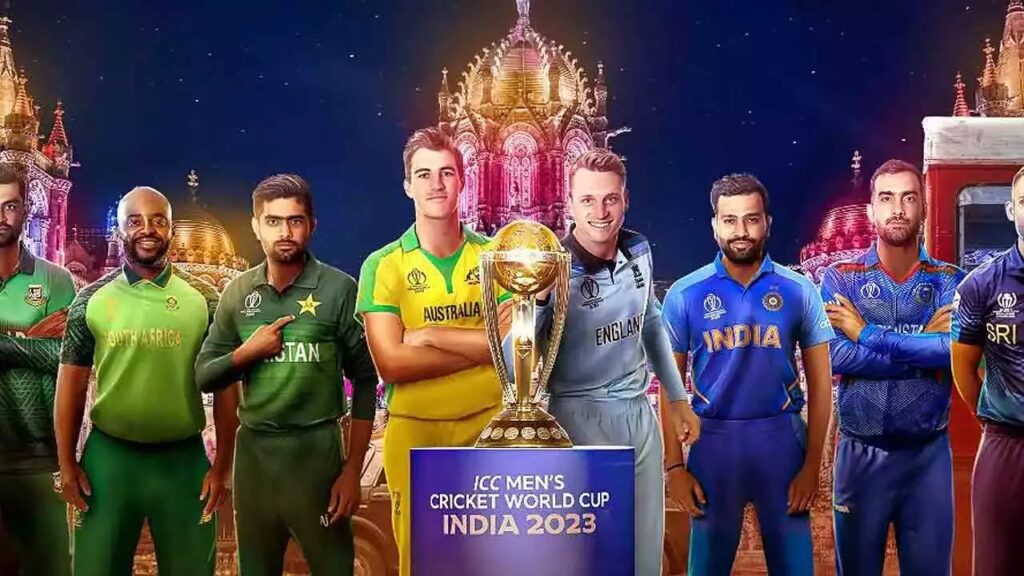
India is hosting the biggest cricketing spectacle in the world — the ICC World Cup. The last time it was held in India, back in 2011, we also won it. Remember, the Tendulkar being hoisted on the back of the teammates and being taken for a round of Wankhede moment. Coming back to 2023, the way things are progressing at the moment, there is every chance that India will be holding the cup again. Though I doubt, if the team will be hoisting Rohit on their shoulders’, he is not all that fluffy afterall.
Winning the World Cup should be an exciting thing. The prospect of winning the cup in front home crowds cheering “Jai Shri Ram“? A real moment of history? India reaching the cricketing pinnacle, yet again?
It would have been wonderful and great indeed, except for the fact, that we seem to be undergoing a cricketing-withdrawal of sorts. One days are no more as exciting as they used to be.
Forget the stadiums with empty seats, there is almost no buzz on the streets, no passionate discussions at coffee stations or exchange of notes at grocery stores. People are not thronging outside electronic shops to see the matches on the big TVs there. You might argue that they are watching it on the mobile screen. Well, they might be, but they certainly are not discussing or debating matches or stats, like it used to be in the past.
All in all, this is the most thanda cup that I have ever seen. The boringest of all. In fact, the cup is so thanda this time, that you could possibly serve vanilla ice cream in it — plain and cold.
There are essentially two reasons why ICC World Cup 2023 is not working. I am sure everyone kind of knows it, but let me state it nevertheless.
Primarily – an overkill of cricket.
Back in the days, when I was a kid, we were often warned against doing too much of the same thing. If you eat the same thing over and over, you will lose interest. If you play the same game over and over, you will get bored. Moderation apparently was the secret to enjoyment. Cricket a decade back, before an abomination named T20, used to be a sport that was rather sparingly played. A one-day or test series would be like an Aamir Khan film, you would have to wait long for it to happen, even though it was a dud. But nowadays, cricket is more like an Akshay Kumar franchise, it doesn’t matter if the series fails or fails miserably, the next one is just round the corner. The top guys at the ICC in their fascination to earn money, are scheduling one series, one tournament, after the other. So, if India loses to England today, no big deal, we will get a chance to extract revenge next fortnight.
The Ficus genus is vast and varied; there are about 850 species of plants in the Ficus genus, ranging from woody trees, shrubs, vines, or epiphytes in the family Moraceae. Approximately 115 species of ficus are present in India, the most popular being the Peepal (Ficus religiosa), the Banyan (Ficus benghalensis), and so many others.
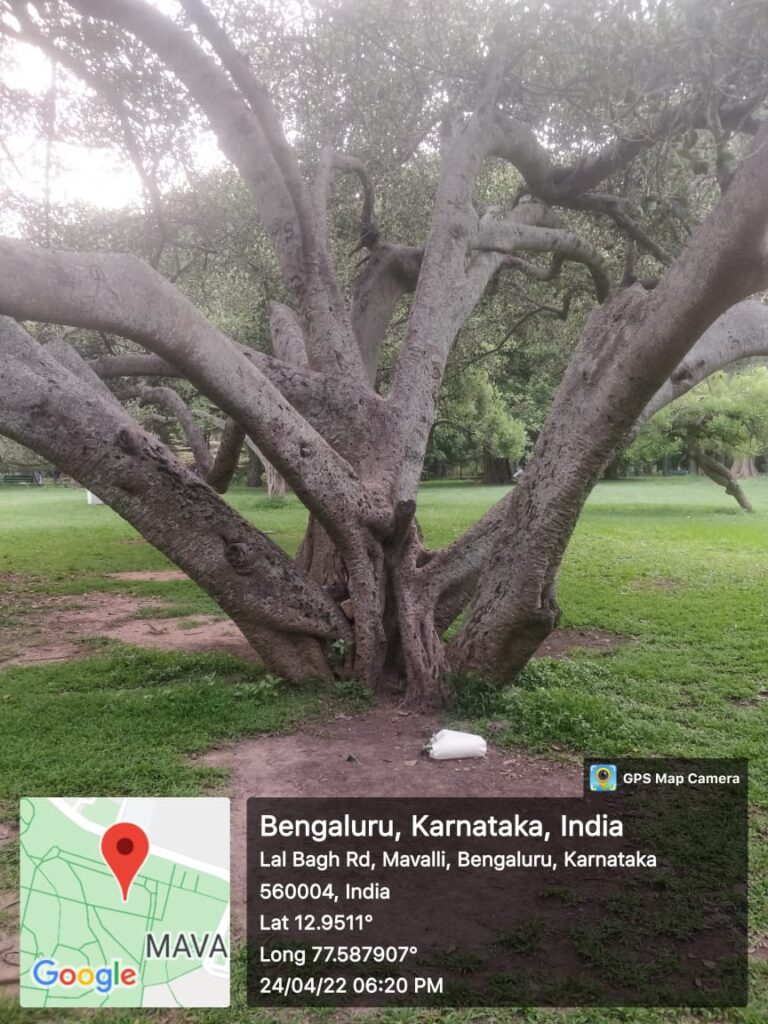
Of the many such figs that stand tall (or rather spread wide) is a particular tree in the Lalbagh Botanical Gardens in Bangalore. DubbedFicus krishnae, it is thought to be a banyan tree variation and is often treated as a subspecies. But that was not the case when first classified in the early 1900s as a new species. However, a few decades later, it was marked as a freak variant of the common banyan tree and was named a sub-species: Ficus benghalensis var. krishnae.
More recently, based on genetic research, the tree has been re-designated as an independent species in its own right.
But apart from all the taxonomic details, here are some reasons why this tree is truly special. The tree is a native of India and is quite rare. While there are many similarities to the banyan, namely the spreading branches with aerial roots that thicken and become trunks that support the crown. Or the similarity in the texture of the leaves, which look a lot similar.
Yet, the differences persist. This tree does not display a dense and spreading canopy like a banyan, and the bark also feels quite different. But the most significant difference is the way the leaves are shaped; they seem to have a single jarlike funnel. The basil loves of the leaves that spring from the stem twist backwards to form a “cup”.
According to legends, the name Krishna comes from Lord Krishna, who rolled up the leaves of an ordinary banyan tree so that he could hide his butter in it. Thus it is also known as Makhan Katori/ माखन कटोरी or Krishna’s buttercup, Krishna vad/ कृष्ण वद.
As mentioned in Vijay Thiruvady’s book Heritage Trees, this particular tree is around 150 years old. Thus when the tree came into being, India was under colonial command, and Queen Victoria was the empress. There is also an interesting story on the discovery of the species narrated by Vijay in an episode on Bangalore Walks.
You can catch the tree near the Japanese Garden, a short walk from the Lalbagh main gate. The best part is that the park guards are pretty stern and dissuade many visitors from sitting on the branches with a persistent and irritating whistle.
A few metres away, almost 100 metres, is another younger Ficus krishnae tree. It has even a further variation to its cup-like leaves; the pocket is divided into two compartments with a stitch in the middle. It is incredible to have such rare trees living out in close cohabitation.
So, next time you are in the park, don’t forget to visit the fantastic Ficus krishnae tree and its younger brother (or sister). Here are the coordinates for the same.
In a small bylane off the busy Sarjapura Road in Koramangala lies the shop of Aruna Musicals. It is in Jakkasandra, which a reasonably posh area in Bangalore. The shop is hidden from the view as it sits pretty on the second floor of a not-so-old building. There’s an online kitchen that supplies food to customers over a mobile app on the ground floor. As a result, the place smells with the aroma of many cuisines. The climb to the top is not the most comfortable one, as the stairs seem to have been built in a hurry; almost like an afterthought.
Nonetheless, the ascension to the second floor brings to you a magical place, full of myriad musical instruments and pieces of equipment. There’s a glass door that separates the outside world from this fascinating place. And standing with this juncture is AS Ganesh, the owner of the business. He stands there at the gate, smiling and stern at the same time.
We discovered Aruna Musicals by sheer luck. On a visit to Bangalore, we wished to purchase a guitar for our younger son, who was insisting on it. Searching through Amazon and Bajao, we were convinced that the best way to buy a piece would be to do so physically. Considering we are as aware of a guitar as, say, a poet is aware of the atomic structure of benzene, we needed guidance more than purchase. A cursory search on Google convinced us that Aruna Musicals is a great place to start with the quest. The reviews spoke effusively and glowingly of the owner, who was not keen to make a sell but help you pursue music. The reviews were a bit dated, but we were convinced about making the visit.
Entering the place (it’s hard to call it a shop), you are automatically drawn into a different dimension. Unlike music shops where instruments are stacked up in bright cases and shiny lights, here they are all assembled like they are part of an ongoing musical. Indeed, there are scores and scores of them, but they are not out of reach behind glass cages; here, they are all around you, wrapping you in their warmness. And right at the centre is the master of ceremonies, Mr Ganesh.
He is warm, effusive and kind. But he is also firm and stern, a fact we realised when a long-haired guitarist landed up without an appointment and asked him to make a minor tweak to his instrument, “It is not really much. It will be very easy.” The casual manner in which the lad spoke about the instrument seemed to rile up Ganesh. He somehow seemed to control his anger and expressed his inability to help him and happily guided him to another shop.
बजे होंगे कुछ सात या साढ़े-सात सुबह के, जब घंटी की आवाज़ से नींद टूट गयी। जहाँ तक याद था, कचरे का डब्बा रात में ही बहार रख दिया था, तो इस समय जमादार का घंटी बजाने का सवाल नहीं होता। एक बार सोचा जाने दो, किसी बच्चे की शरारत होगी। मगर जब दूसरी बार घंटी बजी तो नींद को टा-टा करना ही पड़ा।
खैर जैसे-तैसे, उठते-उठाते, बचते-बचाते, दरवाज़ा खोल ही दिया, तो सामने साक्षात जमादार-भैय्या के दर्शन हुये। लेकिन वो कुछ अलग दिख रहे थे, कपडे साफ़ थे, वो कुर्ता-पैजामा पहने हुए थे। आज तो चेहरा भी दिखाई दे रहा था, जो अक्सर किसी कपडे या गमछे से ढका रहता। एक अजीब सा तेज उनके personality से प्रवाहित हो रहा था। सच बोलै जाये तो मुझे कुछ मिनट लगे, उन्हें पहचानने मे। उनकी यह वेश-भूषा देख कर नींद गायब हो गयी।
हाथ जोड़के, शीतल विनम्रता से जमादार-भैय्या ने फ़रमाया, “साब, हैप्पी दिवाली, साल मुबारक”। यह सुनते ही, मेरे दिमाग की बत्ती जल गयी, मुझे पता था आगे क्या आने वाला था, मगर फिर भी, बनावटी अल्हडपने से जवाब दे दिए, “आप को भी वैरी हैप्पी दिवाली”। अब जबकि हम दोनों ने दो राष्ट्र-अध्यक्षों की तरह दिवाली ग्रीटिंग्स की फाइलें हक्ष्ताक्षर करके बदल ली थी, एक सन्नाटा सा छा गया, जैसे हम किसी शोक सभा में मौजूद हो। सच बताऊ तो मैं वापस बिस्तर पे जाना चाहता था, और हमारे हैंडसम जमादार भैय्या को भी कम जल्दी ना थी। कई और घंटियां बजानी थी, एक घर पे थोडिना इतना टाइम बर्बाद कर सकते थे। “साब, दिवाली की बक्शीश” कह कर वो सीधे मुद्दे पर आ गए।
अगर सत्य कहु मुझे इस बेवाकी पे जरा भी आश्चर्य नहीं हुआ, यह कोई नयी बात ना थी। बड़ी दीपावली का अगला दिन, नए साल के रूप में मनाया जाता है। यह, एक गुजराती परंपरा हैं, जो बाकी सारी गुजराती चीज़ो की तरह राष्ट्रीय और अंतर्राष्ट्रीय हो गयी है। इस दिन सारे काम-करने वाले लोग निकलते हैं, अपने हक़ की बक्शीश लेने। भले ही आपकी दिवाली कैसी भी गुजरी हो, अगले दिन हैप्पी-दिवाली बोलने वालों की कमी नहीं होती। भले ही आपकी गर्दन पर चाकू नहीं रखा गया हों, मगर वो प्यारी मुस्कान की नोक कुछ कम ज़ालिम ना थी। एक तारीकी से कहिये तो यह sanctioned extortion या मुम्बैया भाषा में कहे तो एक प्रकार की वसूली थी।
जमदारजी की बात सुनके मैंने पापा की पेंट जो अलमारी पर लटकी थी, उनकी जेब से वॉलेट निकाल के बीस रुपैये थमा दिए। रात को दुश्मनी हमले के पहले हम लोगों ने पूरी स्ट्रेटेजी बनायीं थी नये साल के आगमन के लिये। बक्शीश की शुरुवात बीस से होगी, और चूँकि उस समय कौन बनेगा करोड़पति का ज़माना ना था, तो अगला पड़ाव २५, ३०, ४० और उसके आसपास ख़तम हो जाता। हम पिछले कई दिनों से छोटे denomination के नोट इक्कठे कर रहे थे।
Yet again, in another “Unlock” announced by the government, swimming pools have been left out. This was the third instance of the “Unlock” when various aspects of the economy were restarted. Gyms, malls, sports complexes, etc. have been allowed to open. Still, swimming pools continue to be disallowed much like cinema halls, entertainment parks, theatres, bars, and so on. Not surprisingly, Indian competitive swimmers who have been waiting many months for the pools to reopen are distraught. They have been let down by the government and the various swimming bodies that promised pools would be reopened.
For the past few weeks, elite swimmers like Virdhawal Khade, Srihari Nataraj and renowned coach Nihar Ameen have been beseeching the sports minister Kiren Rijjiju and the Ministry of Home Affairs (MHA) to pay attention to their plight. Numerous tweets have been posted tagging the Swimming Federation of India (SFI), MHA, the sports minister, imploring them to open up the pools for competitive training. India’s highest-ranked swimmer Virdhawal Khade has even gone to the extent of talking about retirement from the sports if there’s no headway. Their exhortations haven’t been answered, except with stoic silence. It’s almost like these swimmers have been banging their heads against the wall, or a better analogy would be they have been dumped in the Arabian Sea without a life jacket.
The predicament and the frustration of the Indian swimmers is quite understandable. It has been over four months since the pools have been closed, that is practically a third-of-the-year. For athletes, who typically spend anything from 4-6 hours in the water, perfecting their strokes, tumbles, catch, and so on, this extended break can be devastating both physically and psychologically. This is all the more so because they were eagerly preparing for the Tokyo 2020 Olympics (which will now be held in 2021). All the preparations, milestones, timelines have gone for a toss.
Qualifying for Olympics is a tough call, especially so in aquatics. The selection process is as follows; participating countries are allowed up to two qualified swimmers per individual event and one relay team. Each country is allowed a maximum of fifty-six swimmers (twenty-eight male and twenty-eight female). Though each country is free to select the swimmers, the International Olympic Committee (IOC) establishes a standard that must be met for a swimmer to be eligible to compete at the Olympic Games. The top swimming body, FINA publishes two sets of time-standards for each of the events: the “Olympic Qualifying Time” known as the “A-Time” and the “Olympic Selection Time” known as “B-Time.” Each country may enter up to two swimmers per event, provided both swimmers meet the qualifying time or A-Time. A country may enter one swimmer per event who meets the qualifying standard or B-Time. Any swimmer who meets the qualifying time will be entered in the event for the Games; a swimmer meeting the B-Time standard will be eligible for entry, and their entry will be allotted/filled in by ranking. A country that does not receive an allocation spot, but has at least one swimmer who meets a qualifying standard may enter the swimmer with the highest ranking. If a country has no swimmers meeting either qualifying standard, it may enter one male and one female in total.
Thus, B-Time qualification will only ensure an invitation to the Olympics if the total available quota slots (878) are not filled. So far, six Indian swimmers have attained the B-Time, Virdhawal with a timing of 22.44s in 50m freestyle. Sajan Prakash (1:58.45 in 200m butterfly), Srihari (54.69s in 100m backstroke), Kushagra Rawat (8:07.99 in 800m freestyle), Aryan Makhija (8:07.80 in 800m freestyle) and Advait Page (8:00.76 in 800m freestyle). Yet, these qualifications count for nothing as only an A-Time can get you the position in the Olympic swimming team. For Virdhawal the target is 22.01; 1:56:48 for Sajan and 53.85 for Srihari. Rawat, Page and Makhija have to clock 7:54:31.
The time difference between 22.01 and 22.44 might not seem much to a common man, but in swimming parlance, it is equivalent to an aeon, a difference between a life-time spent in celebration or in ignominy.
While Indian swimmers struggle to attain these qualifying times, the case is pretty different for a power-house like the US. To give an idea, till August 14, 2019, over 1000 swimmers had attained the qualifying times for different events in the US. To illustrate the high-level of competition, let’s take the 50 Freestyle male event, six swimmers had achieved the A-Time, the best being Caeleb Dressel with 21.04. Some 23 swimmers have attained the B-Time. Indeed, there were 23 swimmers between the timeline of 22.01 to 22.67. Now, the US team can send only two swimmers for this event. Thus, at the US trials, all these swimmers will have to battle out, and only the top two will get to wear the stars and stripes. All these A-Times and B-Times count for little when you are in the US.
And we are just talking about the US, other swimming powerhouses like Australia, Japan, China, UK, also have their robust selection processes that ensure that they will be sending their very best for the competition.
In contrast, no Indian swimmer has ever attained the A-Time for any Olympic events. That should give an idea of where we stand in the sport, globally. Basically, we are scraping at the bottom. Period!
But then swimming is a critical sport for any country wishing for Olympic glory. There are a total of 37 events in swimming discounting the other aquatic events like diving, etc. That’s a good 111 medals on offer; gold, silver and bronze. Even the union minister of sports Kiren Rijiju understands the importance of swimming, stating, “India will have to focus on aquatic sports, especially swimming if the country wants to excel in Olympic Games.”
The minister went on to add that, “Historically, the top countries in the Olympics have bagged a large number of medals in swimming. In the last five Olympics, the US won about 31 per cent of their total medals in swimming. There is a great opportunity for any country because of the sheer number of events that take place in aquatics. Today, we don’t stand anywhere in swimming at the Olympic level, but there is a huge potential in the sport if we act with dedication, proper planning and adequate resources.”
Simply put, if a country desires to be an Olympic power-house, it can’t without paying attention to aquatics, especially swimming events.
So, why are we failing badly? Why is it that a country of 1.3 Billion can’t find talent to attain an A-Time?
Plastic waste is bad. It is terrible. Period. By now, almost everyone knows how damaging plastic-laden waste is to the environment. And Palava has a singularly bad Plastic Problem.
The biggest villain in the plastic gang is — Single-Use Plastic or known popularly as SUP. Plastic bags that we use for groceries or shopping, garbage bags, straws, plastic cutlery like spoon and forks, are the worst for our environment. The everyday plastic bags we use will take some 500-1,000 years to decompose, while plastic bottles can take 450 years or more. During its life cycle, plastic waste clogs up drains, swells up in landfills, floats into the oceans and so on. Plastic is not only dangerous to animals and marine creatures but it also for us, as plastic is entering our food-cycle.
And while we are made to believe that Plastic Waste is recyclable/recycled, nothing could be further from the truth. Only a marginal percentage, and that too, the high-grade plastic is reprocessed. The SUP invariably lands up in landfills or oceans. Where it is going to stay for hundreds of years and create problems for us. The only option is to reduce our usage progressively until it is zero.
Even the government, both at centre and state has repeatedly emphasised on the need to desist from using it. In fact, last year, the government of Maharashtra had even gone to the extent of banning SUP, but then it was not successfully implemented. The onus is now on the citizens to take matters in their hands.
PALAVA’s PLASTIC PROBLEM
Lodha Palava is a smart-city that lies in close proximity of Mumbai. With modern amenities, this is a vibrant cosmopolitan community in Dombivli East, Thane. Spread over many acres this colony boasts of some of the most enviable amenities, multiple gardens, schools, swimming pools, cricket ground, mall, golf course, etc.
Thousands of families live in this complex, which is professionally managed by a management company established by the builders. The complex falls under the ambit of Kalyan-Dombivli Municipal Corporation.
While the basic infrastructure is impressive, namely, roads, water and electricity. Oddly, there has been no system for correct waste management.
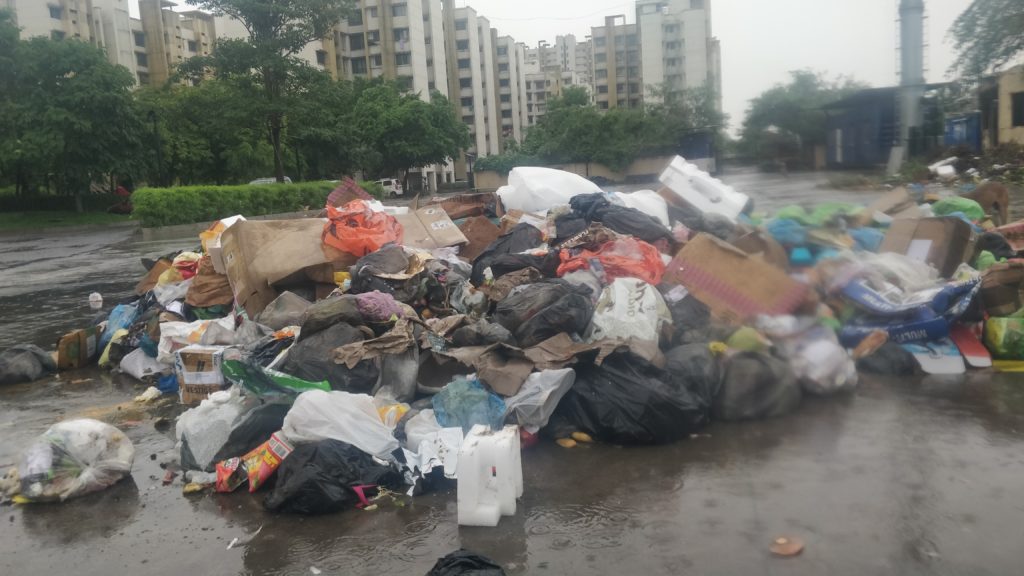
Every day, all these thousands of families discard their waste. Which is collected by sub-contractors and them dumped at Kalyan landfill. Some societies within the complex have encouraged segregation of waste at source, but that is ineffective as the waste is mixed together and dumped.
To understand the process, I decided to catalogue the waste collection in two clusters of Palava, namely Casa Bella and Casa Bella Gold. The total number of flats in Casa Bella (CB) is 2600 and in Casa Bella Gold (CBG) it is 4600. Around 20 boxes of waste are collected at CB and 40 at CBG.
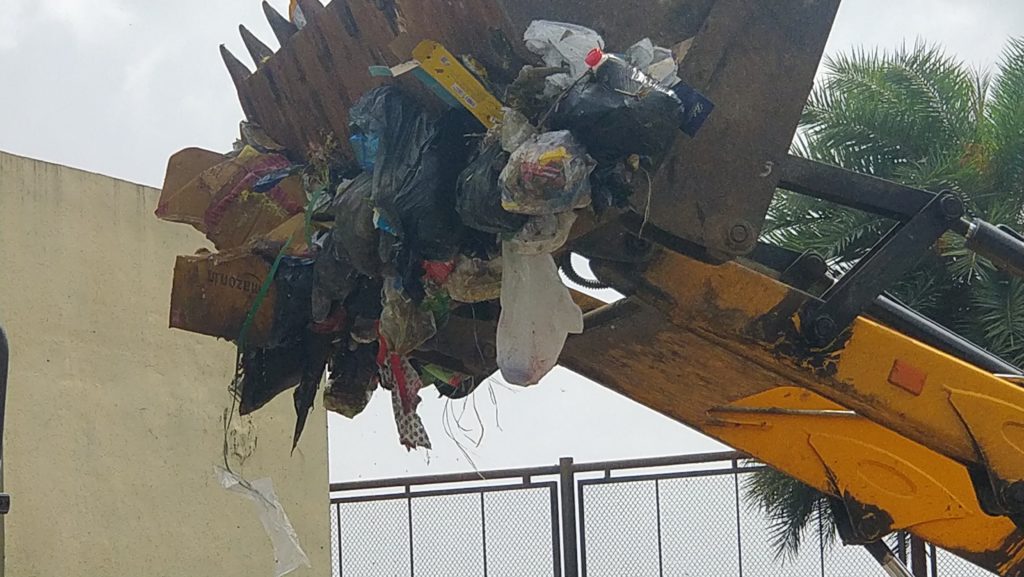
Post noon, all the waste collected is loaded on a truck and carted away to Kalyan Landfill, These two clusters together generate sufficient waste to fill up a single truck, of 5-6 tons. Thus, every single day, there’s one truck from CB and CBG. Don’t forget, these are just two clusters there are quite a few more in Palava.
Waste collected at CB & CBG
A cursory examination of the waste throws up the dour picture. A major portion of this waste is plastic, mainly plastic bags of different sizes and thickness. Also, part of this waste are cardboard cartons from Amazon, Flipkart and other online marts, hundreds of them each day.
The workers who load the waste do try and segregate it, but it is highly inefficient, as the volume of waste is very large and they have just a couple of minutes to pick, sort and load it on the dump-truck. There is a waste-buyer at Nilje station that buys the plastic at a small cost.
Urgent Measures
The waste that is being generated at Palava is phenomenal and all this is landing up in the landfill, polluting soil, river and the ocean. In this light, my urgent appeal to all residents of Palava is:
Avoid using plastic
Stop using Single User Plastic like thin bags, grocery, etc.
Ask societies to implement waste management practices like segregation of waste at source and separate collection
Separate measures to be taken for waste. Creation of a compost pit in clusters for dumping wet waste. Creation of system for recycling of dry waste
Municipal authorities should collect waste separately and deal with it separately
Considering the huge number of cardboard cartons in the waste, pressure must be applied on online marts like Amazon.in to formulate an effective way of disposal
Finally, awareness is the first step to action. Be aware of your waste footprint and try to reduce it.
We need to come together and implement sustainable waste management practices. Palava city not only has some of the best infrastructures in this part of the country but also an educated and aware citizenry. It is time for bringing forth the power of the collective and create a model that can be followed by others. Use social media like Facebook and Twitter to raise awareness on the issue, for instance, every time that Amazon loads you with plastic, take a pic and tweet it to @JeffBezos and @amazonIN
Usage of plastic needs to be discouraged, at every avenue at every cost.
Let’s make Palava #PlasticFree. Join the movement.
For any comments or queries reach out to me@shashwatdc.com
Being a swimmer in India is a tough thing. Much tougher than other being a sportsperson in any other sports. Besides the obvious comparison, of how other sports like cricket, badminton or for that matter even Kabaddi are given more preference, and so on; there is much more that an Indian swimmer has to battle with on a day-to-day basis. And it is not just infrastructure, the lack of good pools or great coaches or financial support, it is the apathy of the government and the sports bodies.
The sad fact
is that to be a competitive swimmer in India; in addition to oodles of talent,
perseverance, fortitude, an individual also requires something as unfathomable
as luck or divine benevolence. Because not only are the swimmers spending hours
daily trying to scrape off 0.02 microsecond of their best times, but also to
dance to the tunes of associations and swimming bodies that function in manner
that can be at best described as whimsical.
Take the latest instance of how the Swimming Federation of India (SFI), the premier governing body for swimming in India has delivered a body-blow to junior swimmers. Every year, swimmers across the country compete first at district-levels and then state to be able to qualify for the National (Junior & Sub-Junior) competitions. Thousands of swimmers practice the hardest as its their one chance to shine in the sports, considering how few such competitions are conducted. Given the humungous amount of enthusiasm and talent, the competitions are really fought hard and with fervour at the junior levels. It is only at the senior levels that you see the numbers dropping drastically, largely due to academics or just want for better opportunity.
Given the
fact that one sees the maximum numbers at junior levels; shouldn’t the SFI do
more to promote it. To find new talent, raw talent and nurture it to greatness?
For the past couple of years, there have been talks of how the SFI wants to merge these 4 age-groups into 3. The reasoning, apparently, is ease of conducting the competitions. The objective apparently is to make things easy for the babus.
So swimmers across the board were surprised when a notification from SFI floated across the Internet, talking about how the age groups had been merged into 3 categories. The swimming sports body has revamped the age brackets as follows: Group I (15 To 17 Years), Group II (12 – 14 years), and Group III (9 – 11 years). While it might not seem much different on first look, but a closer examination makes it clear as to how younger swimmers have been short-changed in the revamp. While the elder group (15-17 years) has been retained as is, the other groups are now 3-year groupings instead of two. So, a 9-year-old girl or boy will now have to compete against a 10 and 11-year-old. And a 12-year-old will have to face off against a 13 and a 14-year-old
Swimming when you do it for leisure is pretty harmless. In fact, it is a good and healthy vocation for the body and the mind. But, when it is taken as a sport, it kind of transmutes into something else. Swimmers seem like a different species altogether. They are focused, private individuals who are interested in just three things: swimming, eating, and sleeping, not necessarily in the same order. In that way, swimming as a sport is something quite different, it is an abiding passion that not only sucks in the sportsperson but also their folks, their parents.
Sometime between when the kid is practicing in pools and participating in local meets, a strange transformation takes place with the parents. At some ill-opportune moment, they transmute from normal fun-loving folks to an obsessive passionate lot. Called as the Swimming Parent (a Swim-Dad or a Swim-Mom), these are pretty normal beings most of the times but shows traces of abnormalities in the proximity of a water-body like a swimming pool or a sea. Abnormalities include garrulous or loud behavior, a fascination for trivialities like splicing or leg movement, and obsession over lap-times. The inflicted one is not shy and inhibited in showing his/her excitement or disappointment to the world at large. At meets, the Swim-Dad can be seen nervously timing the different heats and thunderously timing the ones that have his kids. Usually, he or she does not swim yet, knows the nuances of each stroke. He or she is well aware of dietary practices even though their body might not reflect it. He or she is obsessed with timings, records, and tournaments. And usually is not much liked by officials and coaches. The good thing is that, once away from the pool, the Swim-Dad displays normal tendencies, but now and then, some mutations occur and the Swim-Dad is equally obsessive even in while sitting in the living room.
To know whether you are afflicted by the syndrome, here’s a list of statements of the primary traits. Count how many the number of traits that you agree with and then compare it with the result at the end. So, let’s find out if you are a Swim-Dad (or a Swim-Mom). Here goes:
If pools excite you, 50 mt makes you happy, 100 mt makes you ecstatic and anything less than 25 Mt is disappointment
If keeping records of your kid’s performance is your favorite hobby, or better, your only hobby
If you go to meets armed with your camera, clipping all races for posterityContinue reading …
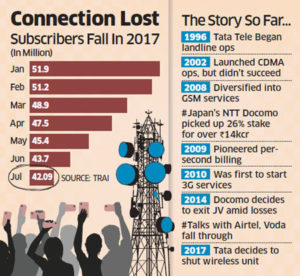
Scores and scores of Tata Teleservices employees anxiously wait for the newspaper-wallah every morning. Getting their hands on the pink sheet, they pore through it with an alacrity of a cat sitting on hot cinders. Most of them have even taken up to surfing business portals on their mobile phones, even while brushing their teeth. And if that’s not enough, they would invariably be watching a business channel as they sip on their morning cuppa of tea.
The reason all these folks from Tata Tele have suddenly become so “news aware” is because their future are jeopardised. The company has been undergoing crisis for the past many months, and big changes are in the offing. Thousands of jobs at stake, so many careers hang in balance. But instead of providing hope, succor or reassurance to the hapless employees, the top management at the company seemed to have clammed up. They just went incommunicado. There was no clarity, or statement from the internal stakeholders. Except possibly for all the speculative analysis that was being discussed and deliberated in the newspapers and the portals. As one senior employee confessed to me wryly:
“ We get to know things from newspapers, not from our people.”
So this week when the employees received an email about a town hall by the MD Srinath Narasimhan, the signs were pretty ominous. The workforce was sure that some big decision would be announced, and the rumor mills went into an overdrive. The unsure people were clutching to any info tidbit as a clue to what will be the future course for the company.
The town hall was scheduled for Friday (the 13th) at 3 pm. And then a day prior, the news broke up on business channels and news portals. Tata Teleservices had decided to sell off it’s mobile business to Bharti Teleservices (Airtel), merge it’s enterprise business with Tata Communications (TCL). And apparently, the broadband part, the landline and photon will become a part of the Tata Sky. The newsbreak played through the day, with even the Group Chairman N Chandra talking about the decisions taken by the embattled Telco.
The floodgates had opened up for the employees.
Around 5 pm, a mail arrives in the official account of the employees, with the subject line “Employee Communication”. It’s a note from the MD’s desk, talking about all the things that’s already playing on TV. The mail talks about the impact on business and the reason for taking such a call, but oddly, it misses upon the most important point– reassuring the employees about their future. The email talks about business continuity but not employee continuity. There’s just nothing there to provide succor to an anxious heart or a worried mind.
And that brings us to the crucial contention, “Do Employers owe it to their employees to reveal firsthand any such wide impact occurrence?” Or to put it plainly, shouldn’t the management speak to their own first, before announcing it to the world?
Clearly, there’s no convention that states that an employer is obliged in any or whatsoever way to it’s employees. For instance, when a company I was working with went belly up, the MD didn’t even bother to tell me that the salary won’t be arriving in my account that month, and neither will all those that were pending for a few months. Finding a new job quickly became a priority, even at the cost of compromises on the salary. The EMIs went into a toss, the savings went dry, the PF piggy broken. It was a mind-numbing traumatic time, like someone had punched in a Ctrl Z.
But then, my ex-employer did not come with a Tata tag. Neither did it come with a legacy of over a 100 years. Of course the Telco business had been disrupted badly by the arrival of a new player on the scene and botched up by shaky government policies. But then for an employee, the Tata name is like a travelers check from American Express, it won’t let you down, it is not supposed to.
Without dwelling on the business side, let’s just say that there are many lessons that can be drawn from Tata Teleservices saga. Lessons on how NOT to communicate with your employees. Here’s a quick summary of it:
Communicate regularly
Doing business is not everyone’s cup of tea. Even the biggest fail and the smallest succeed. The woes faced by the Indian Telco sector is pretty obvious. The people employed in the sector are well aware of the challenges. But yet, communication is always a must. Good companies tend to regularly engage their employees through newsletters, intranet, or even internal social media tools like Yammer. Communication should be a regular affair, irrespective of crisis or not. Continue reading …
Back in September 2014, when India’s Mars Orbiter Mission or Mangalyaan had successfully traversed the wide interstellar space to place an Orbiter in the Red Planet’s orbit, there was much celebration, clamor and much pride on the achievement. After all, only a handful of countries had been able to achieve a feat like that, and more importantly our Dragonish neighbor had failed to do that. It was a moment of super-duper pride for Indians, something like winning a Cricket World Cup twice and that too by thrashing the Pakis in the finals by a big-big margin. Mangalyaan was really so big.
Yet, even among the cheer and confetti around, there were a few discordant voices that could be heard talking about things like the usability, feasibility, of a mission like that. “One-third of Indians don’t have access to regular power or water, yet we splurge money on fancy space missions. Let’s concentrate on the basics, and leave such things for the Americans and their NASA. Kya zaroorat hain yaar!”
Now, this logical reasoning, juxtaposing any project spend with rampant poverty is a favorite bogey of the intelligentsia in India. Sipping duty-free Chardonnay and munching on salamander tikka masala, the irony if their views are never lost in these very brainy folks. The poor-poor chorus had been playing for much too long, like some background music in our Hindi films.
The launch of bullet trains in India has brought out this music again. Everywhere that I see, I am confronted by the sheer analytical and logical reasoning of why bullet trains are an expensive fancy waste, or how the economics is all wrong on this one. Intelligent and intellectual folks are deriding the project on a variety of reasons, from financial to political. All this negative coverage is surprising, after all, shouldn’t we be celebrating one of the biggest infrastructure projects in modern times. Didn’t the naysayers similarly debunk the ₹15000 crore Mumbai-Pune Expressway, and guess what they are doing these days, crying about the traffic jams on the 100 km stretch.
So what’s the bit about the Bullet trains, is it really expensive and unnecessary? Let’s deal with some of the primary arguments against the project on a case to case basis.
At ₹1,10,000 crore, it is a bullet TOO costly
In deed the Bullet Trains are costly. Why else, would so few countries have them and not all. Okies, so we know the story, the Japanese have loaned India some ₹88,000 crore at some very favorable terms like 50-year time frame with 0.1% interest, a moratorium on payments for 15 years, etc. The rest ₹20,000 crores will come from India. Now, as Aakar Patel argues on Firstpost, the figure is “three times the size of India’s health budget” and goes on conclude that the Bullet Trains “will be a vanity project, sucking money that could be used for health and education”.
But then, every infrastructure project is always a costly one. Building infrastructure always requires money, it is fairly obvious and simple. To give an instance, here are a few projects with their approx cost in the brackets:
Gujarat International Finance Tech-City or GIFT City (₹60,000 crore)
Golden Quadrilateral (₹30,800 crore)
Navi-Mumbai Airport (₹16000 crore)
Yamuna Expressway (₹12,839 crore)
Netaji Subhas Chandra Bose International Airport (₹2,325 crore)
Mumbai Freeway (₹1250 crore)
Ever since India’s first Prime Minister Jawaharlal Nehru launched the ₹ 250 crore Bhakra-Nangal in the 1960s, we have been forever evaluating the cost in terms of infra-spend. A nation that will soon be the most populous nation on the planet does not have a luxury to not spend on infrastructure. We need the highways, roads, the metros (the Delhi metro at ₹552 crore per kilometer, it is one of the costliest), as much as we do healthcare and education. Government spending in infrastructure is also a great way to boost sagging economy, it generates employment, helps businesses, etc. And finally, don’t forget, Bullet Trains are not a social project, they will run like a business, charge a premium, etc. Given the favorable terms of lending, the overall cost is quite justifiable. The big worry is not the initial assessment but rather the cost overruns. Almost all infrastructure projects in India are delayed and exceed the projections if the Bullet Train go through the same rigmarole, then it will turn unfeasible and costly. The best (or rather the worst) instance of this is how India acquired INS Vikramaditya, or aircraft carrier Admiral Gorshkov, from Russia. The initial cost was some ₹6000 crore, but instead ballooned to ₹ 16,750. For a decommissioned aircraft, this was a much higher cost to pay.
Today happens to be the last day of the Ganapati festival. Especially in Maharashtra, and more so on Mumbai, the festival is celebrated with such pomp and fervour that it would amaze anyone. Speaking from a religious hat, Ganesha, the benign elephant god after visiting tera firma for some ten days, will now be returning to good heavenly abode, among energetic chants of “Ganpati Bappa Morya, Puchta Varshi Lavkar Ya” (All hail Ganapati. Please come early next year). There such an energy that flows through the city, that it envelops you and affects you. Witnessing all the myriad Ganeshas being taken out for visarjan (ritualistic immersion), amid chants, drums and flowers, it’s hard not to feel happy and charged up at the same time.
But sadly this feeling doesn’t really for long. Over the next few days, one will be confronted with the scale of mindless degradation, of the water bodies, of grounds, it saddens you a quite a bit. Newspapers will publish photos of washed up idols of Ganesha strewn across the beaches of Mumbai. A few familiar voices that try to leverage every thing for a personal PR, will suddenly appear on the scene and start with their familiar spiel of how the city is unable to cope with the sheer scale of the festival, they will ramble about the destruction of mangroves, of beaches, of the Arabian sea, and once they have got their 15 mins, they will shut up and into in hibernation.
This whole environmental/ecological discussion has almost turned into a cycle, the narrative moves along familiar ways. It isn’t that the people at large have been oblivious or ignorant to the ecological impact of the visit by the celestial god. The immersion prices gas been largely streamlined, you can’t just immerse the idol anywhere that catches your fancy. There are designated points, there’s a process, and more importantly, there are people from the administrative side that oversee and conduct the whole process. Over the past couple of years, the judiciary too has done it’s bit in bringing some necessary checks and balances, the high court especially has been quite proactive in clamping down on noise pollution, or pulling up the government for shoddy work done.
On the common folks level, people have become sensitive and concerned about how the commonly available plaster-of-Paris (p-o-p) idols truly besmirch the lakes, rivers and the sea. Idols crafted with mud (Shadu mitti) are costlier but quite common. There are now idols that are available that dissipate into a potted plant, once the festival passes. Even the media, more so the FM radio channels drive home the point quite laboriously through many days before the festival.
Personally, I have grappled with such issues myself, thrice has the elephant god visited my place, making me aware of the kind of challenges that present themselves, even when you are willing and keen to go green. While my first idol was a p-o-p one, the next two were of shadu mitti. Ideally, that should be making me happy and glad, as I seem to have have done my bit by going the “eco” way. But I frankly am not.
It’s only when, we started bringing in Ganesha at home, did I realise the scale of issues that confronts you. Greening in the idol is just one aspect of the festival, there’s much that needs to be done on that front.
Especially this year, I started to make notes of the environmental impact or rather the CO2 footprint of the Ganapati fest. In fact, we even tried to go in for eco-products in our quest to go green. It was costlier, but felt good. Yet, it is really not enough.
To give you an idea, let me enumerate with a few thoughts.
Beginning with the idol, while many people are now going in for eco-ganeshas (made of mud/clay) we embellish the idol in not-so ecological paints. The idols are painted in vivid colors, and accessorized with glassy objects that are anything but eco. In fact, idolly — or ideally, the idol must be in the pristine condition that it is made, with a natural color that manifests itself. While there could artistic refinements, there should be minimal embellishment of the idol itself. Continue reading …





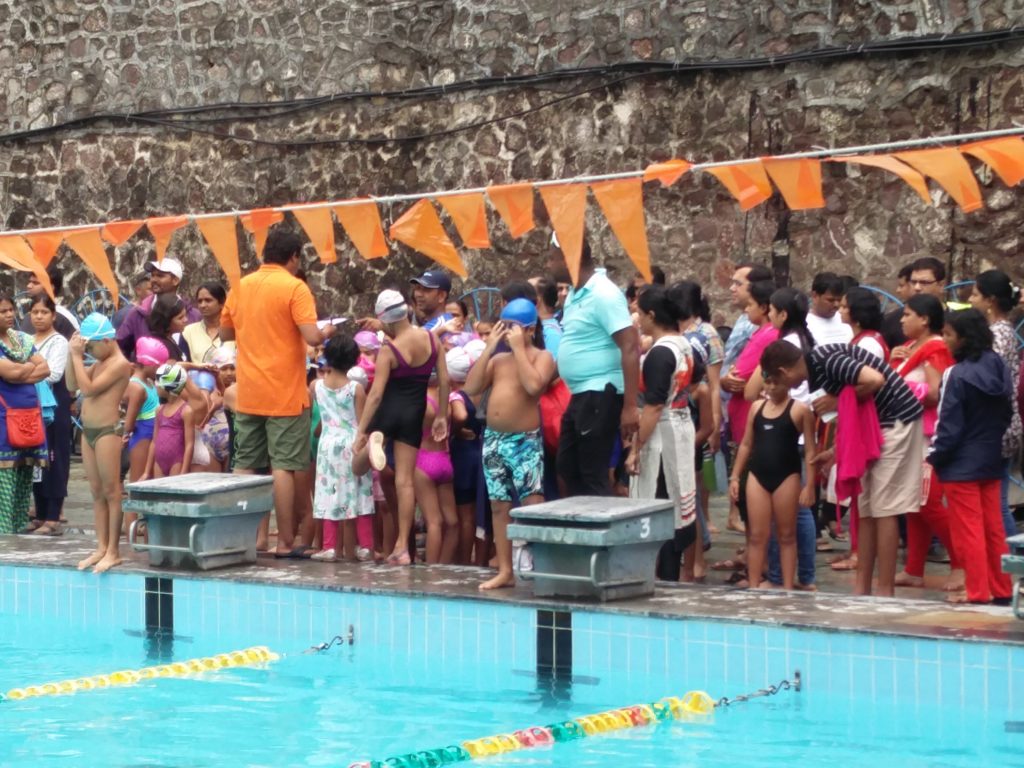
 different, it is an abiding passion that not only sucks in the sportsperson but also their folks, their parents.
 The good thing is that, once away from the pool, the Swim-Dad displays normal tendencies, but now and then, some mutations occur and the Swim-Dad is equally obsessive even in while sitting in the living room.
 because their future are jeopardised. The company has been undergoing crisis for the past many months, and big changes are in the offing. Thousands of jobs at stake, so many careers hang in balance. But instead of providing hope, succor or reassurance to the hapless employees, the top management at the company seemed to have clammed up. They just went incommunicado. There was no clarity, or statement from the internal stakeholders. Except possibly for all the speculative analysis that was being discussed and deliberated in the newspapers and the portals. As one senior employee confessed to me wryly:
 Clearly, there’s no convention that states that an employer is obliged in any or whatsoever way to it’s employees. For instance, when a company I was working with went belly up, the MD didn’t even bother to tell me that the salary won’t be arriving in my account that month, and neither will all those that were pending for a few months. Finding a new job quickly became a priority, even at the cost of compromises on the salary. The EMIs went into a toss, the savings went dry, the PF piggy broken. It was a mind-numbing traumatic time, like someone had punched in a Ctrl Z.
 “One-third of Indians don’t have access to regular power or water, yet we splurge money on fancy space missions. Let’s concentrate on the basics, and leave such things for the Americans and their NASA. Kya zaroorat hain yaar!”
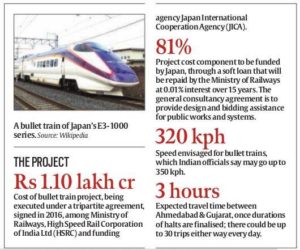 economy, it generates employment, helps businesses, etc. And finally, don’t forget, Bullet Trains are not a social project, they will run like a business, charge a premium, etc. Given the favorable terms of lending, the overall cost is quite justifiable. The big worry is not the initial assessment but rather the cost overruns. Almost all infrastructure projects in India are delayed and exceed the projections if the Bullet Train go through the same rigmarole, then it will turn unfeasible and costly. The best (or rather the worst) instance of this is how India acquired INS Vikramaditya, or aircraft carrier Admiral Gorshkov, from Russia. The initial cost was some ₹6000 crore, but instead ballooned to ₹ 16,750. For a decommissioned aircraft, this was a much higher cost to pay.
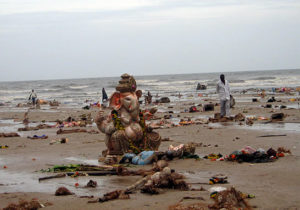 water bodies, of grounds, it saddens you a quite a bit. Newspapers will publish photos of washed up idols of Ganesha strewn across the beaches of Mumbai. A few familiar voices that try to leverage every thing for a personal PR, will suddenly appear on the scene and start with their familiar spiel of how the city is unable to cope with the sheer scale of the festival, they will ramble about the destruction of mangroves, of beaches, of the Arabian sea, and once they have got their 15 mins, they will shut up and into in hibernation.
 Personally, I have grappled with such issues myself, thrice has the elephant god visited my place, making me aware of the kind of challenges that present themselves, even when you are willing and keen to go green. While my first idol was a p-o-p one, the next two were of shadu mitti. Ideally, that should be making me happy and glad, as I seem to have have done my bit by going the “eco” way. But I frankly am not.