Nimsdai: The Man Who Conquered Mountains?

There is something about successful people that we resent, especially when they have risen through the ranks. Their ascent underscores the smallness of our own existence of how we have wallowed in the bottom while these people made it to the very top through the force of their will and determination, by not following conventions, by breaking all rules and norms and in that process leaving their personal imprint. Our lives are but imprints on the sand of time, while theirs is a marker etched for ages.

We admire these souls even as we envy them. We gape at their ascent and somehow celebrate their fall. It’s the heel that we look at in every Achilles.
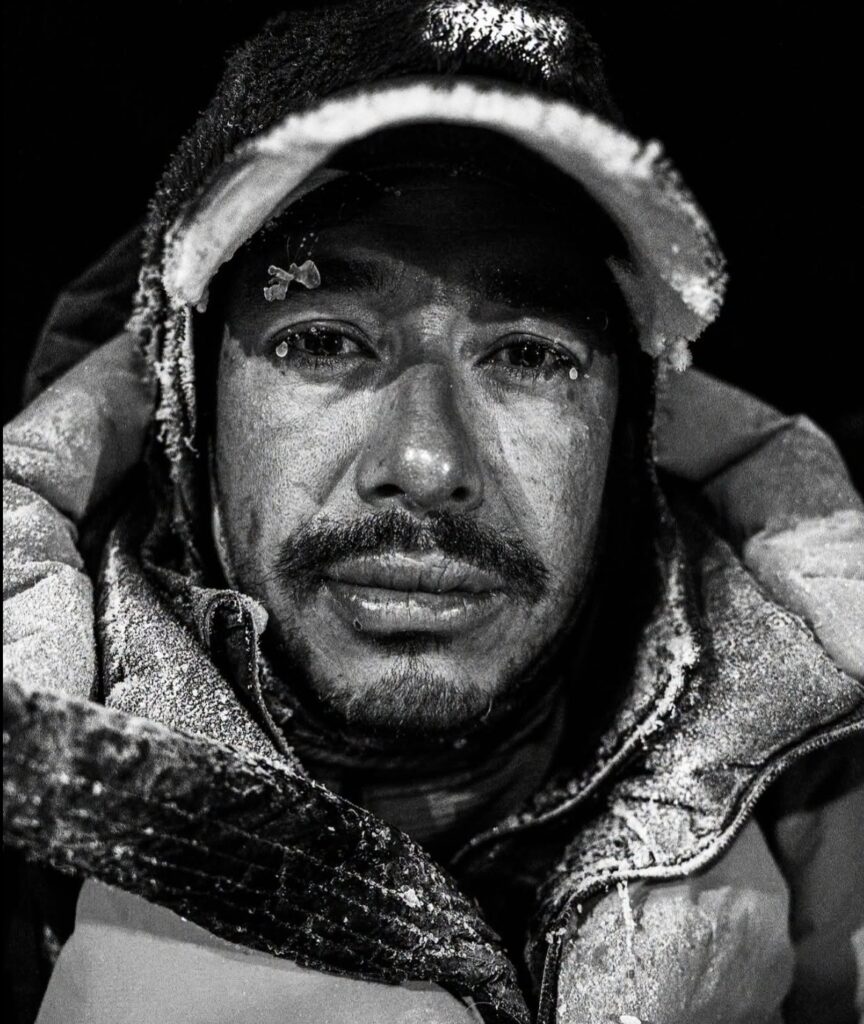
The story of Nirmal Purja or Nimsdai, as he was popularly known, follows the same pattern. The irony of it is that it took an avalanche to stop him.

Nims’s death on Broad Peak in Pakistan brings an untimely close to a chapter in mountaineering history: the story of a man who, in a matter of a few years, created a name and legacy that will inspire people, and that many will revile.

It was in 2019 that this man from Nepal barged his way into global news with his extraordinary feat of summiting the 14 highest mountain peaks in the world (the 8000ers) in less than seven months. The previous record had stood at seven years, and this man, with his seemingly insane bravado and chutzpah, scaled these peaks like we undertake a morning walk at Lalbagh, climbing the little hillock there.

But while his achievement stood out in the news, it was actually the documentary on Netflix “14 Peaks” that turned him into a global icon. The documentary was released in 2021, and “Nothing is Impossible” was a mantra that inspired many mountaineers.

There is one clip in particular during one of his ascents, when other climbers are in doubt about going through with the climb, he smiles to the camera cheekily and says, in a sing-song way, “Giving up is not in the blood, sir.”

One could argue that he was no Hillary, Norgay, or even Messner, and he seemed quite aware of it. Instead, he was always wanting to do better than them. There is this anecdote of Michael Phelps, the most decorated Olympian in human history, when a younger version of him was told that he had a chance to be the second Mark Spitz (another record-breaking Olympian), he scoffed at the suggestion, stating that he rather be the “first Michael Phelps.” In that sense, Nims was not a mountaineer, the kind who simply enjoyed the challenge of going up the mountain and pushing themselves against the limits. He was a competitively charged sportsman for whom limits were merely a hurdle to overcome – someone who wants to be on the podium under the arclights.

Through the times, we have witnessed how mountaineers metamorphise when they summit a peak. Astronauts who blast out into orbit undergo something similar, it is called the Overview Effect. Looking at the planet from above, their perspective undergoes a change. They don’t see boundaries, countries, or borders, but a fragile blue planet in the seemingly endless darkness of space.

Similarly, standing at the top of Everest, mountaineers realise the fragility of human life and the sturdiness of human will. Standing at a height, at which commercial planes operate, with the clouds underneath their feet – it is hard not to feel invincible. But those agonizing hours in the death zone, where every step is an achievement by itself, there is also that respect for the elements, for nature. There is a realization that sort of creeps in – the ascent and the summitting was not an act of subjugation or triumph. But rather a fortuitous benediction, a passage that was granted to them. Standing 25000 feet closer to heaven, you become aware about the power of the elements – lets call it the Overstanding Effect.

Did Nims feel the same reverence towards the mountains?

Maybe. But he didn’t really show it, if at all he felt it. For him the peaks were there to be summited, mastered to be conquered, to be vanquished.

He did grant some allowance to the forces of nature, when he underscored that he did not take the mountain for granted and asked for a safe passage. But ultimately he believed in himself. “The biggest strength I have is, I have no fear.” Like Phelps, he scoffed at conventions, when people expressed doubt at the possibility of his 14 Peaks project, he dubbed the endeavour as Project Possible, a sort of a middle finger to his naysayers.

In the documentary, there is one sequence that truly stumped me. Generally, any expedition to the Everest peak or any other starts in a sombre manner. In a sort of ritualistic way, with the climbers performing puja, beseeching the mountain gods for safe passage.

On 12th of May, 2019, he summits Dhaulagiri – the second mountain in his project. He then travels to Kathmandu for a meeting a client, who could be an important funder. He parties with the client all night drinking and dancing till 6 AM. Then, without resting he proceeds directly to Kanchenguna, the third one of his project, and reaches the summit in a single ascent from bottom to top. In the video, he seems so groggy and high that it seems absurd he was able to do it at all. You could credit the climb to his elite forces training, his endurance or even to the acclimitisation. Yet, even accounting all the possibilities, this one was an extraordinary feat. Somehow, between the rituals and the revelry, it makes you wonder if the mountain gods have truly lost their mojo. I mean, if someone could amble up an 8000er in a hangover, what’s the fuss about all that reverence and deference? Is the sublime soluble in alcohol?
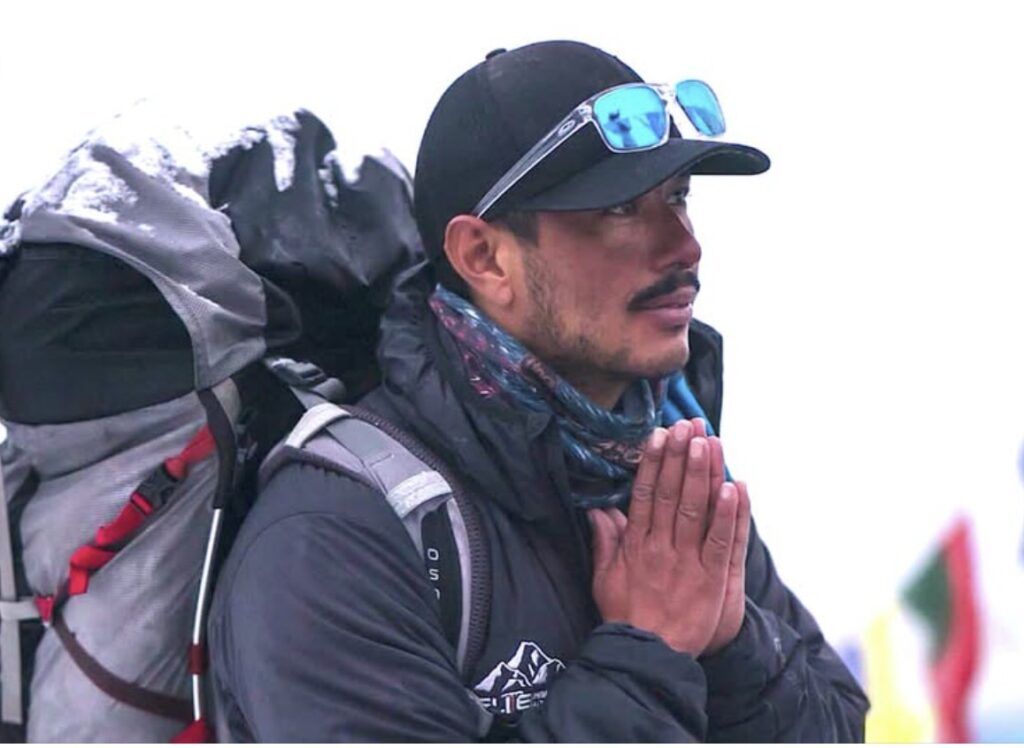
This is where Nims was different from us Middle Earth people, who are thankful to fate and the powers above for whatever little or more scraps destiny throws at us. Not Nims, he believed he deserved a lot more, and would snatch his glory from the gods if they dared stand in his way. Life became a relentless pursuit of the next summit. After tasting success and creating a record that would be hard to emulate, Nims did not sit back and start enjoying the fruits of the work by writing books and giving talks. Well, he did do all that, but he wanted to do something harder, something almost impossible to emulate: creating one mountaineering record after another. And so he did:

The first winter ascent of K2. All 14 peaks without supplemental oxygen. The first person to complete all the 8000ers and the Seven Summits. A record number of 8000ers climbed. Eighteen Guinness World Records.

When his 2019 ascent of the 14 Peaks was questioned over the use of supplemental oxygen, he climbed all 14 peaks again without oxygen support to prove his superiority. This time, it was 2+ years instead of 7 months.

His expeditions were arduous and tough, but also very organized. He ran it like a well-oiled machine, helicopter transfers, fixed ropes, hardened and dedicated set of Nepali sherpas in his team. He created a commerce-driven ecosystem with him at the very centre – with companies like Elite Exped, Nimsdai Store, Nimsdai Foundation, Skydive Nimsdai and so on.

Nims was not only hard-headed mountaineer, but also a canny businessman – smart and astute. He was well aware of the power of story-telling. He built this aura of invincibility around him. He was the brand, the icon – the living embodiment of Nothing is Impossible mantra. All his posts on social media featured him and him alone. And he had lots of followers – on Instagram he had over two million followers; on X (formerly Twitter) more than 100,000; on YouTube, 500,000.

This was the commercial engine, through which he was raking in the money.

The irony is that in 2019, during his climb to the top of Everest – he had taken and posted a picture of the traffic jam to the top – showing hundreds of people lining up in a single file on Hillary step to reach the top. The picture went viral sparking a debate on commercialization of mountaineering – especially on Everest.
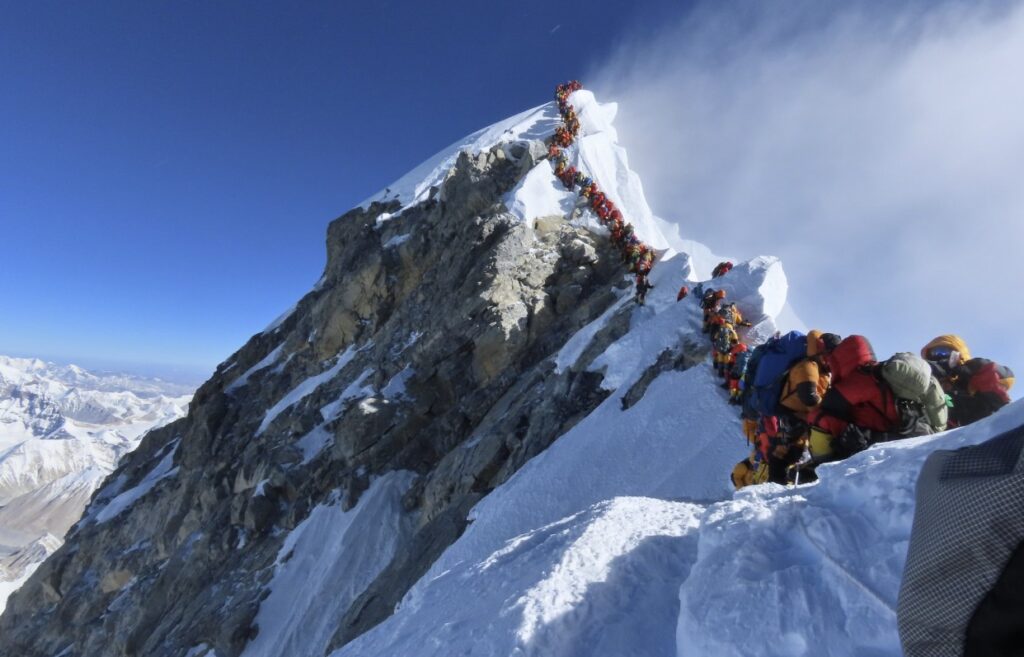
In 2019, Nims was hinting at this commercialization and by 2026, he was a prominent beneficiary of it.

Nims explained this contrast by talking about the benefit this accrued to his country and his people. Despite being a UK citizen, Nims was a proud Nepali within. Time and again he emphasised how Nepali climbers, especially the Sherpas and the porters, went unrecognized despite of them ascending the summits multiple times in their lifetimes. To right these wrongs, he set up a core team of Nepali climbers who seemed to share his passion and chutzpah.

In the Netflix documentary, when he completes the mission, he pronounces loudly that had a Westerner or a white man conquered the 14 Peaks in this record time, there would be ten times more renown and acclaim – it was a grouse of a brown man living in a world designed to deify the white man. And this was something that he railed against through his life, about being vilified, or being scorned and belittled. The only way, he could break the hallowed citadel was through the sheer will of his determinations, through the bolts of his records. He knew that because of his origins, the accented English or the colour of the skin, he will never be accepted as one. But the mountains don’t make such distinctions, they do not judge or moralise. For them a brown, a white, or even a purple is all the same. It didn’t matter if the climber was humble or arrogant.

But his irreverence and the unconventional mountaineering style made him a target – he had many detractors. While Nims focused only on the summit and the ascent, a great alpinist like Reinhold Messner emphasised: “The summit is only halfway.”
People would constantly point to the purist approach to mountaineering, called Alpine style: doing it on your own, without much support or logistics. By that measure, Nims was surely a deplorable pagan, a barbarian.

In his short lifetime of fame and glory, there were other accusations too, from financial ones to sexual abuse. But in his characteristic manner, Nims fought back, loudly and strongly. He could not be cowed, neither by the peaks nor by his detractors.

He knew that whatever the outcome, so long as he stayed ahead of the pack, he would continue to reap the rewards. His focus was singular: creating new records. And that, in some way, was also his undoing.
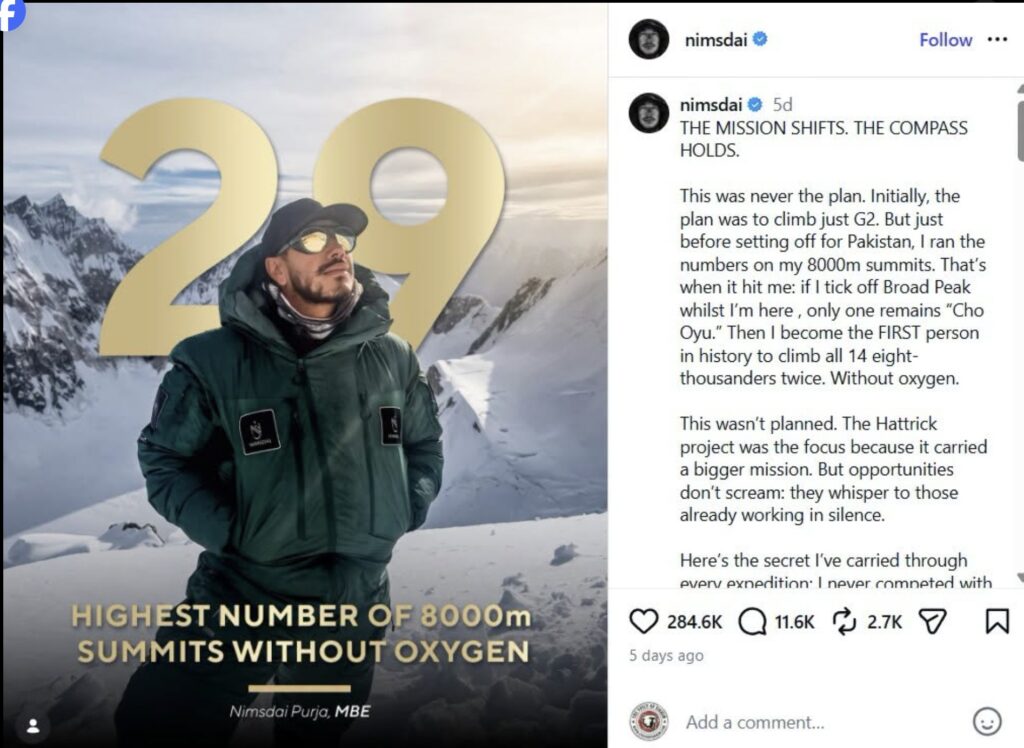
His last post on Facebook revealed that he was in Pakistan, climbing G2, and while preparing for the expedition, he did a number check: if he were to climb Broad Peak in Pakistan, it would be his 13th peak, and then only Cho Oyu would remain to be conquered, making him the first person in human history to have ascended the 14 peaks twice without oxygen. That would be his hat-trick record of climbing the 14 peaks, something, again, almost impossible to emulate.

Broad Peak had an interesting connection to Nims. During his first record-breaking attempt, after he summited Everest, Lhotse, and Makalu in 48 hours – becoming the first person to do so – he headed to Pakistan to climb the five treacherous mountains there: G1, G2, K2, Nanga Parbat, and Broad Peak, all the five 8000ers.

Nims ascended the five peaks in a record time of 26 days, a record that has been unsurpassed and is likely to stay that way for a long time to come. The last peak he conquered was Broad Peak. It was here that he created the record, etched his legacy.

It is also here that the Nims story comes to a sad end.

Perhaps the mountain gods, incensed by the irreverence and nonchalance of this mortal, were waiting for their chance, biding their time. They enticed Nims with a record-breaking feat, and then, when they had him vulnerable and in a spot, they crushed him under the weight of snow and ice.
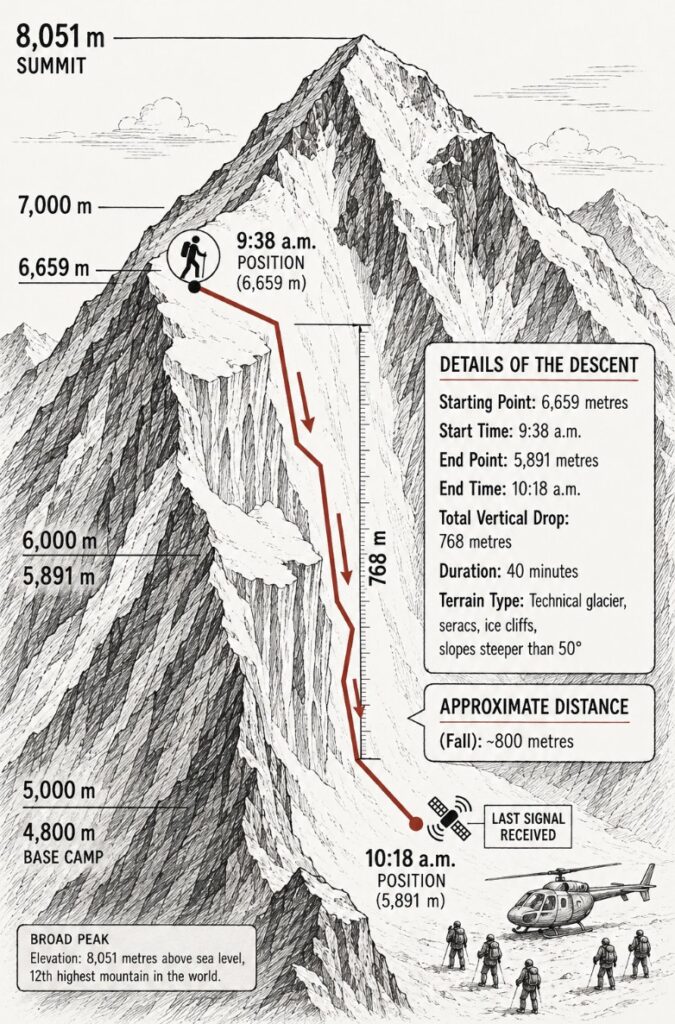
Through his short mountaineering life, Nims was famous for his rapid ascent. The quick strides whereby he would climb metres in minutes – reflecting on his superior physicality. The avalanche that extinguished his life took him on a rapid descent.

There is aphorism that goes something like – there are old climbers and there are bold climbers, but there are never old, bold climbers.

Nims was definitely a bold one. He now is part of an extraordinary league of legendary climbers who lost their lives in the very mountains they loved, starting from George Mallory, to Anatoli Boukreev, Alex Lowe, Ueli Steck to David Lama. The list is long and illustrious. Nims will be among the rarified stars.

In his brief life, Nims burnt through the stratosphere like a rocket. His life will become a folktale, people will retell, emphasising how dreams come true and how impossible becomes possible if you really believe hard enough. Destiny can be manifested.

Others will warn that ambition and arrogance are a heady concoction, that it will almost always result in tragedy. Don’t upset the fates, they will love to rip you out, they will warn.

That is quite understandable. After all, people who live and die in the safety of terra firma will never really know what it is to soar over the clouds, to be closer to heaven, to live and to breathe deeply, to drink heavenly ambrosia standing on the top of the world.

We will focus on the heels. But then, Achilles would never have it any other way. Rest a bit, Nimsdai, you finally can.

Continue reading
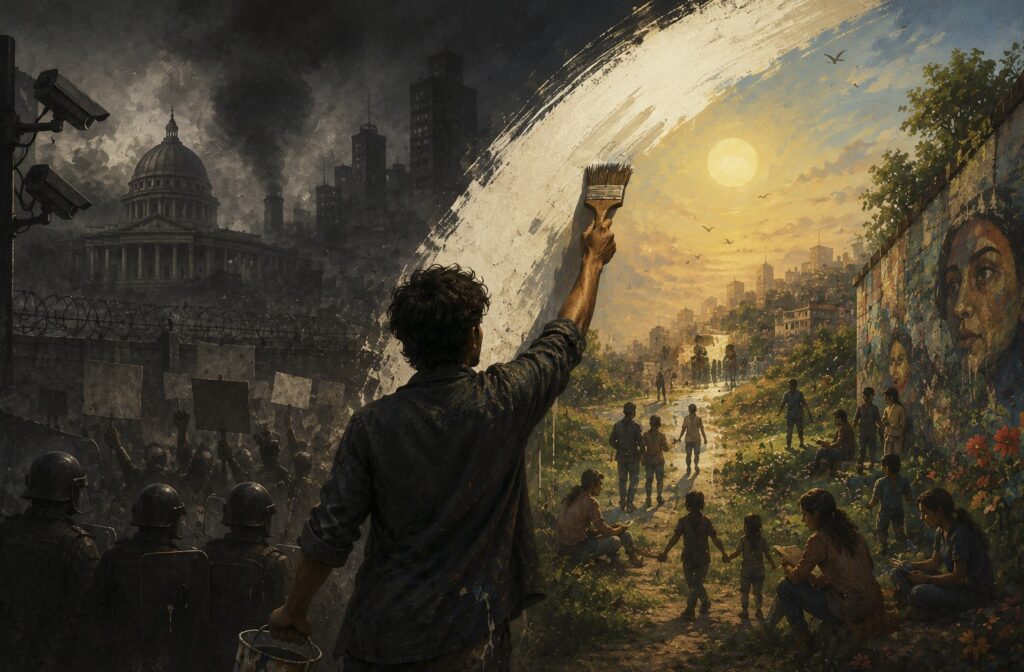
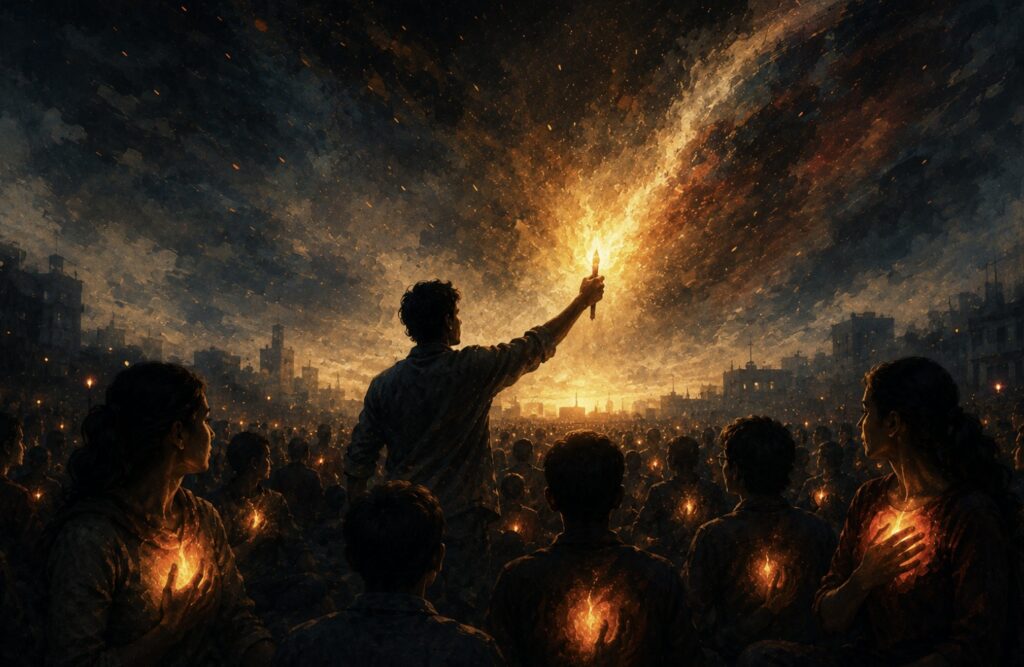
आग जलनी चाहिए — The Fire Must Burn

A post from a friend about a Malayalam movie, Amma Ariyan, forced me to confront what I had been trying to avoid for quite some time.

Like so many of us who live for the simple रोटी, कपड़ा, मकान and don’t want to be न किसी की तीन, न तेरह — ignorance, at times feigned, is an amazing cloak. It wraps you into a stupefaction, a sense of disbelief that even if “all izz not well,” it might just eventually be — and that when it does end well, all will automatically be well.

It is this meekness within you that covers your vision — rendering you unable to see things the way they are, or to come to terms with reality as it is.

Over time we tend to become so much like the courtiers in the Emperor’s New Clothes — muffling our conscience for a little bit of peace.

And then, when the curtain over our eyes is jerked out suddenly, you are ashamed of your wretchedness, of your own weakness. The world suddenly seems so raw and unvarnished — you now have to confront the sheer wantonness that is so ubiquitous, the squalor, the putrefaction of values, the sheer morbidness.

It is suffocating — how could one buy peace in such conditions? How can one come to terms with it?

It is disgusting, infuriating — you hate what’s around you, and also what you have become, buying scraps of peace with conscience as the currency. But now the price seems just too high.

And just when you are sort of drowning in this slough of despondency, Dushyant Kumar appears like an apparition — speaking words of revolution, of change. His words give warmth, they give hope, and most importantly, they give you a roadmap of how things could shift.

हो गई है पीर पर्वत-सी पिघलनी चाहिए,
इस हिमालय से कोई गंगा निकलनी चाहिए।

His short poem — ho gayi hai peer parvat-si… — is an anthem of revolution, of courage, of standing up, of not giving up.

आज यह दीवार, परदों की तरह हिलने लगी,
शर्त लेकिन थी कि ये बुनियाद हिलनी चाहिए।

This does not imply making a compromise with either the system or its stooges — maggots that have grown fat feeding off the lard of corruption, even as they dress up nobly and act saintly. The system needs to be dismantled. It needs to be overhauled.

हर सड़क पर, हर गली में, हर नगर, हर गाँव में,
हाथ लहराते हुए हर लाश चलनी चाहिए।

We need deep-seated change — a shift away from all the encumbrances that bind us down: caste, creed, language, religion. These compartmentalizations must be eviscerated. A system plagued by rampant inequity and steeped in corruption cannot, and must not, be allowed to beguile or misguide us any longer.

सिर्फ़ हंगामा खड़ा करना मेरा मक़सद नहीं,
मेरी कोशिश है कि ये सूरत बदलनी चाहिए।

Many times in the past there have been moments when people rose, only to retreat when confronted by the state. Silence is the price the system demands. And ironically, disquiet is the only way the system can be jolted. Whether it will change or shift, one can’t say — but that should not deter us from the objective.

मेरे सीने में नहीं तो तेरे सीने में सही,
हो कहीं भी आग, लेकिन आग जलनी चाहिए।

The only regret is that the bravado that comes with youth is often amiss elsewhere. Experience is a lousy teacher — it teaches only profit, ROI, benefit, survival. It does not concern itself with society, nation, or state; it prioritizes only self-preservation.

Little wonder, then, that it is the young who are at the front, leading the call for change — getting whacked, getting beaten, and yet persisting. It is they who give us hope of a possible breakthrough.

हो कहीं भी आग, लेकिन आग जलनी चाहिए।

Indeed, the fire must keep burning and consume all — so that something new can be created from the rubble. Something that belongs to all of us, and to which we, in turn, belong.

Here is the full poem – without break

हो गई है पीर पर्वत-सी पिघलनी चाहिए,
इस हिमालय से कोई गंगा निकलनी चाहिए।

आज यह दीवार, परदों की तरह हिलने लगी,
शर्त लेकिन थी कि ये बुनियाद हिलनी चाहिए।

हर सड़क पर, हर गली में, हर नगर, हर गाँव में,
हाथ लहराते हुए हर लाश चलनी चाहिए।

सिर्फ़ हंगामा खड़ा करना मेरा मक़सद नहीं,
मेरी कोशिश है कि ये सूरत बदलनी चाहिए।

मेरे सीने में नहीं तो तेरे सीने में सही,
हो कहीं भी आग, लेकिन आग जलनी चाहिए।

— Dushyant Kumar

The Guru’s Arrow – by Kabir

सतगुर लई कमाँण करि,
बाँहण लागा तीर।
एक जु बह्या प्रीति सूँ,
भीतरि रह्या सरीर।।

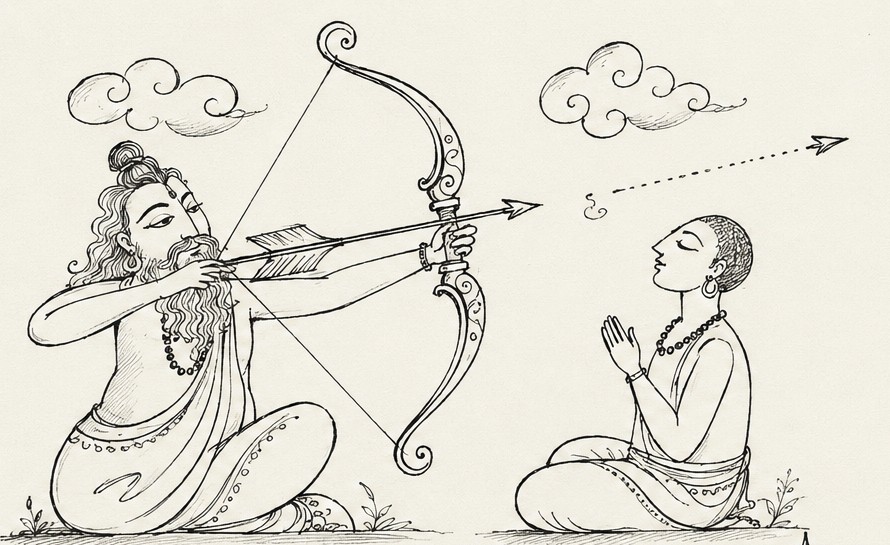
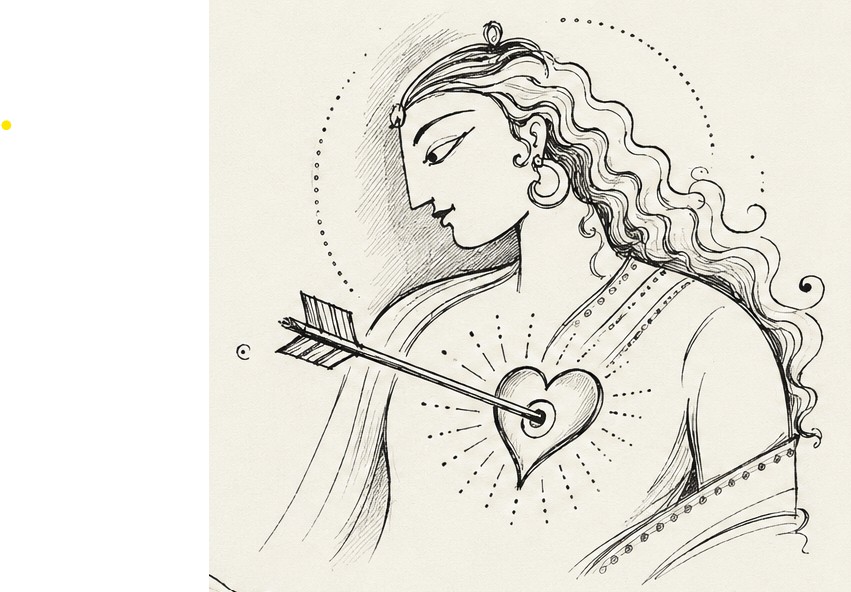
The satguru took up the bow, and let the arrows fly. But the one shot with love — that one stayed lodged within the body.

Finding a guru — or someone who opens up our inner consciousness — is a theme that repeats quite often in Kabir’s words. A life that has been untouched by the master almost seems worthless.

The ability to surrender abjectly in front of a person — to trust his words, his actions, his commands — to follow him — is a thought that seems so absurdly impossible. How can one surrender? How can the rational mind take a backseat? It seems impossible and implausible.

Yet, I have read about so many such accounts — of Narendranath Datta meeting Ramakrishna Paramhansa and surrendering before him and becoming Vivekananda. And then, of course, there is the mythic Neem Karoli Baba, and so many of his followers who were touched by him. Not to mention the stories of Sai Baba, who has become a deity from a person.

Coming back to Kabir — the doha talks about how when an accomplished teacher comes into our lives, it undergoes a complete transformation.

सतगुर लई कमाँण करि,

As soon as the teacher picks up the bow, this is also symbolic of how the teacher accepts the pupil — he decides to invest his actions in transforming the shishya. This act of acceptance is itself the first threshold. The moment we cross that —

बाँहण लागा तीर।

the arrows start flying. The process is on, and in certain ways, relentless. The guru is not looking at compartmentalisation — he will not solely focus on one aspect, say, like Dronacharya taught Arjun the skill of warfare. But he will go beyond. Everything is under the range of his bows and arrows; everything that he does will bring that change.

एक जु बह्या प्रीति सूँ,

But even in his quiver, there is this one specific arrow that truly stands out — that is love, or devotion. Whatever else one might do in life — in terms of learning, acquiring skills, gaining experience — it is only when one is touched by that sensation of divine, cosmic love that one truly understands the real meaning of existence, the purpose of life itself, the real concept of Brahman — the universal force. It is only through love and devotion that we can realise the god.

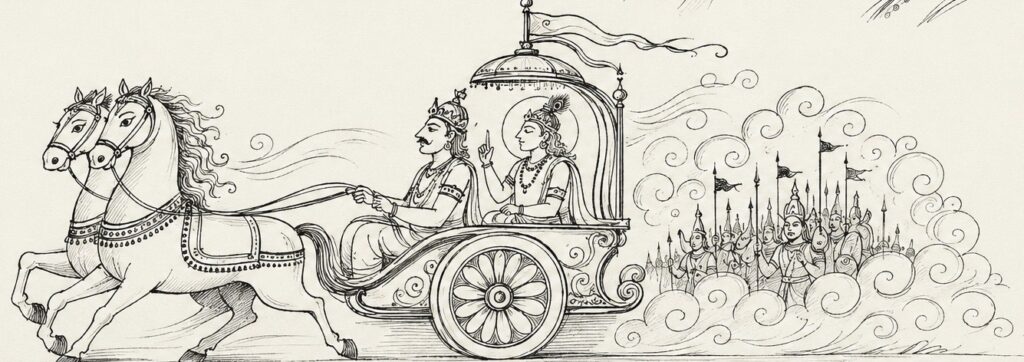
In short, a guru can be a transformative person — guiding you when you fail or falter — like Krishna, right in the middle of the battlefield, spelling out the course of action that must be undertaken, dispelling the doubts. But Krishna is unique. He is celestial, divine, friend, and also the guru — he is the arbiter, and the one to whom all our actions accumulate. When he declares — अहं ब्रह्मास्मि, “I am the universe” — it doesn’t seem like a claim, but merely an attestation of fact.

भीतरि रह्या सरीर।।

And now, when that arrow of love and devotion pierces through us, it embeds itself. It transforms. It does not leave us. This is the arrow that takes us down the road of realisation — toward union with the Brahman.

Every other arrow the guru shoots — knowledge, skill, discipline — does its work and is spent. Only this one stays lodged. Only this one keeps working on us after the guru has stopped teaching, after the lesson is long over.

Because this arrow does not just point outward, toward the Brahman. It turns us inward, first. We meet ourselves. And it is only by that route — through ourselves — that we meet our maker.

The Saffron Surge: How the Shadow of Dhaka and the Promise of the Sword Flipped Bengal

The elections in West Bengal are done and dusted. Yet, things seem far from settled. Former CM Mamata Banerjee has refused to step down, and violence has flared on the streets, including looting and the high-profile killing of Suvendu Adhikari’s PA. It appears it will be some time before normalcy returns to Bengal.

Not surprisingly, the media is in a frenzy. The saffron wave that unseated Mamata Banerjee after 15 years has become the singular focus of newsrooms and op-eds. The scale of the BJP’s victory is not only unparalleled but, frankly, unimaginable. Every analyst worth their salt is dissecting the reasons behind this seismic shift—from the Special Intensive Revision (SIR) deletions to anti-incumbency, and from governance failures to perceived arrogance.

As the battery of psephologists takes a breath, political observers have begun crediting the BJP juggernaut for the landslide—primarily the duo of Prime Minister Narendra Modi and Home Minister Amit Shah. We are reminded that this result was 15 years in the making; how Amit Shah made it a life’s mission, spending 15 days and nights in Bengal (apparently, sidelining his ministerial duties, but let’s not say that). We are inundated with statistics: the number of rallies by the PM, the roadshows by the Home Minister, and how booths were managed—or, as some might say, how votebanks were “mobilized.”

To get a clearer picture, let’s look at the data. In this election, the BJP won 207 seats with a vote share of 45.84% (approx. 29 million votes), while the Trinamool Congress (TMC) was relegated to 80 seats with 40.80%. For context, in 2021, the BJP held 77 seats (38.15%) while the TMC won a handsome 215 seats (48.02%). The overall voter turnout was historic at 93%, with approximately 6.55 crore votes polled out of a registered pool of 7.05 crore.

The defining factor was the 7.2% swing away from the TMC. As the expert Yogendra Yadav noted in one of the appearances when the results were being declared; TMC’s vast grassroots connection could absorb a 5% swing, but anything beyond that would be calamitous. That threshold was decisively breached.

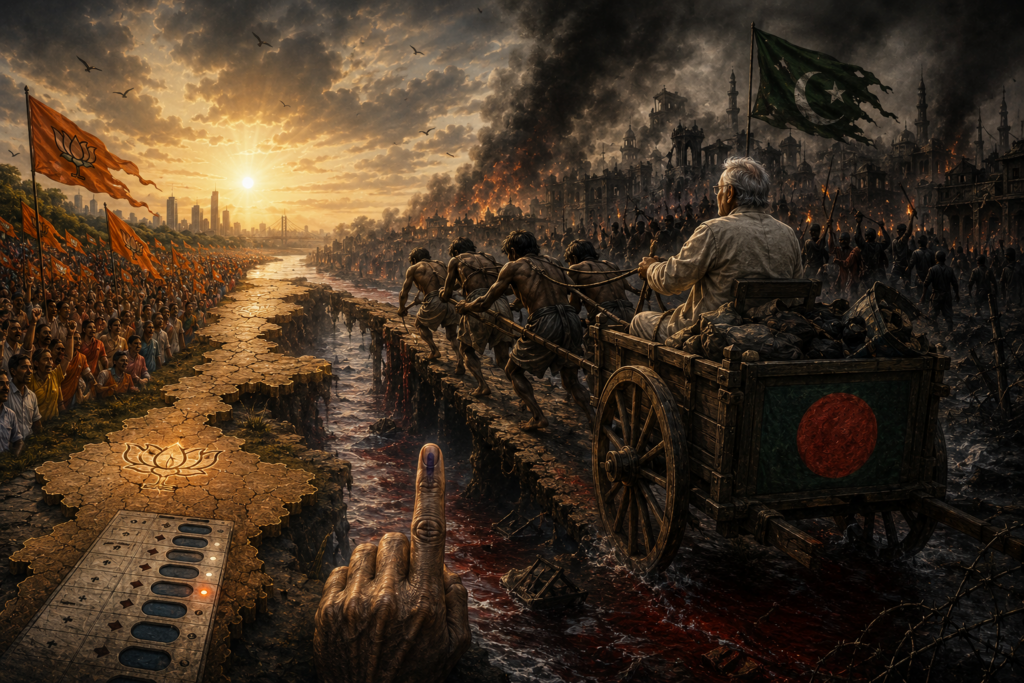
Where did this swing come from? It was driven by an unprecedented consolidation of the Hindu votebank. Historically, West Bengal’s demography—with a 27% Muslim population— they have played an important role in the politics of the state – especially because they are assumed to vote en masse as a bloc. With the Hindus divided around numerous lines, caste, class, language, the so-called Muslim votebank has always been a significant factor in Bengal elections. 

In 2026, for the first time, Hindus voted as a monolithic bloc. An estimated 65–70% of Hindu voters chose the BJP, up from 50% in 2021. Notably, 68.2% of Hindu male voters backed the BJP, while the TMC managed to retain only 38% of the Hindu female vote, a significant blow to their “Laxmir Bhandar” advantage.

The Bangladesh Factor

To understand this shift, one must look 70–80 km southeast of Kolkata. In August 2024, a student-led agitation unseated PM Sheikh Hasina in Bangladesh. Her escape to India led to a massive anti-India backlash across the border. In the aftermath, the interim government led by Nobel laureate Dr. Muhammad Yunus was unable to quell systematic violence against Hindus.

Throughout 2024 and 2025, reports of murders and the desecration of temples created a visceral sense of “existential threat” among West Bengal’s border populations. The BJP, with its unabashed saffron credentials, was perfectly positioned to reap this crop of fear. In districts like Nadia, North 24 Parganas, and Malda, the Hindu vote didn’t just grow; it exploded.

West Bengal shares a 2,217 km border with Bangladesh. The frontline districts account for roughly 115–120 seats. In 2026, the BJP won 92 of these seats, up from 48 in 2021—a growth of over 90%.

The Matua Factor and SIR

The Matua community (Dalit refugees) was the “X-factor” in this border surge. Constituting roughly 17.4% of the state’s SC population, they influence outcomes in 40–42 seats. This community was hit hardest by the Special Intensive Revision (SIR). Of the 91 lakh names deleted from the rolls, approximately 22 lakh were Matuas (though 1.9 lakh were later restored).

The fear of disenfranchisement led these voters toward the BJP, which promised them permanent status through the Citizenship Amendment Act (CAA). Consequently, the BJP swept nearly 90% of Matua-dominated seats.

The landslide was also fueled by the abject liquidation of the Left Front and Congress. In 2021, their combined 10–12% vote share acted as a buffer for the TMC. In 2026, this “Third Pole” crashed to a historic low of under 7.5% statewide (CPI(M) at 4.45% and INC at 2.97%), leaving them with just three seats combined.

Simultaneously, the Muslim vote fragmented. New players like Humayun Kabir’s Aam Janta Unnayan Party (AJUP) and the ISF sliced the TMC’s base. In Murshidabad and Malda, the AJUP won key seats like Rejinagar and Nowda, allowing the BJP to sail through the middle in Muslim-majority constituencies like Beldanga and Kandi.

Finally, the “Bangladesh Factor” permeated the middle-class consciousness of Kolkata and Howrah. The BJP’s narrative shifted from “Border Security” to “Urban Demographic Protection.” This resonated with a bhadralok class previously skeptical of the party, leading to the fall of TMC fortresses like Bhabanipur and Rashbehari.

Conclusion: The Sword over Supplication

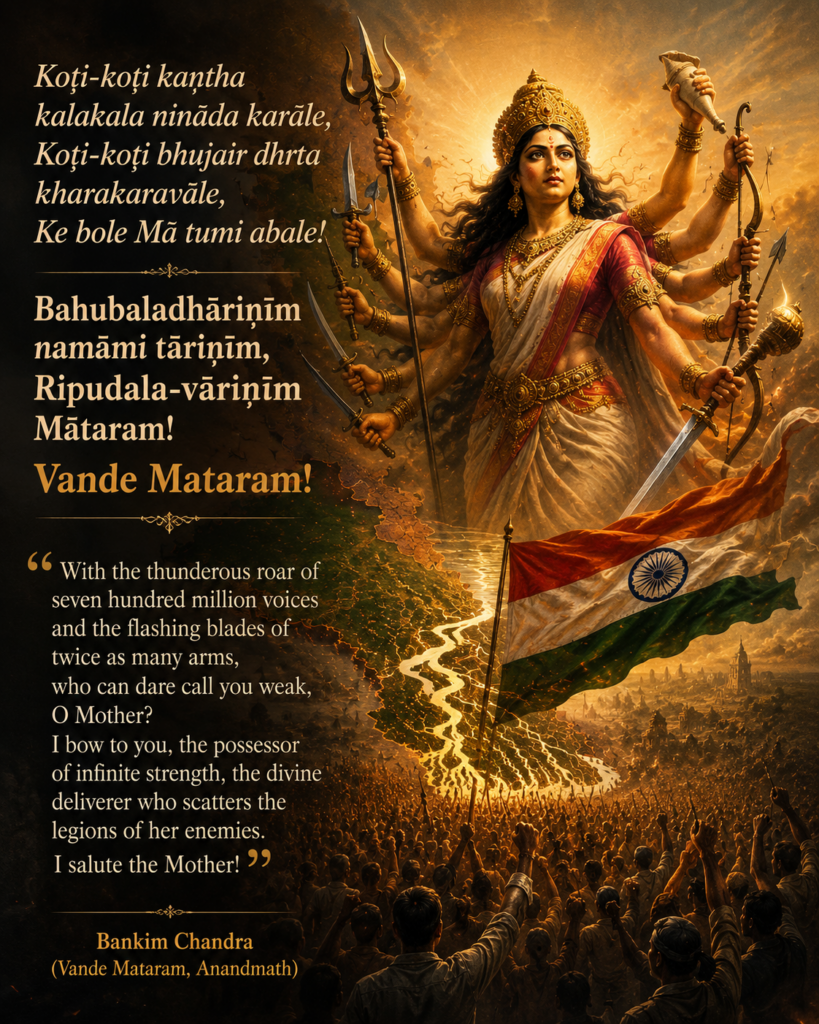
On December 8th, 2025, just months before the polls, the Central Government initiated a full-day debate on the national song, Vande Mataram. By highlighting the historic “injustice” of retaining only two stanzas, the BJP passed legislation restoring the full six. By invoking the militant spirit of Durga, the BJP portrayed its members as modern-day Santans—the ascetic warriors of Bankim Chandra’s Anandmath—defending the land against “aliens.”

In that sense, the ballot box in 2026 became the modern Anandmath, where the ‘Sword’ took precedence over the ‘Supplication.’

Narendra Modi – Prime Minister for Life!!!

Come June 4th, the results for the 18th Lok Sabha will be out. This will culminate a staggering exercise—the largest in the world—electing 543 members to the august parliament house. It will also be the culmination of a crushing electoral schedule spread over 44 days, with over 500 million votes being cast. 

Elections are not cheap—they are costly, quite costly. According to a report in Business Standard, “Based on previous years’ trends, the 2024 election is expected to cost approximately double the amount of the last election, amounting to a staggering ₹1,00,000 crore.” Approximately the same amount allocated to the education sector for a year (2024/25) is ₹1,12,899 crore. So, frankly — for a country like India, where we can do so much with scarce resources, elections are something that one should avoid. Especially if the outcome is decided beforehand. Democracy is not a panacea to all the ills, after all. Don’t believe me? Just look at the current state of affairs in India.

Going by all the reported, misreported or unreported trends, Prime Minister Narendra Modi will make a comeback. The debate is how strong that comeback will be—400, 370, 300, or even 250. “Abki baar char sau par,” is the war cry of BJP. The party increased its tally from 281 to 303 and now wants to take a giant leap. Will that be possible or not? That should be left for the vast Indian milieu to decide.

Yet, given that Modiji completely dominates India’s landscape, and will do so for a long time to come, thanks to the TINA (There Is No Alternative) Factor. Strong men are quite in fashion these days. Xi Jinping will be the head of China for life, Putin will rule the roost at the Kremlin till he is alive, and Erdogan has planted himself firmly in Istanbul. And these are not dictatorial countries; Russia had an election recently, and Turkey, not so recently. So, even democracy likes strong gents.

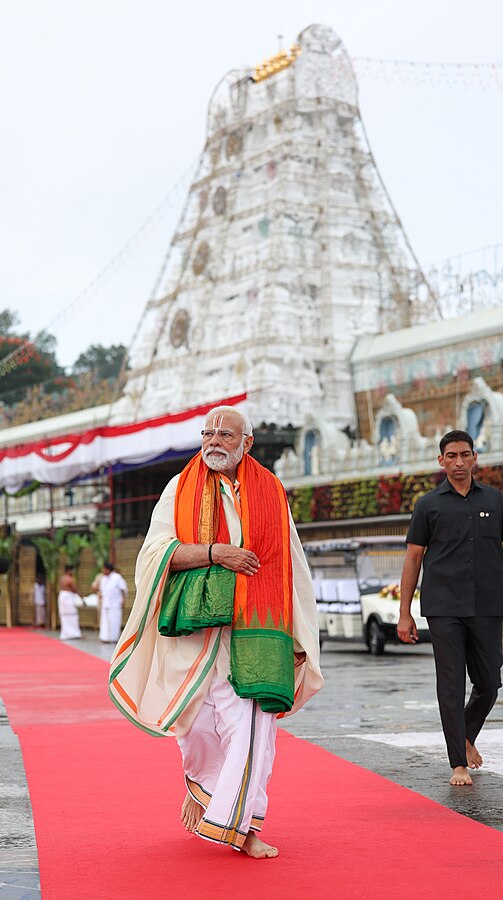
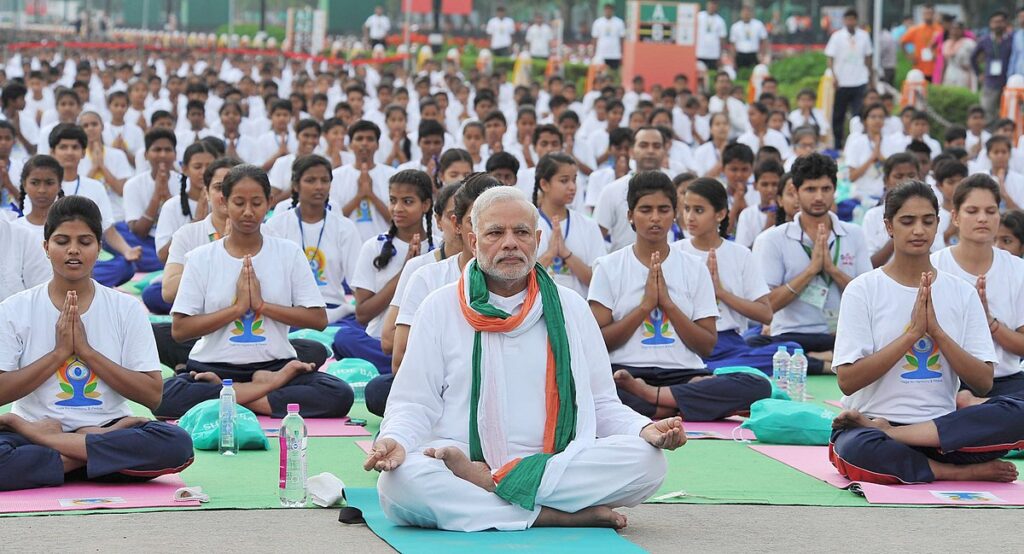
If that is the case, and Modiji wins the election with a handsome margin, my humble proposition is that we should just declare him as the Prime Minister for Life until he chooses to move on or gets bored. The next general election will be held post-Modi timeframe. That is when Indian voters will exercise their choice again for a PM. It is not that I am suggesting disbanding the voting-democracy mechanism — chief ministers should be elected by voting, so mayors and municipal chiefs. Only the ‘prime minister’ choice will be off the table until Modiji is here. This way, we will save a lot of money and a lot of trouble — and focus on the issues that really matter to our country.

For the benefit of 1.4 Billion people, the most populous country in the world, let me enumerate the substantial benefits that will come from declaring Modiji as PM for life:

No need for Othering

India is a rainbow country of multiple castes, creeds, and religions. While Hinduism is the majority religion demographically, it is not monotheistic. There are more sects and variety in the religion than outside it. Now, there would be no polarisation if there were no central elections. Why do you need to drum up support when there is no outcome? Muslims form some 15% of the Indian population, so they don’t need to be bothered. They will cease being they/them; we can finally move to we/us. If this schism is not there, we would not need to talk about CAA, UCC, Hijab, Jinnah, Love Jihad, and so much more. There will be more peace all around.

No need to demonise the opposition

Read more: Narendra Modi – Prime Minister for Life!!!

One of the significant charges on Indira Gandhi deals with her authoritative streak. The charge that she steamrolled through opposing voices and would much instead prefer the echo of a clique. Congress Party had no qualms about misusing the state to reach a purpose. Nothing was off the table. Exitus acta probat!

But what was art during the times of Indira Gandhi has become a science. Enforcement Directorate (ED), or Central Bureau of Investigation (CBI), have become dirt collectors on political opponents. If you oppose the government, you are a marked person. Now, if there are no elections, there would be no need to vilify or demonise the opposition. ED or CBI will be able to function as they can, focusing on crime and corruption rather than political opponents. Modiji will not have to shake hands with corrupt politicians or protect them just because they have jumped ship. Conversely, he would not need to send them to jail just because they oppose him. 

No need to blame Nehru or Indira 

If there were ever a record of how many times the reigning prime minister has taken the name of the first prime minister, it would definitely belong to Modiji. I am sure not even his daughter or grandson, both PMs, ever referred to the Nehru patriarch as much as our beloved Modiji has. There is scarcely any moment when Nehru-Gandhis are not remembered. We know more about Nehruji only because of these unceasing remembrances. If there is no election, there would be no need for a blame game. No need to rake the past for mud-slinging. Nehruji (wherever he might be) will heave a sigh of relief, and so will Indira Gandhi or Rajeev Gandhi. The blame for everything will not be transferred to the Nehru-Gandhi family. Modiji will not need to raise the bogey about the past and focus on how things stand now.

No need to strike a deal with corruption

Remember, “na khaaunga or na khaane dunga,” statement by Modiji. He had promised to eradicate corruption in the most radical of ways. Sadly, the only things that have been eliminated are the cases against politicians who have jumped ship to join the party. This could largely be a result of how our polity runs. However much you might want to be righteous and punish the corrupt, one has to join alliances to win seats and get numbers invariably. Now, if Modiji does not have to bother about electoral bonds or the number of seats, he will go the whole hog against the corrupt and mighty. It could be politicians; it could be businesses. None would be spared. India would emerge into an era of real Ram Rajya, where corruption, cronyism, nepotism or any such ism would not exist.

No need to please businesses

One of the evils of elections is that one needs to please Mammon. You need big money to fight such elections, which comes from big businesses. But it is not all hunky-dory. There is always a quid pro quo in terms of policies or favours. The business people investing in a rupee would expect a million back. If no elections are to be fought, there will be no need for big money or a quid pro quo. Policies will be designed how they should be rather than benefitting some person or entity. There will be no loopholes in laws, and there will be no shortcuts. 

No need for rallies or roadshows

Modiji invests a significant amount of time and effort in fighting the elections. Since these national contests are done in his name, he is forced to traverse the length and breadth relentlessly seeking votes. Imagine the sheet burden on Modiji’s time. If there are no rallies or roadshows, Modiji can spend more time on constructive work. He would be able to invest more time in solving the real issues confronting India: population explosion, unemployment, healthcare and so on. 

No need for religiosity

India is a land of temples; we already have some of the most magnificent ones. At this juncture, the numbers suffice. Then again, we need to find the divine in us, not outside. As Kabir says, “moko kahan dhunde re bande, main to tere paas mein. Na mandir mein, na masjid mein, na kaabe kailash mein.” We need good hospitals and centres that provide affordable healthcare, and they won’t have to go to private hospitals. What we need is great public education institutions so parents don’t have to kill themselves paying fees for private schools and colleges. We need great centres of learning rather than just religious ones. With no requirement to pander to any specific segment, we can move to a spiritual plane that is more inward-looking than chest-thumping.

No need to destroy the environment 

One consequence of urban lifestyles is a more significant destruction of nature and the environment. To power the cities, we need more coal, and to get more, we need to strip more forests. This leads to a negative feedback loop. As the forests are destroyed, we have greater warming — leading to a greater need for cooling. As India rapidly urbanises, more and more citizens (voting) live in the cities. And any government must be aware of their needs. Of course, there could be pot-holes, water issues, and planning chaos, trees chopped for metros, but one cannot do without electricity. Now, if Modiji does not have to bother about these city-wallahs, why would he ever let the forests’ destruction occur? I am sure he would not let dams come up in eco-sensitive zones like the North East and would not allow the destruction of island ecosystems like Andamans or Lakshadweep. 

No need for media stooges

To win elections, one needs to build opinions and to build opinions, one needs a pliant press. The fourth pillar of democracy is usually under the thumbprint of the reigning government through coercion or inducement. It is often a dog that readily wags its tail—for exclusive interviews, access, and advertising spend. The government, too, needs the press to forward its agenda. What if there was no need to hard sell? Modiji would not be bothered by a free press. He would then readily hold candid press conferences like any other leader without worrying about who would ask what. Neither will he be perturbed by what is being reported, even if it is the truth. All the domesticated and pet journalists will be disbanded; only the wild ones will remain free to write whatever they want, to show whatever they want. 

Imagine the gains one can have by giving up on an election that is just a formality of sorts. We could save so much money and so much angst and usher in the golden age of Modi-rajya. I mean, if Lord Ram had to constantly bother fighting an election in Ayodhya, managing vote banks, dealing with babus, courting the vyaparis, and so on, would he be able to deliver good governance as well? I highly doubt it.

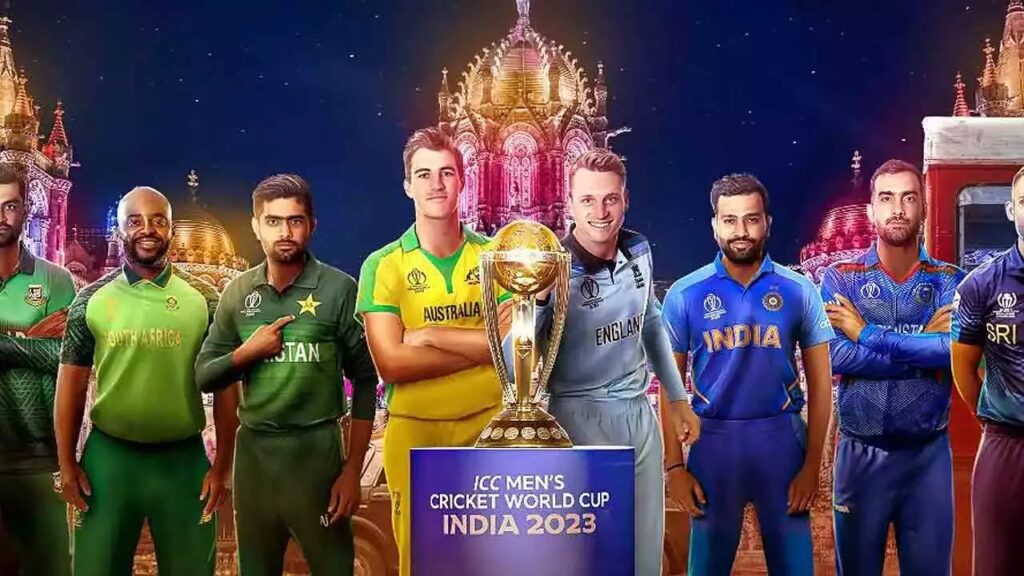
#icccricketworldcup2023: Could It Be Any More Boring?

  • A confession, to begin with, I am a reformed cricketing aficionado. Namely, I don’t follow the sport as it is now. To be honest, I don’t think there is much sport left in the way cricket is played now.

India is hosting the biggest cricketing spectacle in the world — the ICC World Cup. The last time it was held in India, back in 2011, we also won it. Remember, the Tendulkar being hoisted on the back of the teammates and being taken for a round of Wankhede moment. Coming back to 2023, the way things are progressing at the moment, there is every chance that India will be holding the cup again. Though I doubt, if the team will be hoisting Rohit on their shoulders’, he is not all that fluffy afterall.

Winning the World Cup should be an exciting thing. The prospect of winning the cup in front home crowds cheering “Jai Shri Ram“? A real moment of history? India reaching the cricketing pinnacle, yet again?

It would have been wonderful and great indeed, except for the fact, that we seem to be undergoing a cricketing-withdrawal of sorts. One days are no more as exciting as they used to be.

Forget the stadiums with empty seats, there is almost no buzz on the streets, no passionate discussions at coffee stations or exchange of notes at grocery stores. People are not thronging outside electronic shops to see the matches on the big TVs there. You might argue that they are watching it on the mobile screen. Well, they might be, but they certainly are not discussing or debating matches or stats, like it used to be in the past.

All in all, this is the most thanda cup that I have ever seen. The boringest of all. In fact, the cup is so thanda this time, that you could possibly serve vanilla ice cream in it — plain and cold.

There are essentially two reasons why ICC World Cup 2023 is not working. I am sure everyone kind of knows it, but let me state it nevertheless.

Primarily – an overkill of cricket.

Back in the days, when I was a kid, we were often warned against doing too much of the same thing. If you eat the same thing over and over, you will lose interest. If you play the same game over and over, you will get bored. Moderation apparently was the secret to enjoyment. Cricket a decade back, before an abomination named T20, used to be a sport that was rather sparingly played. A one-day or test series would be like an Aamir Khan film, you would have to wait long for it to happen, even though it was a dud. But nowadays, cricket is more like an Akshay Kumar franchise, it doesn’t matter if the series fails or fails miserably, the next one is just round the corner. The top guys at the ICC in their fascination to earn money, are scheduling one series, one tournament, after the other. So, if India loses to England today, no big deal, we will get a chance to extract revenge next fortnight.

Continue reading

Meet the fantastic Ficus krishnae

The Ficus genus is vast and varied; there are about 850 species of plants in the Ficus genus, ranging from woody trees, shrubs, vines, or epiphytes in the family Moraceae. Approximately 115 species of ficus are present in India, the most popular being the Peepal (Ficus religiosa), the Banyan (Ficus benghalensis), and so many others. 

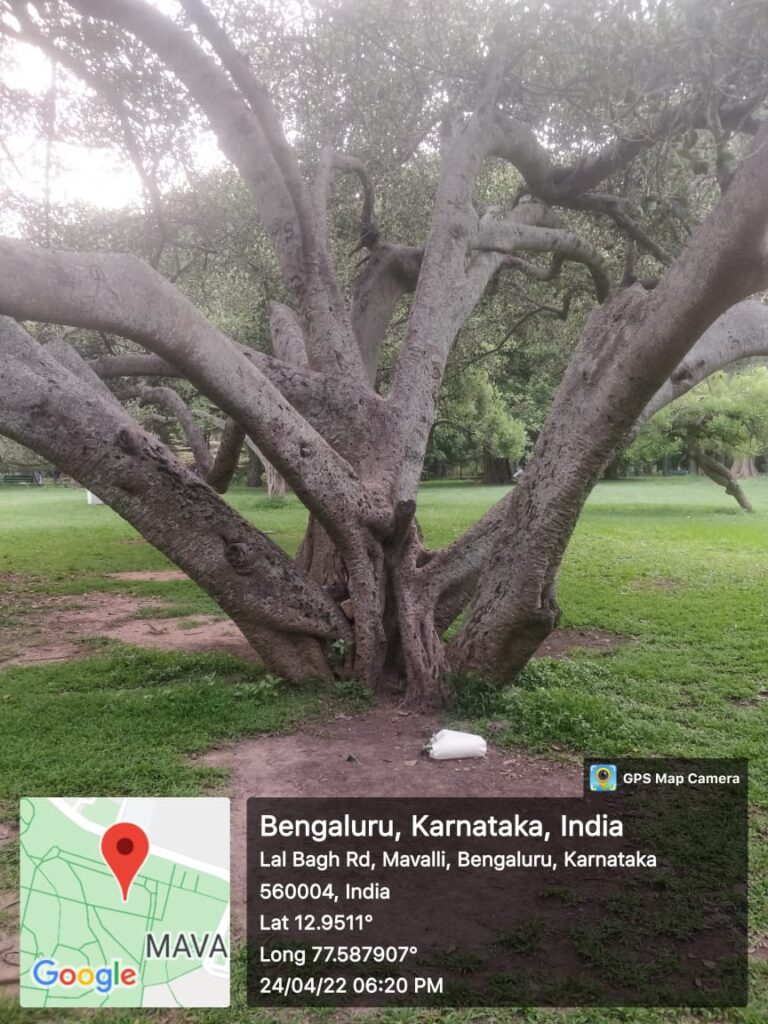
Of the many such figs that stand tall (or rather spread wide) is a particular tree in the Lalbagh Botanical Gardens in Bangalore. Dubbed Ficus krishnae, it is thought to be a banyan tree variation and is often treated as a subspecies. But that was not the case when first classified in the early 1900s as a new species. However, a few decades later, it was marked as a freak variant of the common banyan tree and was named a sub-species: Ficus benghalensis var. krishnae. 

More recently, based on genetic research, the tree has been re-designated as an independent species in its own right.

But apart from all the taxonomic details, here are some reasons why this tree is truly special. The tree is a native of India and is quite rare. While there are many similarities to the banyan, namely the spreading branches with aerial roots that thicken and become trunks that support the crown. Or the similarity in the texture of the leaves, which look a lot similar.

Yet, the differences persist. This tree does not display a dense and spreading canopy like a banyan, and the bark also feels quite different. But the most significant difference is the way the leaves are shaped; they seem to have a single jarlike funnel. The basil loves of the leaves that spring from the stem twist backwards to form a “cup”. 

According to legends, the name Krishna comes from Lord Krishna, who rolled up the leaves of an ordinary banyan tree so that he could hide his butter in it. Thus it is also known as Makhan Katori/ माखन कटोरी or Krishna’s buttercup, Krishna vad/ कृष्ण वद.

As mentioned in Vijay Thiruvady’s book Heritage Trees, this particular tree is around 150 years old. Thus when the tree came into being, India was under colonial command, and Queen Victoria was the empress. There is also an interesting story on the discovery of the species narrated by Vijay in an episode on Bangalore Walks.

You can catch the tree near the Japanese Garden, a short walk from the Lalbagh main gate. The best part is that the park guards are pretty stern and dissuade many visitors from sitting on the branches with a persistent and irritating whistle. 

A few metres away, almost 100 metres, is another younger Ficus krishnae tree. It has even a further variation to its cup-like leaves; the pocket is divided into two compartments with a stitch in the middle. It is incredible to have such rare trees living out in close cohabitation.

So, next time you are in the park, don’t forget to visit the fantastic Ficus krishnae tree and its younger brother (or sister). Here are the coordinates for the same.

The Monk who deals in Music

In a small bylane off the busy Sarjapura Road in Koramangala lies the shop of Aruna Musicals. It is in Jakkasandra, which a reasonably posh area in Bangalore. The shop is hidden from the view as it sits pretty on the second floor of a not-so-old building. There’s an online kitchen that supplies food to customers over a mobile app on the ground floor. As a result, the place smells with the aroma of many cuisines. The climb to the top is not the most comfortable one, as the stairs seem to have been built in a hurry; almost like an afterthought.

Nonetheless, the ascension to the second floor brings to you a magical place, full of myriad musical instruments and pieces of equipment. There’s a glass door that separates the outside world from this fascinating place. And standing with this juncture is AS Ganesh, the owner of the business. He stands there at the gate, smiling and stern at the same time.

We discovered Aruna Musicals by sheer luck. On a visit to Bangalore, we wished to purchase a guitar for our younger son, who was insisting on it. Searching through Amazon and Bajao, we were convinced that the best way to buy a piece would be to do so physically. Considering we are as aware of a guitar as, say, a poet is aware of the atomic structure of benzene, we needed guidance more than purchase. A cursory search on Google convinced us that Aruna Musicals is a great place to start with the quest. The reviews spoke effusively and glowingly of the owner, who was not keen to make a sell but help you pursue music. The reviews were a bit dated, but we were convinced about making the visit.

Entering the place (it’s hard to call it a shop), you are automatically drawn into a different dimension. Unlike music shops where instruments are stacked up in bright cases and shiny lights, here they are all assembled like they are part of an ongoing musical. Indeed, there are scores and scores of them, but they are not out of reach behind glass cages; here, they are all around you, wrapping you in their warmness. And right at the centre is the master of ceremonies, Mr Ganesh.

He is warm, effusive and kind. But he is also firm and stern, a fact we realised when a long-haired guitarist landed up without an appointment and asked him to make a minor tweak to his instrument, “It is not really much. It will be very easy.” The casual manner in which the lad spoke about the instrument seemed to rile up Ganesh. He somehow seemed to control his anger and expressed his inability to help him and happily guided him to another shop.

Continue reading

वो हैप्पी-दीवाली और साल-मुबारक वाले दिन

बजे होंगे कुछ सात या साढ़े-सात सुबह के, जब घंटी की आवाज़ से नींद टूट गयी। जहाँ तक याद था, कचरे का डब्बा रात में ही बहार रख दिया था, तो इस समय जमादार का घंटी बजाने का सवाल नहीं होता। एक बार सोचा जाने दो, किसी बच्चे की शरारत होगी। मगर जब दूसरी बार घंटी बजी तो नींद को टा-टा करना ही पड़ा।

खैर जैसे-तैसे, उठते-उठाते, बचते-बचाते, दरवाज़ा खोल ही दिया, तो सामने साक्षात जमादार-भैय्या के दर्शन हुये। लेकिन वो कुछ अलग दिख रहे थे, कपडे साफ़ थे, वो कुर्ता-पैजामा पहने हुए थे। आज तो चेहरा भी दिखाई दे रहा था, जो अक्सर किसी कपडे या गमछे से ढका रहता। एक अजीब सा तेज उनके personality से प्रवाहित हो रहा था। सच बोलै जाये तो मुझे कुछ मिनट लगे, उन्हें पहचानने मे। उनकी यह वेश-भूषा देख कर नींद गायब हो गयी।

हाथ जोड़के, शीतल विनम्रता से जमादार-भैय्या ने फ़रमाया, “साब, हैप्पी दिवाली, साल मुबारक”। यह सुनते ही, मेरे दिमाग की बत्ती जल गयी, मुझे पता था आगे क्या आने वाला था, मगर फिर भी, बनावटी अल्हडपने से जवाब दे दिए, “आप को भी वैरी हैप्पी दिवाली”। अब जबकि हम दोनों ने दो राष्ट्र-अध्यक्षों की तरह दिवाली ग्रीटिंग्स की फाइलें हक्ष्ताक्षर करके बदल ली थी, एक सन्नाटा सा छा गया, जैसे हम किसी शोक सभा में मौजूद हो। सच बताऊ तो मैं वापस बिस्तर पे जाना चाहता था, और हमारे हैंडसम जमादार भैय्या को भी कम जल्दी ना थी। कई और घंटियां बजानी थी, एक घर पे थोडिना इतना टाइम बर्बाद कर सकते थे। “साब, दिवाली की बक्शीश” कह कर वो सीधे मुद्दे पर आ गए।

अगर सत्य कहु मुझे इस बेवाकी पे जरा भी आश्चर्य नहीं हुआ, यह कोई नयी बात ना थी। बड़ी दीपावली का अगला दिन, नए साल के रूप में मनाया जाता है। यह, एक गुजराती परंपरा हैं, जो बाकी सारी गुजराती चीज़ो की तरह राष्ट्रीय और अंतर्राष्ट्रीय हो गयी है। इस दिन सारे काम-करने वाले लोग निकलते हैं, अपने हक़ की बक्शीश लेने। भले ही आपकी दिवाली कैसी भी गुजरी हो, अगले दिन हैप्पी-दिवाली बोलने वालों की कमी नहीं होती। भले ही आपकी गर्दन पर चाकू नहीं रखा गया हों, मगर वो प्यारी मुस्कान की नोक कुछ कम ज़ालिम ना थी। एक तारीकी से कहिये तो यह sanctioned extortion या मुम्बैया भाषा में कहे तो एक प्रकार की वसूली थी।

जमदारजी की बात सुनके मैंने पापा की पेंट जो अलमारी पर लटकी थी, उनकी जेब से वॉलेट निकाल के बीस रुपैये थमा दिए। रात को दुश्मनी हमले के पहले हम लोगों ने पूरी स्ट्रेटेजी बनायीं थी नये साल के आगमन के लिये। बक्शीश की शुरुवात बीस से होगी, और चूँकि उस समय कौन बनेगा करोड़पति का ज़माना ना था, तो अगला पड़ाव २५, ३०, ४० और उसके आसपास ख़तम हो जाता। हम पिछले कई दिनों से छोटे denomination के नोट इक्कठे कर रहे थे।

Continue reading

Indian Swimmers continue to suffer. Who’s to blame?


Yet again, in another “Unlock” announced by the government, swimming pools have been left out. This was the third instance of the “Unlock” when various aspects of the economy were restarted. Gyms, malls, sports complexes, etc. have been allowed to open. Still, swimming pools continue to be disallowed much like cinema halls, entertainment parks, theatres, bars, and so on. Not surprisingly, Indian competitive swimmers who have been waiting many months for the pools to reopen are distraught. They have been let down by the government and the various swimming bodies that promised pools would be reopened.

For the past few weeks, elite swimmers like Virdhawal Khade, Srihari Nataraj and renowned coach Nihar Ameen have been beseeching the sports minister Kiren Rijjiju and the Ministry of Home Affairs (MHA) to pay attention to their plight. Numerous tweets have been posted tagging the Swimming Federation of India (SFI), MHA, the sports minister, imploring them to open up the pools for competitive training. India’s highest-ranked swimmer Virdhawal Khade has even gone to the extent of talking about retirement from the sports if there’s no headway. Their exhortations haven’t been answered, except with stoic silence. It’s almost like these swimmers have been banging their heads against the wall, or a better analogy would be they have been dumped in the Arabian Sea without a life jacket.

The predicament and the frustration of the Indian swimmers is quite understandable. It has been over four months since the pools have been closed, that is practically a third-of-the-year. For athletes, who typically spend anything from 4-6 hours in the water, perfecting their strokes, tumbles, catch, and so on, this extended break can be devastating both physically and psychologically.  This is all the more so because they were eagerly preparing for the Tokyo 2020 Olympics (which will now be held in 2021). All the preparations, milestones, timelines have gone for a toss.

Qualifying for Olympics is a tough call, especially so in aquatics. The selection process is as follows; participating countries are allowed up to two qualified swimmers per individual event and one relay team. Each country is allowed a maximum of fifty-six swimmers (twenty-eight male and twenty-eight female). Though each country is free to select the swimmers, the International Olympic Committee (IOC) establishes a standard that must be met for a swimmer to be eligible to compete at the Olympic Games. The top swimming body, FINA publishes two sets of time-standards for each of the events: the “Olympic Qualifying Time” known as the “A-Time” and the “Olympic Selection Time” known as “B-Time.” Each country may enter up to two swimmers per event, provided both swimmers meet the qualifying time or A-Time. A country may enter one swimmer per event who meets the qualifying standard or B-Time. Any swimmer who meets the qualifying time will be entered in the event for the Games; a swimmer meeting the B-Time standard will be eligible for entry, and their entry will be allotted/filled in by ranking. A country that does not receive an allocation spot, but has at least one swimmer who meets a qualifying standard may enter the swimmer with the highest ranking. If a country has no swimmers meeting either qualifying standard, it may enter one male and one female in total.

Thus, B-Time qualification will only ensure an invitation to the Olympics if the total available quota slots (878) are not filled. So far, six Indian swimmers have attained the B-Time, Virdhawal with a timing of 22.44s in 50m freestyle. Sajan Prakash (1:58.45 in 200m butterfly), Srihari (54.69s in 100m backstroke), Kushagra Rawat (8:07.99 in 800m freestyle), Aryan Makhija (8:07.80 in 800m freestyle) and Advait Page (8:00.76 in 800m freestyle). Yet, these qualifications count for nothing as only an A-Time can get you the position in the Olympic swimming team. For Virdhawal the target is 22.01; 1:56:48 for Sajan and 53.85 for Srihari. Rawat, Page and Makhija have to clock 7:54:31.

The time difference between 22.01 and 22.44 might not seem much to a common man, but in swimming parlance, it is equivalent to an aeon, a difference between a life-time spent in celebration or in ignominy.

While Indian swimmers struggle to attain these qualifying times, the case is pretty different for a power-house like the US. To give an idea, till August 14, 2019, over 1000 swimmers had attained the qualifying times for different events in the US. To illustrate the high-level of competition, let’s take the 50 Freestyle male event, six swimmers had achieved the A-Time, the best being Caeleb Dressel with 21.04. Some 23 swimmers have attained the B-Time. Indeed, there were 23 swimmers between the timeline of 22.01 to 22.67. Now, the US team can send only two swimmers for this event. Thus, at the US trials, all these swimmers will have to battle out, and only the top two will get to wear the stars and stripes. All these A-Times and B-Times count for little when you are in the US.

And we are just talking about the US, other swimming powerhouses like Australia, Japan, China, UK, also have their robust selection processes that ensure that they will be sending their very best for the competition.

In contrast, no Indian swimmer has ever attained the A-Time for any Olympic events. That should give an idea of where we stand in the sport, globally. Basically, we are scraping at the bottom. Period!

But then swimming is a critical sport for any country wishing for Olympic glory. There are a total of 37 events in swimming discounting the other aquatic events like diving, etc. That’s a good 111 medals on offer; gold, silver and bronze. Even the union minister of sports Kiren Rijiju understands the importance of swimming, stating, “India will have to focus on aquatic sports, especially swimming if the country wants to excel in Olympic Games.”

The minister went on to add that, “Historically, the top countries in the Olympics have bagged a large number of medals in swimming. In the last five Olympics, the  US won about 31 per cent of their total medals in swimming. There is a great opportunity for any country because of the sheer number of events that take place in aquatics. Today, we don’t stand anywhere in swimming at the Olympic level, but there is a huge potential in the sport if we act with dedication, proper planning and adequate resources.”

Simply put, if a country desires to be an Olympic power-house, it can’t without paying attention to aquatics, especially swimming events.

So, why are we failing badly? Why is it that a country of 1.3 Billion can’t find talent to attain an A-Time?

Continue reading

An Urgent Appeal to Palavians

Plastic waste is bad. It is terrible. Period. By now, almost everyone knows how damaging plastic-laden waste is to the environment. And Palava has a singularly bad Plastic Problem.

The biggest villain in the plastic gang is — Single-Use Plastic or known popularly as SUP. Plastic bags that we use for groceries or shopping, garbage bags, straws, plastic cutlery like spoon and forks, are the worst for our environment. The everyday plastic bags we use will take some 500-1,000 years to decompose, while plastic bottles can take 450 years or more. During its life cycle, plastic waste clogs up drains, swells up in landfills, floats into the oceans and so on. Plastic is not only dangerous to animals and marine creatures but it also for us, as plastic is entering our food-cycle.

And while we are made to believe that Plastic Waste is recyclable/recycled, nothing could be further from the truth. Only a marginal percentage, and that too, the high-grade plastic is reprocessed. The SUP invariably lands up in landfills or oceans. Where it is going to stay for hundreds of years and create problems for us. The only option is to reduce our usage progressively until it is zero.

Even the government, both at centre and state has repeatedly emphasised on the need to desist from using it. In fact, last year, the government of Maharashtra had even gone to the extent of banning SUP, but then it was not successfully implemented. The onus is now on the citizens to take matters in their hands.

PALAVA’s PLASTIC PROBLEM 

Lodha Palava is a smart-city that lies in close proximity of Mumbai. With modern amenities, this is a vibrant cosmopolitan community in Dombivli East, Thane. Spread over many acres this colony boasts of some of the most enviable amenities, multiple gardens, schools, swimming pools, cricket ground, mall, golf course, etc.

Thousands of families live in this complex, which is professionally managed by a management company established by the builders. The complex falls under the ambit of Kalyan-Dombivli Municipal Corporation. 

While the basic infrastructure is impressive, namely, roads, water and electricity. Oddly, there has been no system for correct waste management.

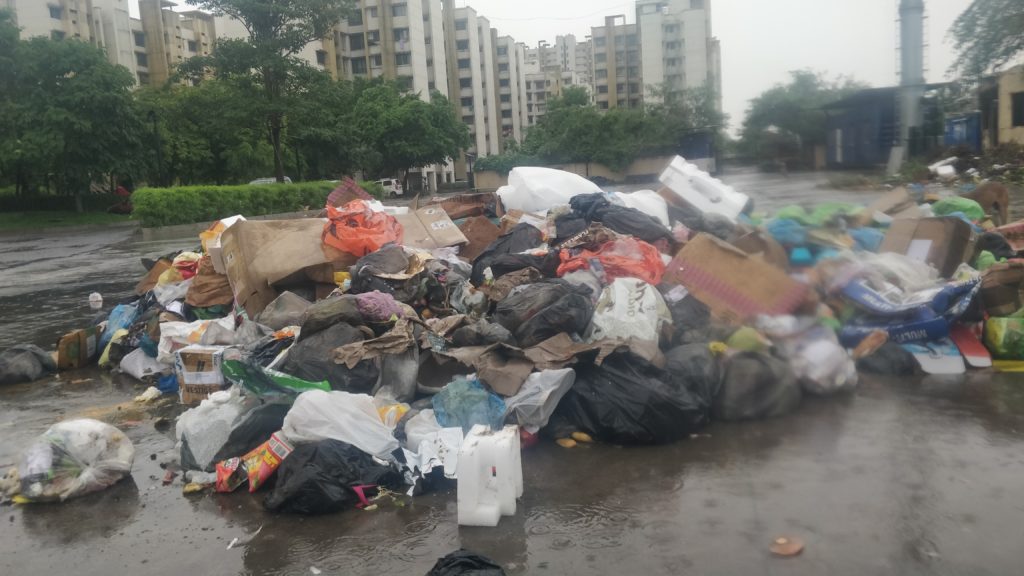
Every day, all these thousands of families discard their waste. Which is collected by sub-contractors and them dumped at Kalyan landfill. Some societies within the complex have encouraged segregation of waste at source, but that is ineffective as the waste is mixed together and dumped.

To understand the process, I decided to catalogue the waste collection in two clusters of Palava, namely Casa Bella and Casa Bella Gold. The total number of flats in Casa Bella (CB) is 2600 and in Casa Bella Gold (CBG) it is 4600. Around 20 boxes of waste are collected at CB and 40 at CBG.

Post noon, all the waste collected is loaded on a truck and carted away to Kalyan Landfill, These two clusters together generate sufficient waste to fill up a single truck, of 5-6 tons. Thus, every single day, there’s one truck from CB and CBG. Don’t forget, these are just two clusters there are quite a few more in Palava. 

Waste collected at CB & CBG

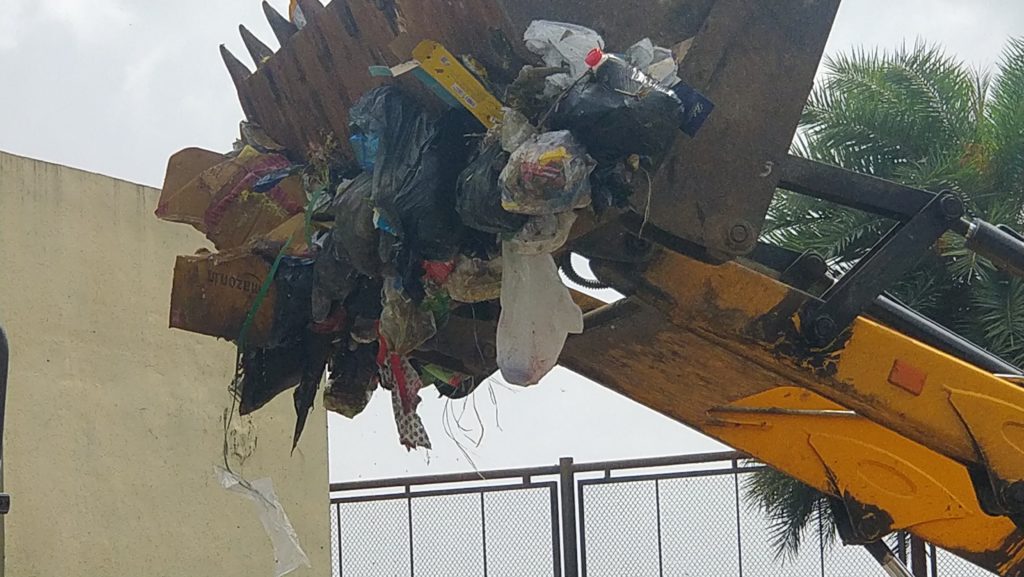
A cursory examination of the waste throws up the dour picture. A major portion of this waste is plastic, mainly plastic bags of different sizes and thickness. Also, part of this waste are cardboard cartons from Amazon, Flipkart and other online marts, hundreds of them each day. 

The workers who load the waste do try and segregate it, but it is highly inefficient, as the volume of waste is very large and they have just a couple of minutes to pick, sort and load it on the dump-truck. There is a waste-buyer at Nilje station that buys the plastic at a small cost.

Urgent Measures

The waste that is being generated at Palava is phenomenal and all this is landing up in the landfill, polluting soil, river and the ocean. In this light, my urgent appeal to all residents of Palava is:

  • Avoid using plastic
  • Stop using Single User Plastic like thin bags, grocery, etc. 
  • Ask societies to implement waste management practices like segregation of waste at source and separate collection
  • Separate measures to be taken for waste. Creation of a compost pit in clusters for dumping wet waste. Creation of system for recycling of dry waste
  • Municipal authorities should collect waste separately and deal with it separately
  • Considering the huge number of cardboard cartons in the waste, pressure must be applied on online marts like Amazon.in to formulate an effective way of disposal
  • Finally, awareness is the first step to action. Be aware of your waste footprint and try to reduce it.
Waste being loaded on the truck

We need to come together and implement sustainable waste management practices. Palava city not only has some of the best infrastructures in this part of the country but also an educated and aware citizenry. It is time for bringing forth the power of the collective and create a model that can be followed by others. Use social media like Facebook and Twitter to raise awareness on the issue, for instance, every time that Amazon loads you with plastic, take a pic and tweet it to @JeffBezos and @amazonIN

Usage of plastic needs to be discouraged, at every avenue at every cost.

Let’s make Palava #PlasticFree. Join the movement. 

For any comments or queries reach out to me@shashwatdc.com

Junior-Swimming In India Being Crushed By Swimming Federation

Being a swimmer in India is a tough thing. Much tougher than other being a sportsperson in any other sports. Besides the obvious comparison, of how other sports like cricket, badminton or for that matter even Kabaddi are given more preference, and so on; there is much more that an Indian swimmer has to battle with on a day-to-day basis.  And it is not just infrastructure, the lack of good pools or great coaches or financial support, it is the apathy of the government and the sports bodies.

The sad fact is that to be a competitive swimmer in India; in addition to oodles of talent, perseverance, fortitude, an individual also requires something as unfathomable as luck or divine benevolence. Because not only are the swimmers spending hours daily trying to scrape off 0.02 microsecond of their best times, but also to dance to the tunes of associations and swimming bodies that function in manner that can be at best described as whimsical.

Take the latest instance of how the Swimming Federation of India (SFI), the premier governing body for swimming in India has delivered a body-blow to junior swimmers. Every year, swimmers across the country compete first at district-levels and then state to be able to qualify for the National (Junior & Sub-Junior) competitions. Thousands of swimmers practice the hardest as its their one chance to shine in the sports, considering how few such competitions are conducted. Given the humungous amount of enthusiasm and talent, the competitions are really fought hard and with fervour at the junior levels. It is only at the senior levels that you see the numbers dropping drastically, largely due to academics or just want for better opportunity.

Given the fact that one sees the maximum numbers at junior levels; shouldn’t the SFI do more to promote it. To find new talent, raw talent and nurture it to greatness?

For the past couple of years, there have been talks of how the SFI wants to merge these 4 age-groups into 3. The reasoning, apparently, is ease of conducting the competitions. The objective apparently is to make things easy for the babus.

So swimmers across the board were surprised when a notification from SFI floated across the Internet, talking about how the age groups had been merged into 3 categories.   The swimming sports body has revamped the age brackets as follows: Group I (15 To 17 Years), Group II (12 – 14 years), and Group III (9 – 11 years). While it might not seem much different on first look, but a closer examination makes it clear as to how younger swimmers have been short-changed in the revamp.  While the elder group (15-17 years) has been retained as is, the other groups are now 3-year groupings instead of two. So, a 9-year-old girl or boy will now have to compete against a 10 and 11-year-old. And a 12-year-old will have to face off against a 13 and a 14-year-old

Continue reading