The elections in West Bengal are done and dusted. Yet, things seem far from settled. Former CM Mamata Banerjee has refused to step down, and violence has flared on the streets, including looting and the high-profile killing of Suvendu Adhikari’s PA. It appears it will be some time before normalcy returns to Bengal.
Not surprisingly, the media is in a frenzy. The saffron wave that unseated Mamata Banerjee after 15 years has become the singular focus of newsrooms and op-eds. The scale of the BJP’s victory is not only unparalleled but, frankly, unimaginable. Every analyst worth their salt is dissecting the reasons behind this seismic shift—from the Special Intensive Revision (SIR) deletions to anti-incumbency, and from governance failures to perceived arrogance.
As the battery of psephologists takes a breath, political observers have begun crediting the BJP juggernaut for the landslide—primarily the duo of Prime Minister Narendra Modi and Home Minister Amit Shah. We are reminded that this result was 15 years in the making; how Amit Shah made it a life’s mission, spending 15 days and nights in Bengal (apparently, sidelining his ministerial duties, but let’s not say that). We are inundated with statistics: the number of rallies by the PM, the roadshows by the Home Minister, and how booths were managed—or, as some might say, how votebanks were “mobilized.”
To get a clearer picture, let’s look at the data. In this election, the BJP won 207 seats with a vote share of 45.84% (approx. 29 million votes), while the Trinamool Congress (TMC) was relegated to 80 seats with 40.80%. For context, in 2021, the BJP held 77 seats (38.15%) while the TMC won a handsome 215 seats (48.02%). The overall voter turnout was historic at 93%, with approximately 6.55 crore votes polled out of a registered pool of 7.05 crore.
The defining factor was the 7.2% swing away from the TMC. As the expert Yogendra Yadav noted in one of the appearances when the results were being declared; TMC’s vast grassroots connection could absorb a 5% swing, but anything beyond that would be calamitous. That threshold was decisively breached.
Where did this swing come from? It was driven by an unprecedented consolidation of the Hindu votebank. Historically, West Bengal’s demography—with a 27% Muslim population— they have played an important role in the politics of the state – especially because they are assumed to vote en masse as a bloc. With the Hindus divided around numerous lines, caste, class, language, the so-called Muslim votebank has always been a significant factor in Bengal elections.
In 2026, for the first time, Hindus voted as a monolithic bloc. An estimated 65–70% of Hindu voters chose the BJP, up from 50% in 2021. Notably, 68.2% of Hindu male voters backed the BJP, while the TMC managed to retain only 38% of the Hindu female vote, a significant blow to their “Laxmir Bhandar” advantage.
The Bangladesh Factor
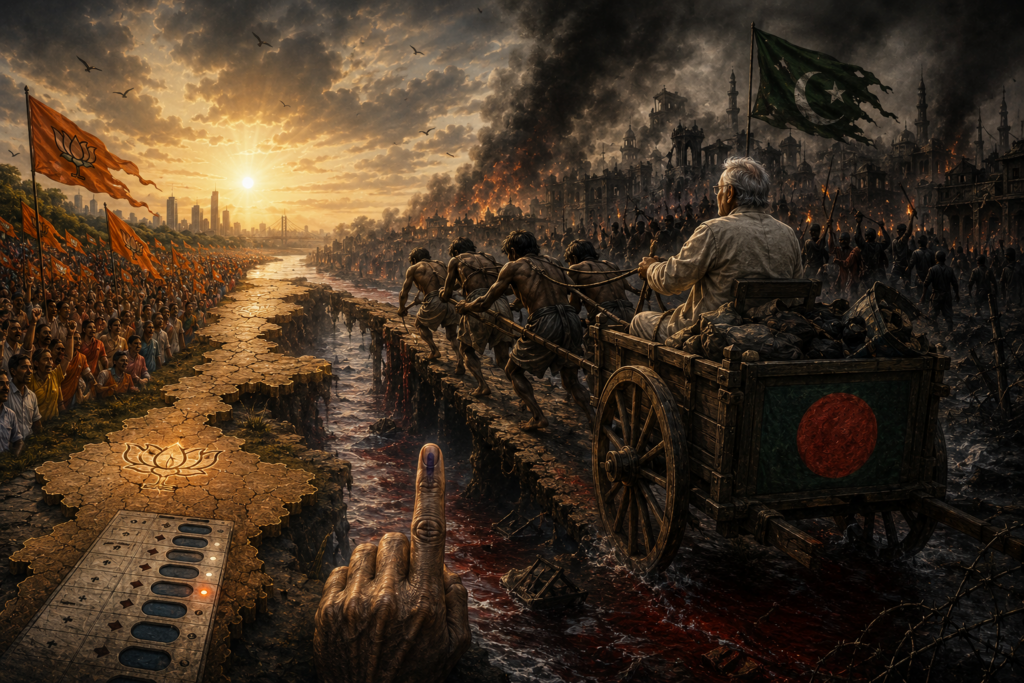
To understand this shift, one must look 70–80 km southeast of Kolkata. In August 2024, a student-led agitation unseated PM Sheikh Hasina in Bangladesh. Her escape to India led to a massive anti-India backlash across the border. In the aftermath, the interim government led by Nobel laureate Dr. Muhammad Yunus was unable to quell systematic violence against Hindus.
Throughout 2024 and 2025, reports of murders and the desecration of temples created a visceral sense of “existential threat” among West Bengal’s border populations. The BJP, with its unabashed saffron credentials, was perfectly positioned to reap this crop of fear. In districts like Nadia, North 24 Parganas, and Malda, the Hindu vote didn’t just grow; it exploded.
West Bengal shares a 2,217 km border with Bangladesh. The frontline districts account for roughly 115–120 seats. In 2026, the BJP won 92 of these seats, up from 48 in 2021—a growth of over 90%.
The Matua Factor and SIR
The Matua community (Dalit refugees) was the “X-factor” in this border surge. Constituting roughly 17.4% of the state’s SC population, they influence outcomes in 40–42 seats. This community was hit hardest by the Special Intensive Revision (SIR). Of the 91 lakh names deleted from the rolls, approximately 22 lakh were Matuas (though 1.9 lakh were later restored).
The fear of disenfranchisement led these voters toward the BJP, which promised them permanent status through the Citizenship Amendment Act (CAA). Consequently, the BJP swept nearly 90% of Matua-dominated seats.
The landslide was also fueled by the abject liquidation of the Left Front and Congress. In 2021, their combined 10–12% vote share acted as a buffer for the TMC. In 2026, this “Third Pole” crashed to a historic low of under 7.5% statewide (CPI(M) at 4.45% and INC at 2.97%), leaving them with just three seats combined.
Simultaneously, the Muslim vote fragmented. New players like Humayun Kabir’s Aam Janta Unnayan Party (AJUP) and the ISF sliced the TMC’s base. In Murshidabad and Malda, the AJUP won key seats like Rejinagar and Nowda, allowing the BJP to sail through the middle in Muslim-majority constituencies like Beldanga and Kandi.
Finally, the “Bangladesh Factor” permeated the middle-class consciousness of Kolkata and Howrah. The BJP’s narrative shifted from “Border Security” to “Urban Demographic Protection.” This resonated with a bhadralok class previously skeptical of the party, leading to the fall of TMC fortresses like Bhabanipur and Rashbehari.
Conclusion: The Sword over Supplication
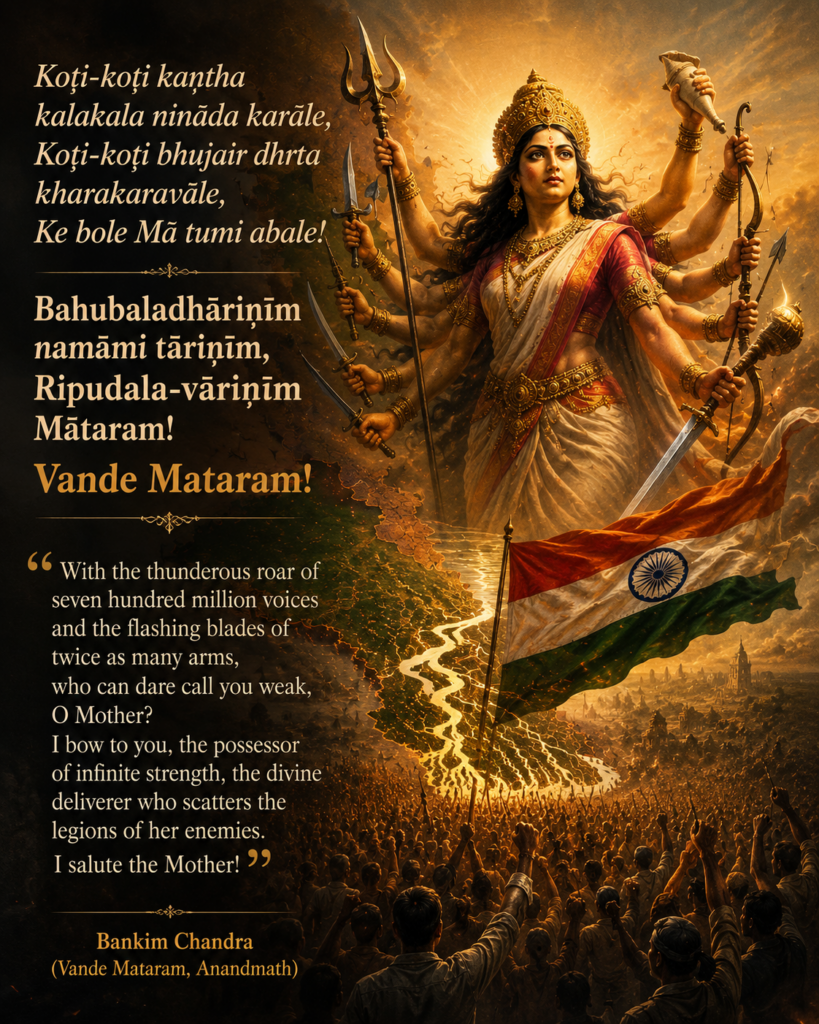
On December 8th, 2025, just months before the polls, the Central Government initiated a full-day debate on the national song, Vande Mataram. By highlighting the historic “injustice” of retaining only two stanzas, the BJP passed legislation restoring the full six. By invoking the militant spirit of Durga, the BJP portrayed its members as modern-day Santans—the ascetic warriors of Bankim Chandra’s Anandmath—defending the land against “aliens.”
In that sense, the ballot box in 2026 became the modern Anandmath, where the ‘Sword’ took precedence over the ‘Supplication.’
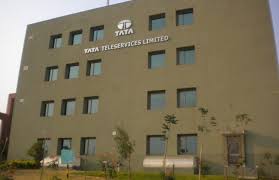 because their future are jeopardised. The company has been undergoing crisis for the past many months, and big changes are in the offing. Thousands of jobs at stake, so many careers hang in balance. But instead of providing hope, succor or reassurance to the hapless employees, the top management at the company seemed to have clammed up. They just went incommunicado. There was no clarity, or statement from the internal stakeholders. Except possibly for all the speculative analysis that was being discussed and deliberated in the newspapers and the portals. As one senior employee confessed to me wryly:
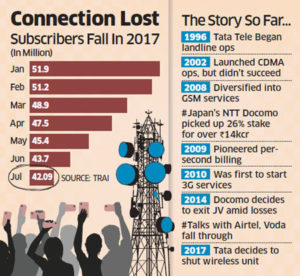 Clearly, there’s no convention that states that an employer is obliged in any or whatsoever way to it’s employees. For instance, when a company I was working with went belly up, the MD didn’t even bother to tell me that the salary won’t be arriving in my account that month, and neither will all those that were pending for a few months. Finding a new job quickly became a priority, even at the cost of compromises on the salary. The EMIs went into a toss, the savings went dry, the PF piggy broken. It was a mind-numbing traumatic time, like someone had punched in a Ctrl Z.
 “One-third of Indians don’t have access to regular power or water, yet we splurge money on fancy space missions. Let’s concentrate on the basics, and leave such things for the Americans and their NASA. Kya zaroorat hain yaar!”
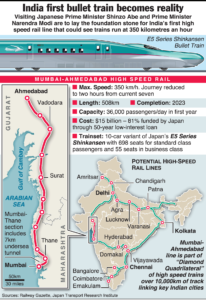
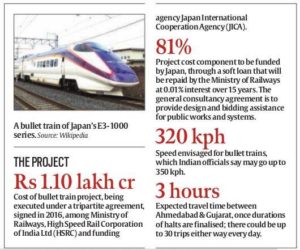 economy, it generates employment, helps businesses, etc. And finally, don’t forget, Bullet Trains are not a social project, they will run like a business, charge a premium, etc. Given the favorable terms of lending, the overall cost is quite justifiable. The big worry is not the initial assessment but rather the cost overruns. Almost all infrastructure projects in India are delayed and exceed the projections if the Bullet Train go through the same rigmarole, then it will turn unfeasible and costly. The best (or rather the worst) instance of this is how India acquired INS Vikramaditya, or aircraft carrier Admiral Gorshkov, from Russia. The initial cost was some ₹6000 crore, but instead ballooned to ₹ 16,750. For a decommissioned aircraft, this was a much higher cost to pay.
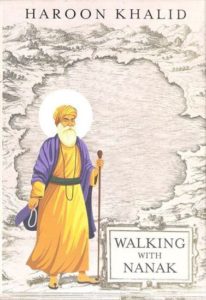 Search of Shiva. Basically, over the years Haroon has been writing on issues related to the minority communities in Pakistan, namely the Hindus and the Sikh. He is a sort of wandering chronicler who talks about the status and the current state of monuments related to Hindus and Sikhs in Pakistan.
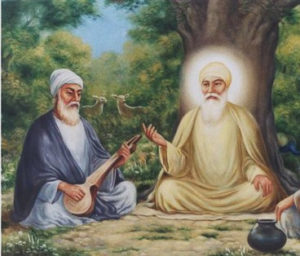 named Mardana, who was a Muslim man from his village. Mardana would accompany him and play rubab on which Guru Nanak would sing his poems. The bond between that of Guru Nanak and Mardana is that of a murshid (guide) and mureed (follower). Haroon too travels to all the sites accompanied by his murshid, Iqbal Qaiser, whom he considers to be his mentor (and much more). Being a scholar (self-taught) on Sikhism, conversations with Iqbal provide an interesting insight on what has been the religious state of affairs post partition.
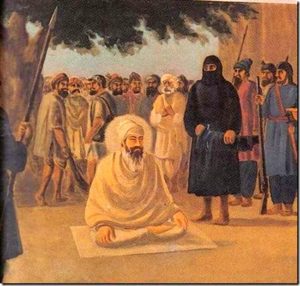 And also tackling the contentious history of the relation between the Mughals and the Sikh Gurus. In a strange karmic way, the destiny of the Mughals seemed to be entwined with Sikh Gurus. For instance, the first Mughal king Babur had an encounter with Guru Nanak, whom he jailed for a few days in 1519. Post that in 1606, the 5th Guru Arjan Das was executed and Guru Hargobind was incarcerated on the orders of Emperor Jahangir. Then in 1675, the 9th Guru Tegbahadur was killed on the orders of Emperor Aurangzeb. And then in 1707, the Mughal emperor Aurangzeb died, and the empire when into decline, the last living guru of the Sikhs, Guru Gobindsingh was murdered by Pathan horsemen in 1708. Haroon deals with this history at length, chronicling the transition of the Sikh Gurus as a religious head to that of a military one, like the formation of the Khalsa by Guru Tegh Bahadur. He also touches upon the fratricidal conflicts like the one with Prith Chand on the selection of his younger brother Arjan as the Guru. Or even the objection by Guru Nanak’s elder son and wife to the appointment of his disciple as a successor.
  claimed himself to be a fan of Hindus, an admirer of Modi, not to mention his takes in Indian real estate market, all these pointed to a rosy future.
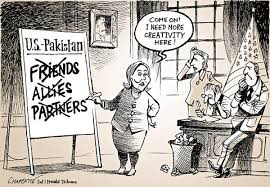 denying a place in the security council, to imposing economic sanctions after the nuclear tests; caught between the love of Islamabad and the scepticism of Beijing, New Delhi seemed to have mattered very less. In fact, between the years of 1978-2000, there was not a single US presidential visit to India, from Jimmy Carter to Bill Clinton.
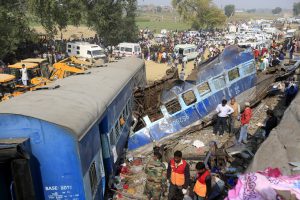 times, almost equally in casualties as that of Gyaneshwari Express in which some 150 had died in 2010, when the train had been derailed by Maoists in West Bengal. The scale of deaths and injuries makes the current accident, one of the worst in the history of Indian Railways. Sadly, going by the things as they are, this accident won’t certainly be the last “major one” in India’s transport sector.
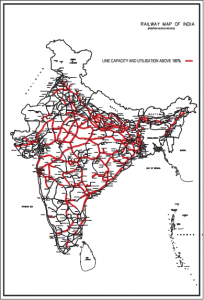 railways have a network of more than
 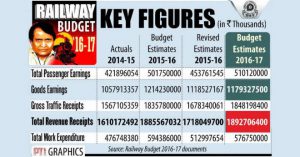 to come. Indian Railways (IR) is right now like a patient that is afflicted with tuberculosis, the symptoms are all there. But if we only concentrate on the manifestation and ignore the ailment, the patient is going to eventually die. The prognosis for IR is similarly dour. And here’s why:
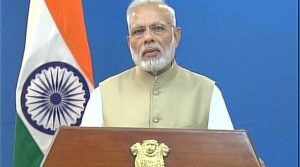 dour looking PM then in the 20 mins made an announcement that sent the whole country in a tizzy. He announced a war on black money with almost immediate demonetization of 500 & 1000 Rupee notes. “The arrangement of buying and selling through existing 500 and 1000 notes will not be available. These will be just worthless piece of paper”.
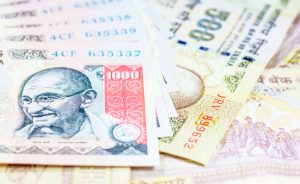 word spread, the exchange stalled. No one was ready to touch the currency with a barge pole. Shopkeeperrs would smile indulgently on being offered these notes. Outside ATMs, there was a huge queue of people, withdrawing 400 bucks at a time. Ditto, long queues at petrol pumps, as people tried to use the notes to tank up their vehicles. Even on the television, you could all these people standing outside ATMs and petrol pumps trying to lay their hands on whatever 100 or 50 they could lay their hands on. People across the board were confused, irritated, and even angry at the way their Tuesday night had been laid waste. But yet, almost all were in agreement that it was a bold, necessary and welcome move by the government. There was hardly a soul on the road, who did not support or complement PM Modi on this move.
 quite a simple book talking about the state of affairs of the world, especially in connection with globalization. The book speaks of how the world is coming together as one big place from Denver to Dalian to Bangalore. It was meant to be a chronicle of our times, and a sort of prognosis of the things that are yet to come. Friedman reaped rich rewards from his book, traveling across the globe, giving talks and discussing the subject.
 and Mexico for the “greatest jobs theft” in the history of the world. According to him, Indians and other nationals were gobbling up American jobs. Indians were no more a threat, but rather scheming thieves that stole and cheated. Now how could that narrative change so quickly? What happened to that ‘flat world’ that was meant to be equal for all
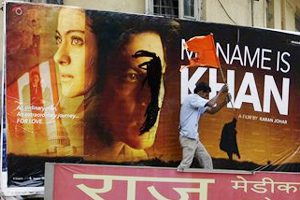 preventive custody, and even warning Uddhav Thackeray of dire repercussions. The battle lines were drawn, a defiant SRK refused to apologise, whereas the Shiv Sena would have nothing less than it. As the battle progressed, the saffron party seemed to lose steam and was looking for a way out of the imbroglio, with its leader talking about a “public apology” as an acceptable truce. That did not come though, and the film was released among heightened tensions. As is the case with quite a few SRK movies, MNIK earned its crores, got all the awards, and was declared a hit.
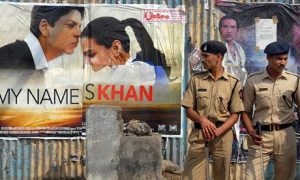 diplomatic mumbo-jumbo, here and there, but these were largely from the smaller actors, the ones people call character artists. The big shots of Bollywood were dumb-founded, much like their likeness that represents them at Madame Tussauds and elsewhere. The Khans, the Kapoors and even the Bachchans, kept mum. Bollywood, the big family of superstars, was more like a petrified herd of goats. The kind that will retreat into the barnyard at the sign of first trouble.
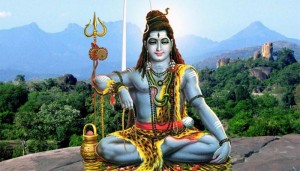 Astha TV, all would have been rather fine. But instead, these points were thrown up at the prestigious annual science congress event that took place in Mysore this year. The event is an annual jamboree that travels from one Indian city to another, apparently to promote scientific temperament within the country. Yet, the only thing that this event seems to doing is promote psuedo-relegiousness of the worst kind. Science, the empirical discipline, has taken a back seat to mythology and religion, which has no relation whatsoever with empiricism.
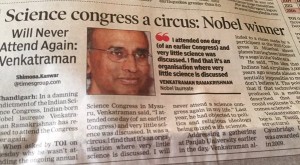 then, Indian-born Nobel laureate Venkatraman Ramakrishnan dubbed the event as “
 The reason that Mark Zuckerberg is going ballistic this time in India, is because of the manner in why Facebook had been splattered with a cake on its face, the last time round. In fact, it had been just some 6 odd months back when Free Basics in its earlier avatar as Internet.org faced immense resistance by the public at large, and thus was stalled by the Telecom Regulators. At that time, Facebook was taken aback by the power of the collective, by the sheer virality of things. So this time, it kind of came prepared, it repackaged the offering (giving it a kinder overtone), gave the offering an emotional spiel, had the creatives in place, and even Zuckerberg, who is on a paternity leave, is now writing blogs defending the offering.