A post from a friend about a Malayalam movie, Amma Ariyan, forced me to confront what I had been trying to avoid for quite some time.
Like so many of us who live for the simple रोटी, कपड़ा, मकान and don’t want to be न किसी की तीन, न तेरह — ignorance, at times feigned, is an amazing cloak. It wraps you into a stupefaction, a sense of disbelief that even if “all izz not well,” it might just eventually be — and that when it does end well, all will automatically be well.
It is this meekness within you that covers your vision — rendering you unable to see things the way they are, or to come to terms with reality as it is.
Over time we tend to become so much like the courtiers in the Emperor’s New Clothes — muffling our conscience for a little bit of peace.
And then, when the curtain over our eyes is jerked out suddenly, you are ashamed of your wretchedness, of your own weakness. The world suddenly seems so raw and unvarnished — you now have to confront the sheer wantonness that is so ubiquitous, the squalor, the putrefaction of values, the sheer morbidness.
It is suffocating — how could one buy peace in such conditions? How can one come to terms with it?
It is disgusting, infuriating — you hate what’s around you, and also what you have become, buying scraps of peace with conscience as the currency. But now the price seems just too high.
And just when you are sort of drowning in this slough of despondency, Dushyant Kumar appears like an apparition — speaking words of revolution, of change. His words give warmth, they give hope, and most importantly, they give you a roadmap of how things could shift.
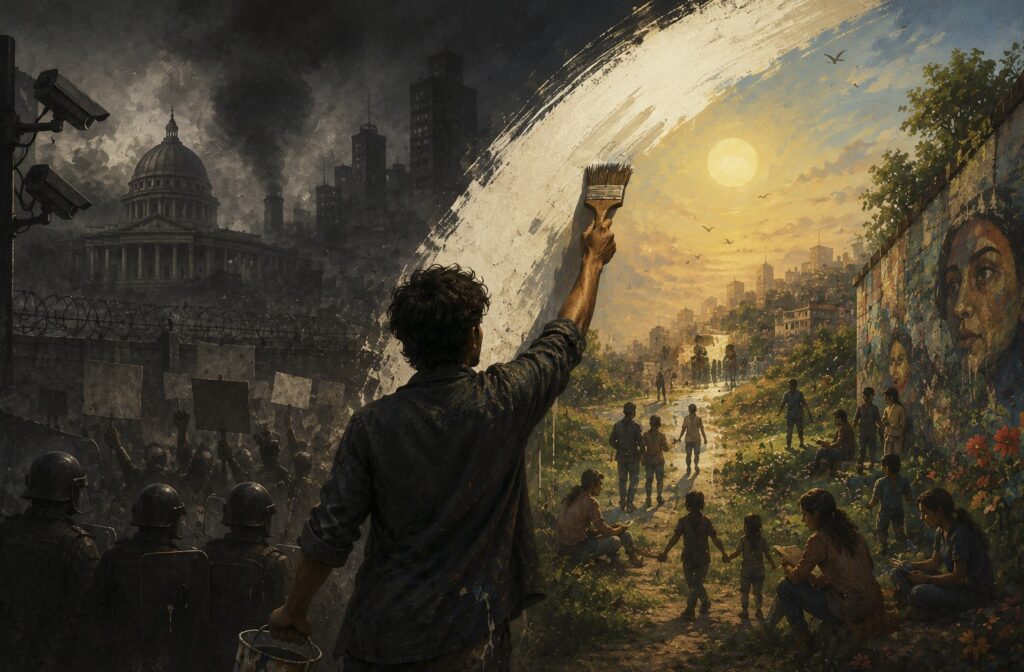
हो गई है पीर पर्वत-सी पिघलनी चाहिए,
इस हिमालय से कोई गंगा निकलनी चाहिए।
His short poem — ho gayi hai peer parvat-si… — is an anthem of revolution, of courage, of standing up, of not giving up.
आज यह दीवार, परदों की तरह हिलने लगी,
शर्त लेकिन थी कि ये बुनियाद हिलनी चाहिए।
This does not imply making a compromise with either the system or its stooges — maggots that have grown fat feeding off the lard of corruption, even as they dress up nobly and act saintly. The system needs to be dismantled. It needs to be overhauled.
हर सड़क पर, हर गली में, हर नगर, हर गाँव में,
हाथ लहराते हुए हर लाश चलनी चाहिए।
We need deep-seated change — a shift away from all the encumbrances that bind us down: caste, creed, language, religion. These compartmentalizations must be eviscerated. A system plagued by rampant inequity and steeped in corruption cannot, and must not, be allowed to beguile or misguide us any longer.
सिर्फ़ हंगामा खड़ा करना मेरा मक़सद नहीं,
मेरी कोशिश है कि ये सूरत बदलनी चाहिए।
Many times in the past there have been moments when people rose, only to retreat when confronted by the state. Silence is the price the system demands. And ironically, disquiet is the only way the system can be jolted. Whether it will change or shift, one can’t say — but that should not deter us from the objective.
मेरे सीने में नहीं तो तेरे सीने में सही,
हो कहीं भी आग, लेकिन आग जलनी चाहिए।
The only regret is that the bravado that comes with youth is often amiss elsewhere. Experience is a lousy teacher — it teaches only profit, ROI, benefit, survival. It does not concern itself with society, nation, or state; it prioritizes only self-preservation.
Little wonder, then, that it is the young who are at the front, leading the call for change — getting whacked, getting beaten, and yet persisting. It is they who give us hope of a possible breakthrough.
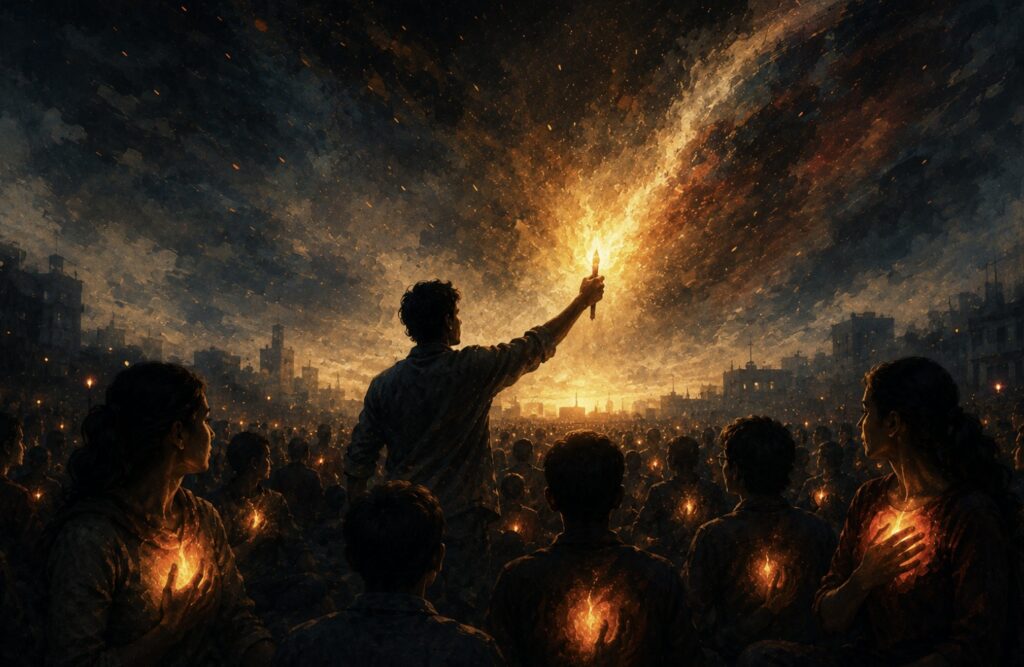
हो कहीं भी आग, लेकिन आग जलनी चाहिए।
Indeed, the fire must keep burning and consume all — so that something new can be created from the rubble. Something that belongs to all of us, and to which we, in turn, belong.
Here is the full poem – without break
हो गई है पीर पर्वत-सी पिघलनी चाहिए,
इस हिमालय से कोई गंगा निकलनी चाहिए।
आज यह दीवार, परदों की तरह हिलने लगी,
शर्त लेकिन थी कि ये बुनियाद हिलनी चाहिए।
हर सड़क पर, हर गली में, हर नगर, हर गाँव में,
हाथ लहराते हुए हर लाश चलनी चाहिए।
सिर्फ़ हंगामा खड़ा करना मेरा मक़सद नहीं,
मेरी कोशिश है कि ये सूरत बदलनी चाहिए।
मेरे सीने में नहीं तो तेरे सीने में सही,
हो कहीं भी आग, लेकिन आग जलनी चाहिए।
— Dushyant Kumar