It is extremely rare for an Indian Prime Minister to make an address to the nation. Usually, when he (or she) does, something seriously is amiss. The last time, I recall, a Prime Minister making “an address to the nation” was in 2014, where a serious looking PM Manmohan Singh bid adieu to the nation. Thus, a PM’s address is a bad omen. Not surprisingly then, when PM Narendra Modi did the same on 8th November, you knew something was up, it was his first “address” in over 2 years in office. And sure it was. A 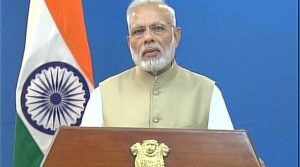 dour looking PM then in the 20 mins made an announcement that sent the whole country in a tizzy. He announced a war on black money with almost immediate demonetization of 500 & 1000 Rupee notes. “The arrangement of buying and selling through existing 500 and 1000 notes will not be available. These will be just worthless piece of paper”.
Never before in the history of modern world, 86% of currency in circulation was turned into worthless in a matter of 2-3 hours. And this was done with absolute planning. The decision came out at 9 pm, and the 500 & 1000 notes ceased being a legal tender at 11.59 pm. In this time, the black money hoarders could do precious little to convert it into another assets like gold or other precious metal. While the government would circulate a completely new (500 & 2000) denomination notes, the banks would be closed for a day, there would be limits on withdrawals, and so many other dos and donts. Come to think of it, there was hardly another way to bring about such demonetization, it has to be hard and it had to be sudden.
Immediately after the announcement, people hit the streets trying to exchange the ubiquitous 500 and 1000 bucks, by making small purchases or things like that. But as the 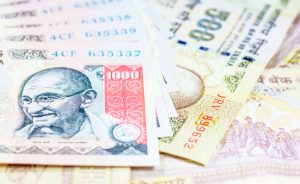 word spread, the exchange stalled. No one was ready to touch the currency with a barge pole. Shopkeeperrs would smile indulgently on being offered these notes. Outside ATMs, there was a huge queue of people, withdrawing 400 bucks at a time. Ditto, long queues at petrol pumps, as people tried to use the notes to tank up their vehicles. Even on the television, you could all these people standing outside ATMs and petrol pumps trying to lay their hands on whatever 100 or 50 they could lay their hands on. People across the board were confused, irritated, and even angry at the way their Tuesday night had been laid waste. But yet, almost all were in agreement that it was a bold, necessary and welcome move by the government. There was hardly a soul on the road, who did not support or complement PM Modi on this move.
So how is that when so many people were troubled and disconcerted with a policy action, yet they seemed to be happy and glad for it? Continue reading

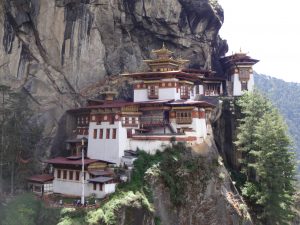 realised, that “70 year-old” was more like a placebo for hassled nerves.
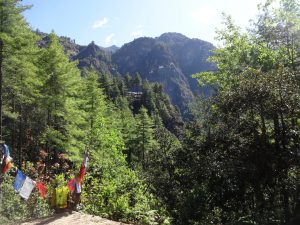 We were there at the base by around 7.30 am, after parking the car, we started on the route. It was a dusty hilly road, and immediately, it started up. At the start you could hear the horses grunting, possibly doing some horsey pranayam in preparation for the taxing climb ahead. For a moment, I was much tempted to load myself on a horse, but our monky guide was firm, and dissuaded me from it. Believe me; very shortly I would be cursing him for it.
 minutes, I would be catching up on my breath. In between, there would be all those horses with those relaxed riders would pass by, and I would grunt in dismay. Why did I ever listen to that monk, is what I grumbled. As the sun gained strength as it made its way across the sky, the going seemed to go tougher.
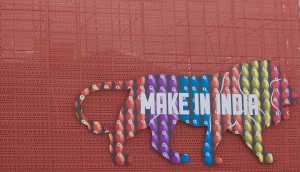 finding an auto becomes an ordeal, something as extraordinary as a Make In India Week (MIIW) seems completely unnecessary. Thus on spotting a green colour media pass for MIIW dangling from my neck, the gentleman in the hard-won share-auto could not help comment. “Auto strike to rokh naheen paya, phir itna bada nautanki kyun?” (The administration could not stall the auto strike, so what is the real need for such an event).
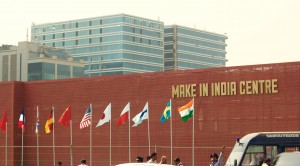 down. Somehow, that anecdote seemed apt to me. It seems that we Indians seem to have a problem with success, especially when it is of our very own. We find it hard to digest, to come to terms with it. So we lash out at it, debunk it, call it useless, futile, nautanki, etc.. That is a typical way in which many react in India. But this trend has exacerbated with the coming the PM Narendra Modi. Everything now is perceived from a political prism, thus, if you don’t agree with him, everything he does has to be negative. So what if it is Skill India or Make In India?
 lithe manner. The term jamboree (essentially means a large congregation or party; extravagant and lavish. Usually, a boisterous affair.) is symbolic of that mindset, a perspective that has been tinged with ignorance
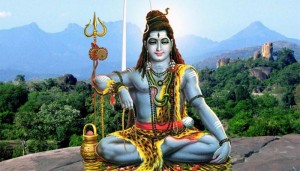 Astha TV, all would have been rather fine. But instead, these points were thrown up at the prestigious annual science congress event that took place in Mysore this year. The event is an annual jamboree that travels from one Indian city to another, apparently to promote scientific temperament within the country. Yet, the only thing that this event seems to doing is promote psuedo-relegiousness of the worst kind. Science, the empirical discipline, has taken a back seat to mythology and religion, which has no relation whatsoever with empiricism.
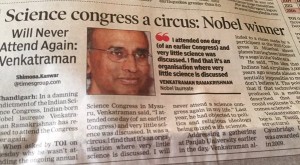 then, Indian-born Nobel laureate Venkatraman Ramakrishnan dubbed the event as “
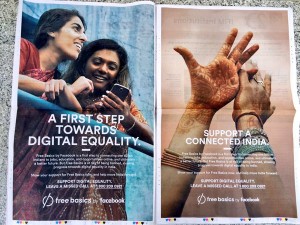 The reason that Mark Zuckerberg is going ballistic this time in India, is because of the manner in why Facebook had been splattered with a cake on its face, the last time round. In fact, it had been just some 6 odd months back when Free Basics in its earlier avatar as Internet.org faced immense resistance by the public at large, and thus was stalled by the Telecom Regulators. At that time, Facebook was taken aback by the power of the collective, by the sheer virality of things. So this time, it kind of came prepared, it repackaged the offering (giving it a kinder overtone), gave the offering an emotional spiel, had the creatives in place, and even Zuckerberg, who is on a paternity leave, is now writing blogs defending the offering.

 intangible, a brand that people like, associate or even hate. And in the past couple of days (specifically 2), the edifice of the brand, built with time and money, has developed a crack and all because of an event which was totally not in their hands.
 hyper active twitteratis were devising ways coordinating attacks on the online retailer, who just dug the head in the sand waiting for all to blow away. Sadly like those hurricanes in the gulf of Mexico, this one only got stronger. As of penning this piece the app had received some 92000 negative ratings. Then there was the supposed uninstall of some 6 lakh by users, and claimed loses of some 100 crores.
 immediately constituted a task force with the sole objective of listening and reacting. Thus even as messages on Twitter were going all over, there would be an erudite set of copy-commandos trying to diffuse the situation.
 strength? And has she lost it completely? Does she represent anything vital now, apart from being the home of a vast number of human beings? How does she fit into the modern world?
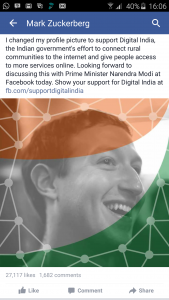 even the CEO of Facebook sporting a DP in support of Digital India. Google in the meantime announced that it will provide free Wi-Fi at 500 railway stations; Microsoft is planning to take broadband connectivity to 5 lakh villages. There is now so much excitement and so much euphoria around the idea, that one feels that there is nothing that can now come between us and our tryst with digitisation. No power on this planet can now stop us from being Digital India. Yeah! Yeah!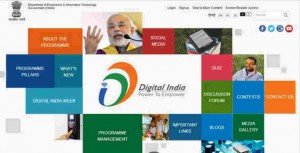
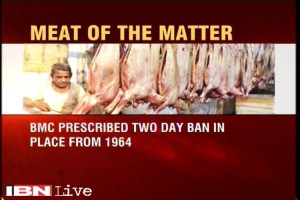
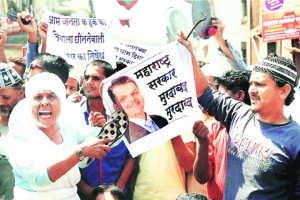 The controversy over the meat ban in Maharashtra, has less to do with Meat more to do with Modi. outrage against the ban has more to do with Narendra Modi as the PM, than the availability of chicken-koliwada on the streets of Mumbai.
 Historically too, Maharashtra and Gujarat were rivals for a long time (even though they did not really exist back then). There is an economic history behind it. The Britishers first established their ‘factory’ in Surat, which essentially was a trading place for Indian goods to be exchanged with those of the British. This made Gujarat (especially Surat) the financial hub. So much so, that when Shivaji was running short of money, he ransacked the city (then under Mughal domination) and made off with much booty. That was essentially the first clash, but it send the agenda for subsequent interactions. When Bombay came into being as a trading post, it were the Parsees from Gujarat that took the lead. When the state of Maharashtra was being created from Bombay Presidency, the Gujjus, especially Morarji Desai opposed it. He had even advocated creating Bombay as a union territory. The rivalry, so, is not really a new one.