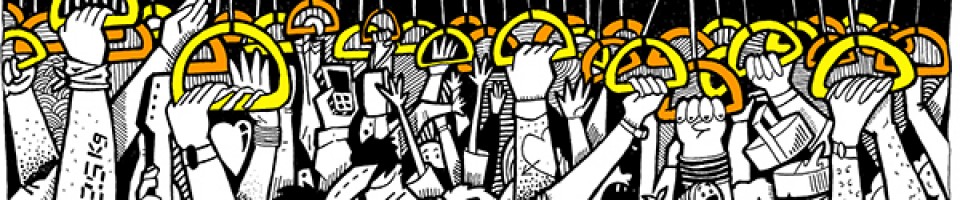
Scores and scores of Tata Teleservices employees anxiously wait for the newspaper-wallah every morning. Getting their hands on the pink sheet, they pore through it with an alacrity of a cat sitting on hot cinders. Most of them have even taken up to surfing business portals on their mobile phones, even while brushing their teeth. And if that’s not enough, they would invariably be watching a business channel as they sip on their morning cuppa of tea.
The reason all these folks from Tata Tele have suddenly become so “news aware” is 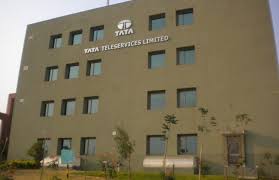 because their future are jeopardised. The company has been undergoing crisis for the past many months, and big changes are in the offing. Thousands of jobs at stake, so many careers hang in balance. But instead of providing hope, succor or reassurance to the hapless employees, the top management at the company seemed to have clammed up. They just went incommunicado. There was no clarity, or statement from the internal stakeholders. Except possibly for all the speculative analysis that was being discussed and deliberated in the newspapers and the portals. As one senior employee confessed to me wryly:
“ We get to know things from newspapers, not from our people.”
So this week when the employees received an email about a town hall by the MD Srinath Narasimhan, the signs were pretty ominous. The workforce was sure that some big decision would be announced, and the rumor mills went into an overdrive. The unsure people were clutching to any info tidbit as a clue to what will be the future course for the company.
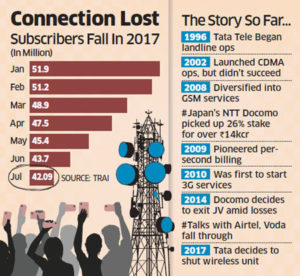
The town hall was scheduled for Friday (the 13th) at 3 pm. And then a day prior, the news broke up on business channels and news portals. Tata Teleservices had decided to sell off it’s mobile business to Bharti Teleservices (Airtel), merge it’s enterprise business with Tata Communications (TCL). And apparently, the broadband part, the landline and photon will become a part of the Tata Sky. The newsbreak played through the day, with even the Group Chairman N Chandra talking about the decisions taken by the embattled Telco.
The floodgates had opened up for the employees.
Around 5 pm, a mail arrives in the official account of the employees, with the subject line “Employee Communication”. It’s a note from the MD’s desk, talking about all the things that’s already playing on TV. The mail talks about the impact on business and the reason for taking such a call, but oddly, it misses upon the most important point– reassuring the employees about their future. The email talks about business continuity but not employee continuity. There’s just nothing there to provide succor to an anxious heart or a worried mind.
And that brings us to the crucial contention, “Do Employers owe it to their employees to reveal firsthand any such wide impact occurrence?” Or to put it plainly, shouldn’t the management speak to their own first, before announcing it to the world?
 Clearly, there’s no convention that states that an employer is obliged in any or whatsoever way to it’s employees. For instance, when a company I was working with went belly up, the MD didn’t even bother to tell me that the salary won’t be arriving in my account that month, and neither will all those that were pending for a few months. Finding a new job quickly became a priority, even at the cost of compromises on the salary. The EMIs went into a toss, the savings went dry, the PF piggy broken. It was a mind-numbing traumatic time, like someone had punched in a Ctrl Z.
But then, my ex-employer did not come with a Tata tag. Neither did it come with a legacy of over a 100 years. Of course the Telco business had been disrupted badly by the arrival of a new player on the scene and botched up by shaky government policies. But then for an employee, the Tata name is like a travelers check from American Express, it won’t let you down, it is not supposed to.
Without dwelling on the business side, let’s just say that there are many lessons that can be drawn from Tata Teleservices saga. Lessons on how NOT to communicate with your employees. Here’s a quick summary of it:
Communicate regularly
Doing business is not everyone’s cup of tea. Even the biggest fail and the smallest succeed. The woes faced by the Indian Telco sector is pretty obvious. The people employed in the sector are well aware of the challenges. But yet, communication is always a must. Good companies tend to regularly engage their employees through newsletters, intranet, or even internal social media tools like Yammer. Communication should be a regular affair, irrespective of crisis or not. Continue reading
 “One-third of Indians don’t have access to regular power or water, yet we splurge money on fancy space missions. Let’s concentrate on the basics, and leave such things for the Americans and their NASA. Kya zaroorat hain yaar!”
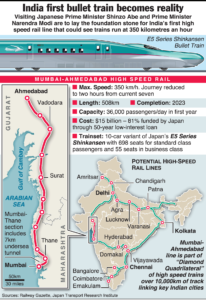
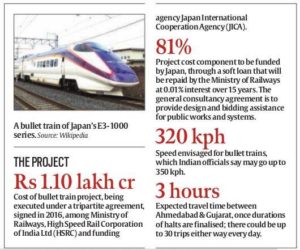 economy, it generates employment, helps businesses, etc. And finally, don’t forget, Bullet Trains are not a social project, they will run like a business, charge a premium, etc. Given the favorable terms of lending, the overall cost is quite justifiable. The big worry is not the initial assessment but rather the cost overruns. Almost all infrastructure projects in India are delayed and exceed the projections if the Bullet Train go through the same rigmarole, then it will turn unfeasible and costly. The best (or rather the worst) instance of this is how India acquired INS Vikramaditya, or aircraft carrier Admiral Gorshkov, from Russia. The initial cost was some ₹6000 crore, but instead ballooned to ₹ 16,750. For a decommissioned aircraft, this was a much higher cost to pay.
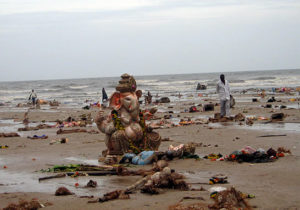 water bodies, of grounds, it saddens you a quite a bit. Newspapers will publish photos of washed up idols of Ganesha strewn across the beaches of Mumbai. A few familiar voices that try to leverage every thing for a personal PR, will suddenly appear on the scene and start with their familiar spiel of how the city is unable to cope with the sheer scale of the festival, they will ramble about the destruction of mangroves, of beaches, of the Arabian sea, and once they have got their 15 mins, they will shut up and into in hibernation.
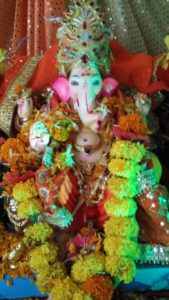 Personally, I have grappled with such issues myself, thrice has the elephant god visited my place, making me aware of the kind of challenges that present themselves, even when you are willing and keen to go green. While my first idol was a p-o-p one, the next two were of shadu mitti. Ideally, that should be making me happy and glad, as I seem to have have done my bit by going the “eco” way. But I frankly am not.
 conscious of mortality, about life, death and the things beyond our control. We see birds dying, people dying sadly in films and on TV, we hear about the deaths of some far-off uncles and aunties, and then there are these absolute strangers that die up in some conversations, that were snatched away by the pot-bellied Yama in some accident, disease, crime, or just about anything. Sadly, the blissful reverie and the innocence of childhood is besmirched by the burly god of death riding his dark buffalo to the underworld. It is at this age that it dawns upon us that life is a balloon that can be punctured by the prick of death. La Vita, is not necessarily and not always, est Bella.
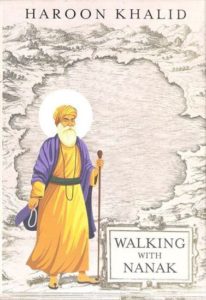 Search of Shiva. Basically, over the years Haroon has been writing on issues related to the minority communities in Pakistan, namely the Hindus and the Sikh. He is a sort of wandering chronicler who talks about the status and the current state of monuments related to Hindus and Sikhs in Pakistan.
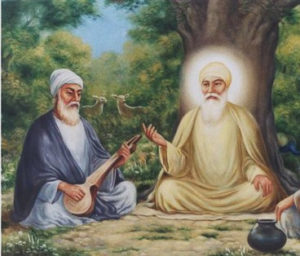 named Mardana, who was a Muslim man from his village. Mardana would accompany him and play rubab on which Guru Nanak would sing his poems. The bond between that of Guru Nanak and Mardana is that of a murshid (guide) and mureed (follower). Haroon too travels to all the sites accompanied by his murshid, Iqbal Qaiser, whom he considers to be his mentor (and much more). Being a scholar (self-taught) on Sikhism, conversations with Iqbal provide an interesting insight on what has been the religious state of affairs post partition.
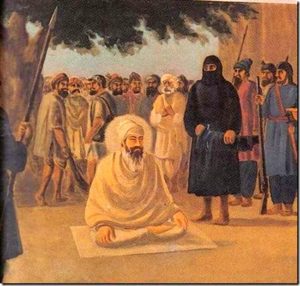 And also tackling the contentious history of the relation between the Mughals and the Sikh Gurus. In a strange karmic way, the destiny of the Mughals seemed to be entwined with Sikh Gurus. For instance, the first Mughal king Babur had an encounter with Guru Nanak, whom he jailed for a few days in 1519. Post that in 1606, the 5th Guru Arjan Das was executed and Guru Hargobind was incarcerated on the orders of Emperor Jahangir. Then in 1675, the 9th Guru Tegbahadur was killed on the orders of Emperor Aurangzeb. And then in 1707, the Mughal emperor Aurangzeb died, and the empire when into decline, the last living guru of the Sikhs, Guru Gobindsingh was murdered by Pathan horsemen in 1708. Haroon deals with this history at length, chronicling the transition of the Sikh Gurus as a religious head to that of a military one, like the formation of the Khalsa by Guru Tegh Bahadur. He also touches upon the fratricidal conflicts like the one with Prith Chand on the selection of his younger brother Arjan as the Guru. Or even the objection by Guru Nanak’s elder son and wife to the appointment of his disciple as a successor.
  Bhat’s death seems to be like deja vu, a replay, of the anarchy that had gripped the Valley last year when Burhan Wani, another Hizbul terrorist, was gunned down by Indian forces.
 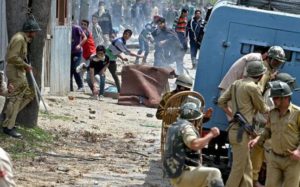 Meanwhile, back in mainland India, Kashmir is portrayed as a law and order problem, Pakistan is blamed for fanning the flames of violence, and so on. The common argument is that till 1989, weren’t the Kashmiris cohabiting with Indians happily, letting the Yash Chopras of the world shoot Bollywood movies in the charming locales. Now, if azaadi was not desirable till the 90s, how did the game change so drastically and dramatically? Why did the Shikara-driving or Kahwa-sipping Kashmiri suddenly develop political ambitions and such massive ones?
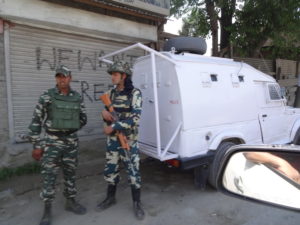 the camps, the schools, the ATMs, everywhere that you see are men in fatigues armed with automatics. One gets a rather odd feeling at seeing such pervasive military presence. I mean, you kind of wonder, whether you have accidentally landed in Kabul or Baghdad instead of Srinagar.
 claimed himself to be a fan of Hindus, an admirer of Modi, not to mention his takes in Indian real estate market, all these pointed to a rosy future.
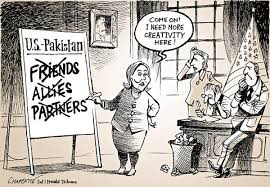 denying a place in the security council, to imposing economic sanctions after the nuclear tests; caught between the love of Islamabad and the scepticism of Beijing, New Delhi seemed to have mattered very less. In fact, between the years of 1978-2000, there was not a single US presidential visit to India, from Jimmy Carter to Bill Clinton.
 screenplay of the movie. And no Benjamin is not some celeb writer or some Pulitzer-prize winner. You see, Benjamin happens to be a rather nondescript piece of technology, which goes by the real name as a recurrent neural network called long short-term memory, or LSTM for short.
 1950s, he had meant it a bit different, dubbing it, “It is the science and engineering of making intelligent machines, especially intelligent computer programs. It is related to the similar task of using computers to understand human intelligence, but AI does not have to confine itself to methods that are biologically observable.”
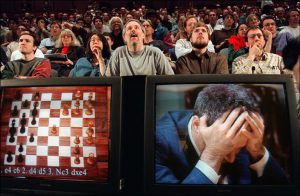 Kasparov in a rematch in 1997, after having decidedly lost to the master in 1996. It seemed to have evolved, learnt from its flaws, analysed its opponent’s strength.
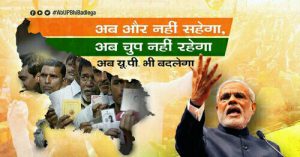 Shekhar, Atal Behari Vajpayee and now even Narendra Modi. In a sense of terms, UP is like the steering-wheel of Indian politics, he (or she) who controls UP, can steer the politics of this nation in his/her wake.
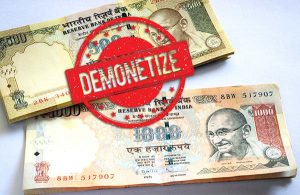 each person’s account to give a size of the problem. Yet, while the figure was notional, it was used a baton to whack BJP and especially PM Modi every now and then. “Where’s the black money in my account?” had become a common jibe by the opposition party leaders like Rahul Gandhi, Arvind Kejriwal, Mamta Banerjee and so on.
 complementary actions towards digitization are undertaken, demonetization could actually accelerate the shift to a cashless — thereby transparent and yes, less corrupt — society. Recently, the Secretary General of Paris-based Organisation for Economic Cooperation and Development (OECD), Angel Gurria came all out in support of demonetization. “India has been a star performer in gloomy times. We do not have many cases of 7% growth (GDP). It is a top reformer among all the G-20 countries”