Learning to live with Ahmadinejad


Ever since the Persian nation went to polls some days back, the world had been waiting with baited breath for the results to come out. In fact, more than the local candidates, the global leaders seemed to have more at stake, starting from the very top from Mr. Obama to Monsieur Sarkozy. The interest level could be gauged by the direct address made by Obama to the Iranian public (which had been largely blacked out by the national media) exhorting them to vote for a change, which could be simply translated as anybody but the current president Mahmoud Ahmadinejad.  

And where the western leaders stopped, the western media came in. Over the past few weeks, almost all the major news channels right from BBC to CNN have been airing special documentaries on the life and politics of Iran. Watching them, it is not hard to miss the subtext to it all, “Ahmadinejad is evil, Mousavi is the savoir. So vote for green”. Over and over again, people were shown the two Irans that live side by side; a modern nation of youths eager to break the shackles and the ancient land of peasants who just want to subsist on government subsidies. Images of young people with spiked and streaked hair, waving the “V” for victory glared at you through the screen. It seemed to be more Idaho than Iran. All through the past few weeks, the channels emphasised how life in Iran had taken a turn for the worse, and how badly Ahmadinejad had failed. It was as if Mousavi had enlisted the help of all these news channels in his battle for Iranian president ship.

But all that fell flat, when the results came out, the bugbear won and won handsomely; Ahmadinejad cornered some 63% of votes versus 34% that of Mousavi. All hopes of a Green Revolution on the lines of the Orange and Purple ones came crashing down to the ground. The verdict is quite unequivocal, even if there have been some irregularities in the process, they can in no manner bridge the immense gap between the victor and the challenger. For good or for worse, Iranians have chosen Ahmadinejad to represent and to lead them. Continue reading

Interview: Jimmy Wales (Wikipedia)

‘Jimbo’ is how Jimmy Wales is quite wellknown within the cyber community and there is an interesting story as to how he got this nickname. Years back, when Jimbo was kick-starting the community project (predescessor of Wikipedia), he was looking for a user name or a nickname, since most of the permutations involving his first name i.e., Jimmy were unavailable, he decided to settle on Jimbo, the one nickname that was not. And it has stuck with him ever since.

Over the past few years, there have been quite a few occasions that I got to interact with Jimbo, but due to some odd karmic coincidence, I never got around interviewing him for Dataquest. Thus, when one such opportunity presented itself, I jumped on it. And Jimbo too was kind enough to spare around an hour for a tete-a-tete.

When I called him at his San Francisco home, Jimbo was busy playing some a game on the computer with his daughter and seemed a wee bit unhappy at the onset on being gleaned away from the fun-thing. But as the interview progressed, he sort of warmed up; talking about different aspects of Wikipedia and how the future might pan out for the world’s leading collaborative encyclopedia project. Here is the interview of the Wikipedia man, as it was published in Dataquest.

******

The Power of Collaboration

You was what the Time magazine chose as the Person of the Year for 2006. The choice underlined the emergence of interactive Web or what is more popularly known as Web 2.0; a universe where millions of users communicate and collaborate seamlessly. Of the three instances of Web 2.0 services that were cited, Wikipedia was one of them (the others being YouTube and MySpace). In the intervening years, Wikipedia has only grown in strength, today it is one of the 4th most visited websites in the globe. Every month close to 280 mn people look up Wikipedia for information or to edit the pages.

Jimmy Wales co-founded Wikipedia in January 2001, as an online encyclopedia that could be edited by anyone. Over the last eight odd years, Wales has become an icon for Web 2.0 and has been recognized at various forums as a thinker and an activist. In 2007 the World Economic Forum recognized him as one of the Young Global Leaders that are having a positive impact on the society at large, while numerous other lists have pegged him as one of the most influential thought leaders or scientists.

But, there is no dearth of detractors to Wikipedia as well, with numerous people pointing out flaws in its liberal editing model, or the fact that the information is not really authenticated. Wales has also been targeted time and again for his personal traits, be it the person he is dating or the page he is deleting. Nonetheless, he continues to be a vociferous mascot for Wikipedia, touring across the globe and spreading the message. In an interaction with Dataquest, he speaks about what makes Wikipedia tick and how not only individuals but also enterprises could use it as one of the information sources. Excerpts:

Recently, Wikipedia successfully raised some $6 mn through contribution for running its operations and you also made a very personal appeal in that regards. What really necessitated the personal appeal? Has the downturn had an impact on fund raising?

Fund raising is not something unusual as we do it every year, where in funds are raised for the following year. As we follow a non-profit root, we are dependent on charity from the normal public to run our affairs, so that is pretty usual for us. As far as the personal appeal goes, I make it every year, so that is not something different either.

To be honest, I did not see any specific instance of economic conditions affecting our fund raising. Our users across the globe understand that we need money to survive and hence they donate in whichever way possible. I am very grateful to all those who did, be it slowdown or not.

It has been some eight years since you launched Wikipedia, and it has grown immensely in these years. What is the road ahead for Wikipedia?jwales

Though it has been eight years, I strongly feel that we are just at the beginning of community driven projects online, where thousands of new things evolve over time and we are going to see a lot more projects of this nature over the coming years. People across different fields are getting together to create things and this trend will only increase. So you just wait, there will be a lot more Wikipedia kind of projects in the years to come.

Wikipedia is renowned as an exhaustive source of information but is there a physical limit to the growth, ie, is it possible to get any and every information on Wikipedia?

Well, to start with, there are very different limits to what can go in Wikipedia. First and foremost lets remember that Wikipedia is an encyclopedia, which directly means that there are scores of things that Wikipedia is and is not. Also, we have a strong focus on good quality and that is not possible unless you have good references. Sadly good references are not in abundant quantity, so that puts a limit to what can be achieved or not. Continue reading

Hail Hynkel….

“Democratia schtunk!! liberty schttunk !! free spracken schtunk!!,” thunders Adenoid Hynkel in front of the sons and daughters of the Double Cross. But even as the Hynkel bares open his dark soul and devious intentions, “strunken me de Europe, and strunken me de world,”; the personal translator on the radio station, Heinrich Stick goes about frostily reading from a prepared script and states that “in conclusion the Fuhrer remarks that for the rest of the world, he has nothing but peace in his heart.”

Burlesque is the one word that comes to mind as one is riveted watching the Great Dictator, a brilliant parody by one of the greatest comedians (and actor as well) this world has ever seen: Charles Chaplin. In fact, the opening speech by Herr Hynkel is one of my all time favourite scenes; the way Hynkel raves and rants about his greatest army and navy, the guttural noises he makes while talking about Jews and the times he breaks off remembering the struggles he had with Herring and Garbitsch (pronounced as Garbage) or the beauty of the Aryan maiden. The 5-minute long address is delivered in gibberish English, with smattering of German words.   

It is not merely Hynkel’s speech, in fact each and every scene in the movie is a masterpiece by itself and that is what makes the movie such a classic and Chaplin such a genius. I well remember about an incident the Satyajit Ray recalled about making Pather Panchali. Filming one of the sequences, he got so carried away by the visual that he continued shooting. It was only later on that he realised that while the sequence was very much visually appealing, it great-dicator-1did not really fit into the scheme of things and had to be discarded. The movie is more important than the sequences, was the implied message.


And yet, if one were to see Chaplin’s films they are all made of amazing sequences that are meant to tickle us. Chaplin’s antics stay with us, even if the movie does not. Many years back, when I was much younger and in school (apparently 2nd or 3rd standard), we were all taken to Chaplin movie being screened in one of the theatres. That was my first introduction to the tramp. I don’t really recall which that movie, but there are a couple of scenes that I still remember, apparently Chaplin and the villain are caught in a blizzard and in one sequence he cooks his shoe and sits down to eat it with a fork and knife. In fact he almost relishes the shoe, as if it is come delicacy. And in another scheme, the house they seem to be living in, slides down a mountain slope ostensibly because of Chaplin’s carelessness. This is all I remember from my first Chaplin movie. Nonetheless, it is a miracle that I remember anything from that movie considering the lapse of time (over 2 decades and more). That is the power of gag, that is where Chaplin’s genius: in creating gags that tickle. Continue reading

Good ol’ days @ USS

It is ironical isn’t it, that in our childhoods, the one thing we most hate (discount the thrashing from parents) is going to school, it is a pain, burden, torture somewhat akin to slavery to a despotic teachers who are bent on making another brick in the wall. Imagine, getting up even before the sun lights up the stratosphere, having a bath (skipping it, if none around), getting dressed, burdened by a sack full of text-books, notebooks and a calendar, leaving home as the rather sad tune of Vande Mataram is heard on a neighbours radio set, trudging to the bus stop hoping and praying that the bus doesn’t arrive (tyre puncture, accident, or anything else), dragging inside it when it arrives, smiling at the teachers that get in the bus hoping that they will be a wee-bit more lenient but alas! Morose prayers, deep breathing to classical music and then the real torture starts: Class-teacher taking attendance, followed by stock taking on homework, punishment, remark on the calendar, a rap on the knuckles, kneeling outside the class, etc. etc. The torture only stemmed for some 15 minutes, when the school broke for recess, in which one has to first rush to the canteen when one hears the bell, grab a bite by standing in a long queue, eat and enjoy, sip at water from a few faucets outside the loos on every floor, empty the bladder and rush back to class by the second ring of the bell indicating the culmination of recess and resumption of persecution.

When they are not trying to cram our brains with information and knowledge which is of little value in real world (for instance, I have never had the use of the most famous algebraic equation (a+b)² = a² + b² + 2ab, ever in my life except for those gloomy days in school), they would drag us to the open ground and force us to move our body in rather rectangular fashion at the count of numbers, namely, 1,2,3,4…5,6,7,8 and then for some very inane reason the count will continue backward and we are expected to it match it by doing the reverse of what we were earlier doing. The only saving grace was that last bell at around 1 pm that resulted in a near stampede as everyone wants to rush out of the school with immediacy. Anyone still in doubt over how children feel about school should look at their demeanour when they enter the school, sad, downcast and glum and contrast it with the way they exit the school, boisterous, raucous and happy.

And yet, as the years pass by and grey abounds on our scalp, we recall those ‘tortuous’ days with fond remembrance. School days weren’t bad after all; in fact, they were one of the best times in our lives. The wiles of the world had not yet defiled our minds and the one and only motive we had was to escape studies and have fun, doing precious nothing, playing war with small figurines, deliberately trying to find a puzzle and solve it, hanging out of tree branches, climbing walls only to jump off them, sneaking into gardens and stealing mangoes or black berries, letting air out of tyres with a thin stick and enjoying the sound that it makes. Oh yes! School was fun, only because we were children and at that time anything and everything was fun. 

I too have fond much remembrance of my school, Utpal Shanghvi School or USS. Located in Juhu, right next to Amitabh Bachchan’s bungalow and near Chandan Talkies, USS started in early 80’s. It mainly catered to rich Gujju kids in the vicinity who did not get admission in Jamnabai or Maneckji. Within a few years of coming into being, USS established itself as a premier choice school, in fact, at around the time I left, the donation required for admission was rumoured to have crossed Rs. 1 lakh, which was a big big amount in those days.

Nonetheless, I was lucky to have got admission in USS thanks to my dad’s acquaintance with the Principal Abha Dharampal’s husband. Prior to USS, I was studying at a rather cosy school in Santacruz (W), named as Little Angels High School. Since, my sister who too was with me at Little Angels and had got admission in Mount Marys Convent in Bandra, my parents decided to shift me to a bigger school, so that I don’t suffer from a complex with my sister (and these were the days before psychiatrist and psychologist existed). Thus, in the month of August, I was sitting in princi’s (hereafter I will refer to Ms. Dharampal as princi as I still don’t have the courage to refer to her by name) office and after a short and snappy interview I was in. It was year 1987.

The reason why I am suddenly indulging in nostalgia is because some days back my mother shared with me a box that I used to maintain as a kid, in which to my great excitement I found yearly class pictures from USS. Looking at those pictures, schooldays memories just kept gushing on like swooning Brahmaputra. I tried to assign names to all those in the photos and to my surprise, I remembered quite a few of them. Since, I was an introvert and somewhat scared of girls, I don’t remember quite many of their names. Fortunately and quite fortuitously, I was present during all these classroom snaps. Looking at all those kids smiling, bored, yawning, posing, stiff, relaxed, etc, I could not help but wonder where all they must be. Probably, married and well-settled like me. Somehow, except for a very few friends, I haven’t been in touch with any of them and even with the ones I did, it was very infrequent. Quite a few years back, I remember going to a reunion at USS and had met a few of them, somehow it did not work out and haven’t been in touch with any of them.

Thus, when my dad got the pics scanned, I decided immediately to put them on a blog as an advert for all my classmates from USS class 1987-1992, to get in touch and get together and share and extend each other memories. Here below I am posting the photos on a yearly basis with a few incidents culled from the neurons that are still storing the memories. It’s better to list them down before they fail or fade or both. Continue reading

Up in the clouds

Apparently, most inventions and technologies have their roots in jargon. In fact, jargonizing is the favourite pastime of almost all tech companies. So, when they are not conjuring up innovative software or hardware solutions, they are prone to cook up some mumbo-jumbo. Usually, these jargons are in the form of acronyms and over a period of time through repeated usage they tend to take on real shape. Sample some of the jargons that have become real, like NC (network computers), ERM (enterprise resource management), RIM (remote infrastructure management, Grid computing, SOA (service oriented architecture), etc. 

Cloud computing is the latest cloud on the block. The term today encompasses a lot more than it innocently declares, and often means different things to different people.  Accordingly, cloud computing stands for SaaS (software as a service), PaaS (platform as a service) and IaaS (infrastructure as a service). But that isn’t all; it also incorporates Web 2,0 and HyperWeb functionalities.  At the basic, it simply means ‘doing things over the Web’, the cloud tantamounts to Internet in this case.

While there is some sort of clarity on what a ‘cloud’ is and what it should be doing. But, there is little or almost no clarity on how one ‘cloud’ should be reacting to another ‘cloud’ or rather working with other clouds. The reason is fairly obivious, the companies that are working on cloud computing, are basically doing in a very personal and private way. Thus, you have the IBMs, the Googles, the Amazons, and the Salesforce.coms of the world who are building and rolling out services and solutions in a cloud architecture. But these are unique to the company and usually have little or nothing in common with others. Hence, there are myriad clouds floating over cyberspace that don’t recognise each other and neither want to either.  It is as if every company is in love with its cloud and wants their client to only be bound by their own. There is little trust in cloud computing. Continue reading

Tutul’s pics

Due to popular demand (by Tutul’s numerous aunties of course), I am hereby posting the images of the lil’ one. Clicked during the days in the hospital, Mr. Idhant Chaturvedi  (Tutul’s official name) seem to be quite disinclined to the camera, it’s unbelievably tough to capture his fleeting smile on camera. And when I keep the camera focused on him, he will maintain a meditative pose with his eyes glued shut, only to open when I have shut the camera out of mere exasperation. As of now, Biwi does not let me ‘pinch awake’ him, so these photos are very rare indeed.

A request: As there is no kaala tikka on him in the photos,  so be careful with your nazaar. So, even if you find him irresistibly cute and extremely handsome (father’s inheritance surely), don’t blurt it out  😛

In his dreams, pouting his lips for a snap or kissing a femme fatale

In his dreams, pouting his lips for a snap or kissing a femme fatale

Finally, eyes open, exploring the world around.

Finally, eyes open, exploring the world around.

There comes the elusive smile.

There comes the elusive smile.

In deep (and constant) contemplation.

In deep (and constant) contemplation.

2020: Just not cricket

Thankfully, the curtains come down on the IPL tamasha today in South Africa. Over the past month and more, we have been inundated with victories, defeats, controversies, etc., from the second season of IPL, the 2020 cricket tournament. Various teams named after different cities and regions of India dressed up in bright ‘in your eyes colours have a go at each other for some 20 odd overs in company of cheer leaders who strut their stuff every time a boundary is scored or a wicket falls. 2020 cricket has apparently found its feet and is now has some critical mass, so as to be dubbed as a form of sport in its own right. And yet, somewhere I feel it nothing more than an abomination on the name of cricket.

In a country devoid of many heroes, cricket is not merely a sport but a religion of sorts. People have taken to worshipping the cricketers, who are nothing less the avatars of the divine lords. Ironically, the game is a colonial import, brought  and introduced by our English masters. But it was in 1983, when Kapil Dev and his team lifted the Prudential Cup over their heads; we fell in love with the game. For a young and vibrant nation breaking from its past, the game came as an ego-booster; India had arrived so as to say.

Over the years, the game took on different connotations as we progressed, from being a steroid shot to a revenge mechanism (Indo-Pak matches), cricket continued to enthuse and excite us. We were fortunate as well, having a recurring crop of world class players, from Vijay Merchant to Sunil Gavaskar to Kapil Dev to Sachin Tendulkar to the current bunch of youngsters led by Mahendra Singh Dhoni. Though, we haven’t won another World Cup in one-day cricket, we continue to be a force to reckon with both on and off the field (financial clout).

Yet, even as the game has transformed over the past decades; there has been a steady descent. Thanks to the millions and billions of monies, cricket has ceased to be a ‘gentleman sport’ but merely a money spinner. And 2020 is the worst manifestation of the greed that now enshrouds and has its grip on the game. To be honest, cricket has died an ignomious death in the last few years, and strangely we the worshippers didn’t even realise it. Continue reading

Interview: Sundar Raman (CEO, IPL)

In an interview, IPL’s CEO Sundar Raman spoke about how technology has really impacted the sport of cricket and how technology and IT has helped making IPL the kind of show that it is. This interaction was published in the Dataquest Magazine.

******

DLF IPL has revolutionised the way the Cricket is watched and followed in India and the world

Without doubt, IPL is the biggest sports extravaganza in the globe with a turnover running in some Rs. 7000 crores. But not only as a cricketing innovation, IPL has also been embroiled in a host of controversies. At the very center of it all, is the CEO of DLF IPL, Sundar Raman. He was appointed last year to give a professional touch to the game, prior to this Raman had been associated with the WPP group for over a decade. 

Raman’s biggest challenge came when the game was abruptly shifted to South Africa due to election and political issues in India. It was a logistical nightmare, considering the short time frame. But Raman and his team have done their homework and thanks to investment and knowledge of IT solutions, they were able to ensure that all goes according to plan without a hitch. Caught up with the rigmarole of the upcoming event, Raman took some time out for an exclusive interaction with Dataquest, wherein he talks about how the game has been revolutionised by the 20-over innovation and how technology is helping it make a success. Excerpts.  

In IPL2, what will be the additions over the very successful IPL 1?

The inaugural season of the DLF Indian Premier League was a huge learning for the BCCI and our team. For starters it helped prove that India can sustain a franchise based model in Sports and quite profitably. But perhaps more important was the fact that we were able to help create a model that has helped grow the game at the grassroots level and significantly enhance the infrastructure across India through private participation. Drawing in the crowds through a mix of world-class action on the field and entertainment, were critical elements in the success of the IPL. That aside we made some unique additions to the quality of cricket played through innovations like the MCC Spirit of Cricket Charter, the Purple Cap for the Best Bowler and Orange Cap for the Best Batsmen.

In the second season, we have explored similar opportunities and avenues to create excitement for the fans and help improve the quality of on-field action. The five minute ‘strategy break’ is on such strategic innovation in the sundar-ramanlong line of innovations that the league has pioneered from the start. We did a calculation last year and 100 per cent matches went over an hour beyond their schedule time. It was just one delayed game after another and this inspite of the fact that we had enforced extremely high penalties. What we discovered then was that a majority of the time teams were ready to pay the money because the coaches and captains/players were consulting one another as the playing situations evolved on-field to fine tune their strategies. It is because of this discovery that we attempted to innovate with this new ‘strategy break’ at the end of 10 overs.

That aside we have identified areas of improvement around spectator comfort and the in-stadia experience, which we will rigorously implement in the upcoming Season 2009 in South Africa.

Then there will be the non-stop Cricket and Entertainment Carnival that we have planned throughout South Africa for the coming 36 days. No efforts are being spared to ensure that the fans in India and the Rainbow Nation are privy to a sporting spectacle the likes of which have never been experienced before. Season 2009 will be an expansive and grand celebration of cricket with a dash of Bollywood and local South African flavor added into the mix for good measure. More importantly, we are expecting strong support from our Indian fans, arriving in South Africa, to make their presence felt and display their solidarity towards their favorite teams. We believe that the kind of interest the DLF IPL has generated over the months and days—right from the time it was announced till today—will channelize into stadia’s across South Africa packed to capacities during the league. 

What would you term as the enhancements to the game brought about by IPL. A lot of purists are balk at the comparison made between traditional cricket matches to IPL ones? Continue reading

Changing times, changing tech

“Aunt is no more. Ask Dineshji to come urgently” was the terse message on my cell quite late into the night. My dad’s sister had been unwell for sometime now, and two heart-attacks in quick succession were very fatal. Once the grim news had settled, another task awaited me. I had to make travel arrangements for dad, as he had to travel to Kanpur, the opposite end of India. It was midnight and Mumbai was sleeping tight.

Unfortunately for me, I wasn’t carrying my laptop either, on which I could access the Web and make the requisite arrangements. I was cursing myself at leaving my laptop back at home and wondering what to do next.

Suddenly, out there in the grim environ, a small 20-watt bulb lit over my head, dispelling the confusion that had cloaked my mind. My E61 turned out to be the Excalibur that I was hunting for. Due to the erratic travel schedules, I have subscribed to GPRS service on my cell. I use it to surf, check mails and send my articles. Agree, the data speeds are pathetic and it takes ages even to mail a simple word document. But that is a small price one has to pay for convenience.

In a jiffy, the Internet explorer was open on my cell and I keyed in ‘Makemytrip.com’. I was pleasantly surprised to find that Makemytrip was WAP enabled and had been optimised for the cell screen. The best thing was the layout was a bit intuitive keeping in mind the small screen and few clicks that go with it. Within, five minutes, I had whittled down the search to an early morning flight to Kanpur, punched in the details, made the payment through the credit card and presto, the work was done.

In another five minutes or so, I checked my Gmail on my cell again to find the confirmation mail from Makemytrip with all the requisite details. Within a few hours, we were at the airport, armed with the printed copy of the airticket in our hands. Continue reading

A :( yet :) Communalist

Communalists like me in India are a wee bit dazed at the moment by the way the election results have unfolded in India. While, victory by NDA (led by a communal BJP) seemed improbable; the contrary (victory of UPA) did not seem a possibility either. To that end, I had stuck out my neck last time (http://shashwatdc.com/2009/04/who-will-be-the-18th-pm/) and declared that Congress will lose the hustings and so will BJP, and we will be see the emergence of a prime minister from one of the numerous fronts. May 16th proved me, and so many more like me, to be wrong and I stand corrected now. I had completely underestimated the intelligence of Indian voters (though I still quite doubt its existence) and had gone ahead and predicted the future as perceived from my rather urbanised mind. I had forgotten that India lives in the villages, thus the issues that were relevant to me were not the same with that of say a Shankar in Azamgarh. 

To be honest, I have never really been able to fathom as to what makes the Indian masses tick; is it a mere battle of survival, so that anyone who gives them the maximum freebie wins or is it caste/religious identity? Considering the way Indians politicians pander and beguile the populace year after year, it is hard to expect them to be sane and rational. Either my fellow countrymen, that number well over a billion, are very intelligent can segregate the wheat from the chaff or are complete idiots who can be easily taken for a ride by wily politicos. Looking at the results of the 15th Lok Sabha elections from this prism, I am a bit more inclined towards believing that Indian voters are more sensible than they are thought to be. And, before all the Congressi start jumping with ‘we told you so’. Let me clarify my statement.

The reason why I detest Congress more from an ideological point-of-view than from a logical one. For me the Gandhi-worship is akin to the dynastical worship of the past; recall how the zamindar babu’s son would be another zamindar himself, similarly, a Gandhi scion has no need to prove himself before being vaulted into the stratosphere of Indian politics. All that is required is a mere name that can be earned by birth or by marriage. This herd mentality, rather common trait among Indians who have been accustomed to be ruled for ages, pisses me no end. And that is the primary reason why I want the callous Gandhi party to be decimated. Continue reading

Kanda Bhajiya, Cutting Chai and Mumbai Monsoons

For the past few months the city is under siege. The enemy has taken complete control. The populace is tortured from daybreak to dusk and from dusk to dawn. Adults, women, children, infants, no one was spared. There was nothing one could do.

The foe was keeping a watch on every road, every lane, every rooftop, and every junction. There was no escaping, not anywhere and not anyhow. For over three months now, my fellow citizens and me endured; hoping, waiting and praying for deliverance.

Something changed over the past few days. There were some reconnaissance sentinels from the allied camp, spurring hopes in our hearts. These black behemoths roamed across the city probably trying to evaluate the scale of invasion required. Relief seemed well on the way.

And today, it finally happened! I could see the relief forces amassing on the horizon. The grey legions were everywhere. The oppressors are no match for these mighty hordes. The mood was sombre, the hearts jolly. It is just a matter of time, before these infidels are driven away from precincts of Mumbai, driven away for 8 or 9 months, before they return to amount a fresh assault.

Pavas aala re!

The monsoon is at the gates, just a matter of time before the heavens open up. It is the time that every Mumbaikar looks forward too every year. The past few months have been agonisingly painful. Summer seems different in this city. Like any other coastal place in peninsular India, the humidity kills you if the heat doesn’t. You will be sweating, irritable and hot all over. But it is quite common. Mumbai’s uniqueness lies elsewhere; in it’s darn crowds. Continue reading

Welcoming Tutul!!!

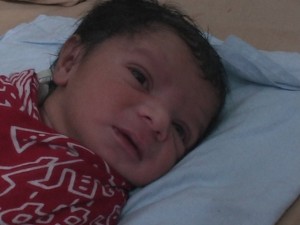
Day before yesterday (May 16th. 16:47 hrs), I was visited by the lady Stork carrying a small bundle of joy, hope and excitement; a bundle that has been named Tutul (pet name, nick name, home name). The visit was not really a surprise for me and wifey, as we had prepared our self for it in the past 9 odd months. And yet when it finally happened, we realised that no amount of preparation or expectation can be enough for child birth.  When, the “ohhhh..waahhh, ooohh…wahhh” moment arrives, you are just as raw, nervous and excited as if this is not happening to you. “Is that delicate, frail, whimpering new-born ours and HOWW!!” is probably the only thought that crosses the mind. In fact, I was quite numbed when I heard the cries and there are still som

baby_storke vestiges of that numbness. But it is wearing off quite steadily, especially when Tutul simply refuses to do as I wish and seem to merely wish as he does.

Tutul, which means soft and supple in Bengali, is an extension of the “UL” series of nick-names in my family, the four of us siblings are named Gugul, Parul, Putul, and Shishul by our parents and now the tradition extends further with Tutul. And yet, while Tutul might be a tiny addition to the vast sea of humanity, for us (me & wifey), he is already one of the biggest event (if not the biggest one) in our lives.

The past few days have been very hectic and quite understandably; when I am not admiring the face of the little angel, which many opine is quite similar to my own, I am running errands, escorting visitors, interacting with the doctor & nurses, learning to handle a tiny doll who seems to be prone to high-pitched shrieks and cries that almost shakes the whole place up, getting advices, doling out some, etc.

In all this, my greatest travesty has been that I have been blacked out and unable to share this amazing news with all my friends, colleagues and well-wishers. It so happens that my cell is conked off, and while I was supposed to get it a week back, I still haven’t. The result has been pretty disastrous, since all my contacts were in that cell, I have not been able to spread the message far and wide, as I would have ideally liked. Over the past few weeks, I had strung together a couple of short messages that would not only inform all and sundry about the new addition to the Chaturvedi clan, but also seek blessings and good wishes for the kiddo. Alas, I have been denied the right to puff up my chest and preen a wee bit. Continue reading