Be Disruptive like Jobs

There was muted silence as a frail-looking man in black turtleneck and blue jeans took stage at the Yerba Buena center in San Francisco. Over the course of next hour, Steve Jobs took the hundreds on agog enthusiasts through one of the most anticipated launches of the year, iPad 2. Literally within minutes of the launch, the cyber world was abuzz with reports and analysis, with blogs, Facebook, Twitter, news sites, feeding the frenzy. Steve Jobs had done it again for Apple, he had ensured that even before the tablet was launched, people would be clamouring for it.

iPad’s success is a brilliant instance of how innovation can be truly disruptive. It’s not as if Apple invented tablets, the concept has been around for decades. In fact the first patent for an electronic tablet used for handwriting was granted in 1888. The first crystallisation of the concept was made by Alan Kay in the early 1970’s, when he came up with the idea of DynaBook. And yet whenever most talk of tablets, they start with iPad. In a less than a year (iPad was launched in Aril 2010), Apple has sold 15 million iPads in 2010 and 40 million in 2011. iPads account for 95% of the market. Apple achieved all this not merely by inventing alone, but by innovating, through careful evaluation of user needs and crafting solutions that meet those. The company is not inventive, but disruptive.

Going ahead, Apple can be a template for any enterprise that wishes to be successful. One needs to deliberately look ahead, peer into the future, and craft products and services that will be ahead of its time. In these days of hyper-competition, innovation is not enough, disruption is required. As IT leaders, you to need to pick a leaf from Jobs biography and make an attempt to be the same. Look at things around you, talk to customers, keep a tab on competition, check the flow of the tech winds. Study, analyse, evaluate, and once you have done so, do it again. Only through force and habit, can you be really be disruptive. Remember Jobs didn’t create Apple in a day, it has been around for over three decades.

Thus, put on your thinking hat and start with a road map. Who knows – in the times to come, there might be many iPad like successes from this ancient land. There’s already talk of Sakshat and Adam doing the rounds…
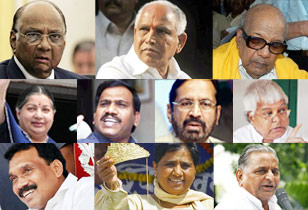
The ills of democracy: A failed state?

64 years might not be much time, when it comes to assessing a nation’s progress. But it is sufficient enough to discern, where the nation is headed to. Examining India’s report card is an exercise in despondency. One can’t fail being saddened and shocked by so much going wrong at the same time. While, everyone paints a rosy picture of an Asian giant, growing at 9% y-o-y, the real truth is corruption is gnawing at India’s entails, resulting massively rising disparity between the haves and the have-nots.

Numerous statistics and facts, not to mention the frequent scams, point to one big unequivocal truth, India is steadily becoming a nation of a few billionaires and a billion starving mouths. We are not turning into an economic giant, but more of a giant balloon of sham, that can go pop anytime.

If you don’t believe the truth, here are some facts and figures that will tell you otherwise:

  • India continues to be among the world’s most corrupt nations. In fact, it has fallen further in the Transparency International index to be ranked at 87 among 180 nations
  • India ranks a low 119 among 169 countries on the 2010 Human Development Index
  • As much as 55% of the population suffers multiple deprivations while an additional 16% are vulnerable to multiple deprivations, according to the report
  • The gross national income (GNI) per capita measured on purchasing power parity terms for Indian was less than a third of the world average at $3,337 in 2008
  • India tops the list for black money in the entire world with almost US$1456 billion in Swiss banks (approximately USD 1.4 trillion) — estimated
  • 80% of Indians earn less than 2$ per day and every second child is malnourished
  • The total amount of money involved in various scams in India over the last 12 years alone, since 1992, is estimated to be over Rs 80 lakh crore (Rs 80 trillion) or $1.80 trillion!

So what could be the possible reason for this downfall? After all, we are one of the largest democracies in the world. How can the collective go so wrong? The horrible truth is, not only are we the largest democracy in the world, we are also the largest in terms of corrupt governance. Continue reading

Babubhai Mistry: The Father of Indian ‘Trick Photography’

For well over two hours, I was hunting across the narrow by lanes of Ville Parle (East), asking all and sundry whether they knew where Babubhai Mistry lived. Considering that his name was much in circulation till about a decade or so ago, I was hoping to find my way to him, through hard labor. Sadly, not one person could help us, and I was just about to give up in exasperation. In a last ditch effort, I asked a laundry fellow, whether he knew Babubhai Mistry, the ace cinematographer. Since, he could not fathom cinematography, I decided to dumb it for him. “Trick photographer, woh jo purana filmon mein sab bhagwaan log ko assman mein udaata tha aur heroine se train rukwata tha“. Something clicked and the laundry wala lit up like a bulb, “Arre, tumko woh Trick-scene photographer se milne ka hain, ruko mein le ke chalta hon“, he stated enthusiastically.

That is what the state was of Babubhai, when I met him in 2008. Sadly, Babubhai Mistry is a name not many are able to recall; even in Bollywood. The few that do, are completely oblivious to Babubhai’s (as he was fondly known) state of affairs; whether he alive or is no more. And yet, just a few decades back, he was a star in his own right, dubbed as the ‘trick scene director’, he was the person who made it possible for Hanuman to lift the Gandhamadan mountain or Hatimtai to fly on a magical carpet in Hindi films. For over 50 years, Babubhai was the man who gave wings to film maker’s and viewer’s fantasies, he was India’s premier special effects director with around 300 films to his credit as director or special effects cinematographer. Many dub his most active years, from 40s to 70s, as the age of the mythologicals (in another words, the age of special effects).

Once the computers and youngsters took over, he retired and settled down with his old memories at his place. Fortunately, I got to spend a few hours with him, as I was working on a story for my magazine. Over these hours, we spoke about a time, how things were and how changed they are today. In spite of his age, he was touching 90, and not keeping good health, he spoke with much excitement through his interlocutor (who was his nephew). And in the end, he shared with me, a couple of hand-written pages in Gujarati. “It is my story, full filmy chhe,” he smiled.

Since, I did not understand Gujarati, I did not pay much attention to it and almost forgot about it. The vagaries of life and work, kept me occupied. Till one day, Pa called and said that Babubhai was no more. Considering his age and state of affairs, it didn’t come as much of a shock. But I was much saddened by the news, more so by the apathy of the industry at large, who seemed to be quite oblivious to the passing away of a legend.

It was then that I picked up those pages (my friend, Jasmine Desai and her mom had them translated in English for me, long back) and decided to share with the world, the story of a man in his own words. So, here below, you will find Babubhai Mistry’s autobiographical take on how he started and how he went on to be the most celebrated trick photographer of his times. It is an interesting story, much like the films he directed. There might be some loses in the translation, but more or less, we have stuck to the original script.

Without much ado, let Babubhai tell his own story and may his soul rest in peace..

P.S. In the end, there is a Youtube link, on which I have uploaded a short video of Babubhai sharing his exploits. Continue reading

Yankee Doodle Doo! — A Big Apple Travelogue

Of all the things that my editor is known for, sense of humor is not certainly one of them. So when he called me up and asked me, whether I would like to go to New York, I was a bit taken aback. He was sombre and so was his tenor, giving me little reason to suspect his intentions. “It is for a Juniper event, 3 days to Big Apple,” he added. With nervous excitement, I acquiesced and from that day onwards (till I came back), all I could think of is New York.

It was a roller coaster ride, many ups followed by the downs. As I had decided to stay back for a few more days, 4 more to be precise, there was a lot that needed to be done, right from finding a roof to arranging the moolah.

To cut the long story short, this piece isn’t about my trials and travails in the US, but rather the impressions that have formed on my mind and what I bring back from the continent.

As my plane landed on a chilly January dawn at Newark International Airport, the first thing that came to my mind was the sheer scale of the complex. I could see from the air itself, that the place was mammoth. And once I disembarked, my doubts turned into reality; there were some hundred odd terminals and more. Newark Airport is some 20 odd miles from New York, in the neighboring state of New Jersey. It took some thirty minutes drive to reach my hotel on 50th street, the New York Palace Hotel. Right next door to the hotel was the St. Patrick Cathedral that seemed to be inspired from maestro Antoni Gaudi’s famous Sagrada Familia Church in Barcelona. And so was the famous Rockerfeller Center, some meters away.

Mapping Manhattan
In many ways, walking in between those sky-reaching towers gives you a sense of deja vu . Have we not seen this somewhere is a constant hum that keeps reverberating through the conscious mind and there are valid reasons for it. New York City (I will henceforth use the rather stylish acronym NYC) has been captured on celluloid innumerable times. So when Spiderman is shown slinging his way through the rather narrow streets of Downtown, or how Robert Neville (Will Smith) in I am Legend , finds out in the empty streets of Manhattan that he isn’t actually the last man standing, or even John McClane (Bruce Willis) and a store owner play a bomber’s deadly game as they race around Broadway while trying to stop him. Closer to home, a certain Mr. Karan Johar, has canned NYC almost exclusively in the very few films that he has made (thank heavens). Continue reading

In memoriam: Uncle Pai

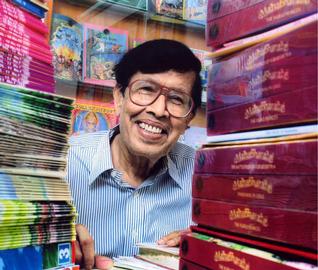
“Hello. That is Shashwat Chaturvedi, right?” a sombre relaxed voice on the other end of the telephone quipped. It was 9 in the morning, and after an arduous late-night at work that stretched on till morning, I would have cared less if it was Lord Shiva on the other side. Groggily, I mumbled an affirmative. “Good. I was just updating my telephone diary. You are a journalist, right,” came another question. This time, I replied in the affirmative and also asked for the antecedents of the caller. “Good. This is Anant Pai.” Even though half asleep, I was jolted, wondering to myself whether it was actually a call or my mind was wandering in some hazy dreamland. The silence at my end prompted the soft voice, “Anant Pai, here. Uncle Pai as you might know.” The next few minutes, I was gushing over the phone, speaking dreamily to Uncle Pai. The rest of the day, I just floated around on a cushion of air; after all it is not every day that you get a call from Uncle Pai.

Like that day, when I was shocked and stirred up by his call, an innocuous post on FB stating “RIP Uncle Pai” again shook me up but this time it was shattering. Like millions of other Indian kids, I too had grown up on a staple diet of Amar Chitra Kathas and Tinkles, and for us Uncle Pai, the creator of these magazines, was more like Santa Claus, except that he didn’t look one and secondly, he told stories and not ordinary stories but those that connected us to our forefathers that walked this very land, 50, 100, 200 and 1000s of years back in history. Most of us, still treasure those original ACKs in the hope of sharing it with the next generation. Thus in a way, ACK had become a family heirloom, passed one generation to the next.

Fortunately, I had the good luck of meeting and interacting with Uncle Pai a couple of times and in each of these meetings, I’d sit in front of him as if confronting some big sage. I would sip from the ever flowing fountain of knowledge; just keep hearing him out, asking him a thing or two and then just paying attention to what he said. When, I was young, I had heard that some rare people were blessed by goddess Saraswati. For me, he was the living embodiment of that goddess. He knew everything under the sun and more importantly, he knew to tell it in a way it stayed with you. For instance, on hearing my name, he told me the real meaning of the term Shashwat, and to drive the point home, he also recited some shlokas to the effect. Or when I spoke about the one Sanskrit shloka that always stayed in my mind, namely the title track of Bharat Ek Khoj, Uncle Pai immediately recited the Nasadiya Sukta (it was from him that I came to know the name) from the Rig Veda, translated it for me and then told me that it was he who had suggested the same to Shyam Benegal (the director of Bharat Ek Khoj) as title track for the serial. Then once the shlokas were done, he would easily sing a Bengali tune, recite Kabir or quote Shakespeare.

There was nothing under the sun that Uncle Pai did not know about; he was a veritable encyclopedia on everything. But the best thing about him, was the manner he could storise everything, turn it into a tale, making it ever so palatable for the young mind. He was a story-teller by par, and he had his mantra. To be a good children’s writer, he used to say, one must know child psychology or what the child loves. One must look from the child’s point of view. Uncle Pai had a simple thumb rule for them, when “children are in a hurry to go to a playground after school, at that time stop them and read your story. If your story holds enough interest for the child and if he doesn’t run away to the playground- you have succeeded in becoming a good writer.” Continue reading

It wasn’t bullets but technology that killed Osama

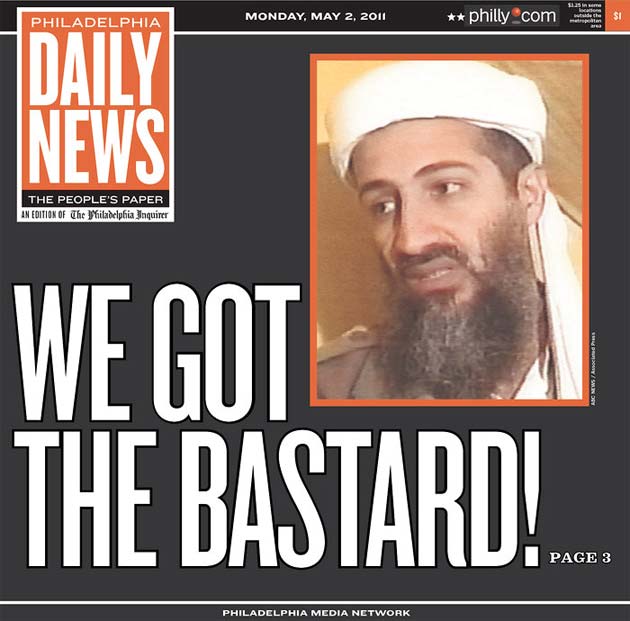
As 4 helicopters ferrying scores of US Navy Seals landed on the isolated mansion standing just 800 yards from the Pakistan Military Academy on the outskirts of Abbottabad city, the fate of its infamous inhabitant had long been sealed, in fact months in advance. 54 year old Osama bin Mohammed bin Awad bin Laden, the leader of the jihadist organisation Al-Qaeda and America’s enemy number 1, might have died in a hail of bullets, but it was path-breaking technology that ensured that he was dug out and cornered.

Ever since, the audacious 9/11 attacks, US agencies, especially the Central Intelligence Agency (CIA) and National Security Agency (NSA) have been combing each link on the ground in the web to hunt down Osama. Over the past decade, there were times when they came to know about Osama’s location within a few minutes that he left the place. But the US forces kept at it, diligently sifting through the data and overhearing the airwaves for any detail that might be forthcoming. And that clue did come, finally, some 7 months back.

Back in August 2010, CIA operatives tracked a trusted courier of the world’s most wanted terrorist to a compound in Abbottabad in Pakistan. They were surprised to find such a high figure visiting a non-descript place. The second thing that convinced the operatives that something was seriously wrong, was when they found that the compound had no phone service, internet or even televisions, and the main building had few windows. Almost immediately, the spy satellites hovering above were trained on the mansion, picking up the contours. A digital model of the mansion was created and everyone and everything going in or out was profiled. And the more they peered, the more sure they were that they had their man. Finally, when the Seals landed at the mansion, they knew what they were after. Technology had given them the lead, which their enemy number one lacked. Continue reading

Bozo; the bestest friend I ever had

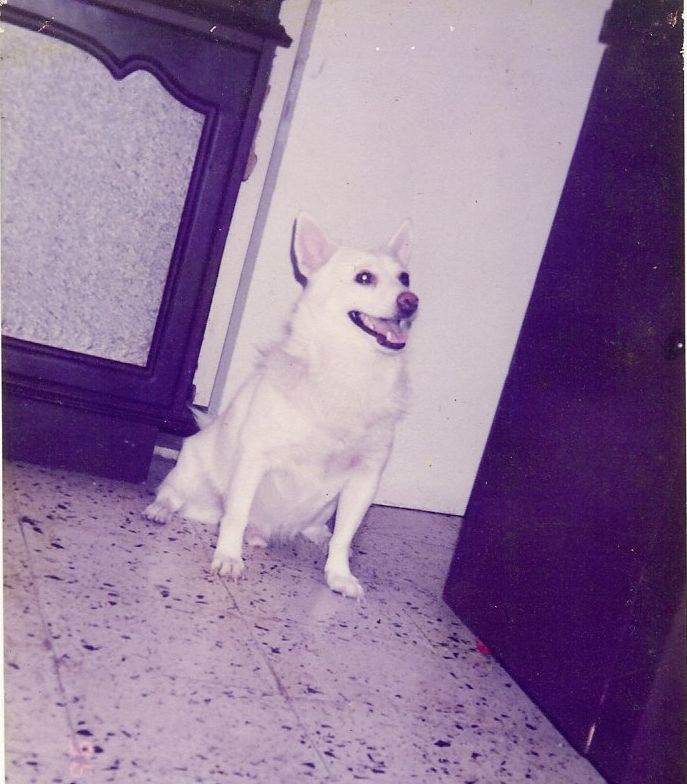
A red-plumpy tomato would always send Bozo in a mad tizzy. So, besotted was he to the by edible fruit, that he would literally beg, plead and snarl for the same. One of the favorite sports, we had at home was to hold a tomato high up in the air, say some 5-6 feet or so. And yet, the little ball of fluff would repeatedly keep jumping at the same, till he finally sunk his teeth into it. There never was a greater lover of the Spanish-discovered fruit than Bozo was. Ironically, when I had chosen him from a litter of 6, it was for the very opposite reasons.

Back in ’93, when I had first seen him, he was a shy, nervous week-old snow-white Pomeranian pup. Unlike, his brothers and sisters, he was not the excited kinds, and preferred to sit in the shadows away from the gaze. So, while the rest of pups crowded and circled me, he just kept away, as if he was some big-shot intellectual, who disliked such inanities. It was this strange quirk in him, that made me pick him. And so, Bozo became an integral part of the boisterous Chaturvedi clan.

Years, passed and the little fluff grew into a big man. Even though he was a pom, he always seemed like an overgrown rabbit to me, especially due to his big big ears. He was very amiable and very patient. In fact, his patience was severely tested at times, living in a house with four children of varying age, from the eldest me (17 years) to the little brother Shlok (2 years), Bozo would always be cuddled, kissed and thrown around by all of us. In fact, one of the weird things was that he hated to be kissed. He disliked it so much that you had to actually ensnare him into it.

Of the many quirks the wonderful guy had, was his strange knack of always picking up the wrong guys. In our neighbourhood, there used to be a couple of giants, a few Alsatians and two towering Afghan Hounds. Bozo, on encountering them, would always challenge them to a big fight. He would continuously bark out at them, probably calling something to their mothers-or-sisters because it used to really infuriate them. Even so, my puny little Hercules wouldn’t stop. I think, he almost forgot that he was pom or probably didn’t care. I am still much thankful to those minders who kept the leash tight. It is because of them that our lives weren’t accidentally shortened.

Bozo, also happened to be the best friend I ever had. For a young man reaching his puberty, he was a blessing. Every night, when I used to take him for those long long walks, I used to talk my heart out to him, of all my crushes, the lost chances, the friends, the enemies, the ambitions, the visions. I would keep on rambling to him. And, he would often peer at me deeply, as if understanding everything. In fact, I am sure, I caught him nodding at times, shaking his head in disbelief at the trivialities. And then at times, he would make those strange mellow grunts, letting me know that it was alright. Reassuring me that “this too shall pass away”.  There was never a hindrance in communicating with him, he understood me, almost like a dear friend, a dear brother. Continue reading

Is Bill Gates a cheat?

For the past years, basking in the after-glow of his philanthropic efforts, one can almost spot a small radiant halo surrounding Bill Gates head. Through his, Bill & Melinda Gates Foundation, the software czar has pledged to donate half his assets to charity and is very much living up to that claim. He has already spent billions in research on AIDS, education and had pledged that he will eradicate Malaria globally. Speaking purely in corporate parlance, Bill Gates has been beatified. And his transition from a scheming, wily Billionaire to that of Saint Gates, has been truly remarkable.

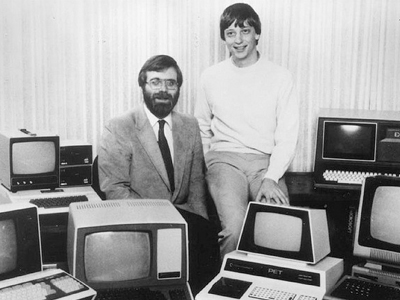
But now, there is a big boulder has been hurled at that carefully crafted image by none other than one-time friend, and ex co-founder Paul Allen in his soon to be published memoir, “The Ideaman, a memoir by the co-founder of Microsoft”. Recalling those early days when the company was founded, Allen makes some damning allegations against Gates, who apparently not only cheated him of his ‘fair share’ but also was keen to upstage Allen during his weakest period in life, when he was afflicted by Hodgkin’s disease.

The not-so charitable side

The biggest grouse that Allen still holds against is his former partner at Microsoft is not surprisingly related to the way things shaped up when the company was established back in 1975. Recalling those heady days Allen touches upon his partnership with Gates when they first met at Seattle’s Lakeside School in 1968. Talking about his first impressions, Allen terms Gates as a “gangly, freckle-faced eighth-grader edging his way into the crowd around the Teletype, all arms and legs and nervous energy. He had a scruffy-preppy look: pullover sweater, tan slacks, enormous saddle shoes. His blond hair went all over the place.”

It is obvious that with his skills with the Teletype (the shared computer at their school) much impressed Allen, who further states that, “You could tell three things about Bill Gates pretty quickly. He was really smart. He was really competitive; he wanted to show you how smart he was. And he was really, really persistent. After that first time, he kept coming back. Many times he and I would be the only ones there.”

Over the next few years, destiny would bring the two together and they both went on to create Micro-Soft. But once, the company was established and set, the disconnect occurred. The difference in both their personalities made them drift further and further apart. While Allen was the philosophical, do-no evil sort of technologist, Gates was the demanding maniacal boss, who would be livid at a programmer asking for a day off, after working 81 hours in 4-days. “Some said Bill’s management style was a key ingredient in Microsoft’s early success. But that made no sense to me,” he states. Continue reading

Telepathy for Draupadi, Twitter for us

Eons ago, lured into a game of dice, the Pandavas lost all their wealth and liberty at the hands of the wily Shakuni and the Kaurava Prince Duryodhana. Intoxicated with power, Duryodhana ordered his brother Dushashana to disrobe the Pandava queen Draupadi in full public view, so to forever shame the Pandavas. A distraught Draupadi, on finding no aid from her enslaved husbands or the courtiers, used telepathy to call upon Lord Krishna, who she considered as her brother, to come to her aid. Needless to say, Krishna did, and so the honor of the Pandavas was saved. Luckily for Draupadi, she had direct connect with someone who could help her out in times of distress.

That was not the case with Ritra Jain, recently. To be fair, Ritra’s case was much different. Impressed by the glitzy looks, she had purchased a sleek BlackBerry device, only for it to conk off almost the next day. After much followups with the retail outlet and the company, a saddened Ritra, as a last resort, opened her Twitter account and punched in her sorrows. All that she wanted do was share views with her friends, get some sympathies and possibly forewarn followers against what she deemed as unsatisfactory service by the company. Much to her surprise, within an hour of her sad tweet, she recieved a call from the BlackBerry firm, asking about her issues with the phone and troubleshooting them. In a day’s time, a BlackBerry representative visited her, took the handset, had it repaired and subsequently returned. Twitter empowered Ritra, much like telepathy did Draupadi.

What surprised Ritra most was the sheer alarcity with which the company responded to her tweet, when all the correspondence to customer care fell on deaf ears. She should not be, because like many other companies, BlackBerry is very active in ORM or Online Reputation Management. Simplistically speaking, it is akin to brand management in cyberspace, ensuring that nothing untoward is spoken, the customers are happy and all is hunky-dory. Continue reading

Top 10 excuses to skip work & watch Indo-Pak game

Holidays hold a special place in an Indian’s life, especially the corporate worker. In addition to the CLs, PLs, and the MLs, Indians are also thankful to the many gods and great men who decided to take birth, marry or die on this land; resulting in a fairly decent number of extr’olidays. And then, when it is not the gods, the politicians are always pliant. So, we have a good set of forced holidays brought about by different outfits under the garb of Bharat Bandh et al.

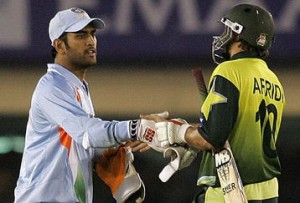
But Wednesday, 30th March falls under a very special category. It is neither a festival, nor any great men (women too) were born, died or anything on this day and finally no political outfit has declared it as Bandh-day. Yet, across the length and breadth of this nation, work will come to a standstill this day, precisely from 2.30 pm onwards, as the Indian cricket team face off with its not-so friendly neighborhood rivals Pakistan. As the game gets going, millions of Indians will be glued to the television screen, cheering, screaming, ranting and raving, as every ball is pitched up on the 22-yard strip.

The match has put companies in India on a dicey wicket. Since, the fiscal-year closing is looming large, there is just too much of stuff that needs be done. On the other hand, it is only but natural that employees will be following the match ball per ball.

To resolve this dilemma, companies across the board have adopted different measures and means, while some have given a day off, the others are putting up screens and offering pizza to all the employees at the workplace itself. Companies like Reliance Infrastructure have given a day off, while others like Axis Bank, Bharti Axa General Insurance, Future Media, Cadbury India and Future Bazaar will work half day. Continue reading

Does Apple hate India?

It is often said that much like an inamorato or a paramour, you either love Apple or hate it. Renowned for its path-breaking innovations, Apple products are much desired all over the globe, from a college kid to corporate head honcho. Same is the case in India as well. Going by the strengths of all the people touting iPhones or moving around with iPads, it will be hardly surprising if we are not as obsessed with the Mac Maker as the Americans are. And yet, why do we have a feeling that the love isn’t mutual, in fact it seems more of an infatuation more than anything else.

A clear indication of this one-way street can be made from the way Apple treats the Indian market. There is an almost disdain on how and when products are launched in the market. For instance, Apple today announced that it will be shipping the new iPad2 to 25 countries mostly European nations and Mexico by March 25th. The company has also indicated that the device will debut in Hong Kong, Korea, Singapore and additional countries in April. Yet there is singular silence when it comes to talking about India.

The few Apple-branded retail outlets dotted across in India, still sport the older iPads and are completely clueless on when and how the newer one will appear. Considering that it took Apple a good ten months after the global launch to officially launch the iPad in India, Indians will have to wait for some time. Leaving the patriotic jingoism aside, the market is rife with accusation that the delay in the India launch of iPad1 is proof that Apple treats India as a market to dump its old goods. The fact that it launched the first version iPad here at a time when it was in the final stage of launching the iPad2 only strengthens the perception that the company wishes to dispose of its inventory in India. Continue reading

Rahman Paobhajiwala

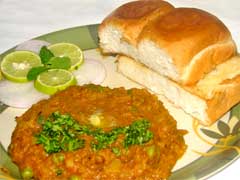
Before I deliberate on the genius of Academy Award winner Allah Rakha Rahman, or popularly known as AR Rahman, let me first talk about the quintessential culinary invention of Mumbai streets, the paobhaji or the pavbhaji (if you may like). Evolved and born from the numerous by lanes of Mumbai, this delectable fare is undoubtedly the second most popular food-item, if not the first one (vada pao being a close competition). Every evening thousands of itsy-bitsy carts appear all across the city, a big oval flat-pan in the centre on which the bhaji is made. It is a staple food for most Mumbaikars who prefer it on the go. Cheap and affordable is the biggest factor that works in the favour of paobhaji, generally available under 30 rupees, it is in arguably the most common dinner dish across the city. Even so, there is no disputing how tasty the ubiquitous and humble paobhaji is. Eaten with a few paos and more that are toasted in butter, it fairly fills up the tummy and also tingles the taste buds.

Even so, anyone who makes a good paobhaji will tell you that there is no ‘good’ way of making a paobhaji; this yummy dish is more made by instinct than by design. While the elements that go into the making of paobhaji are more or less the same, yet it is the permutations and combinations between them that distinguish between a common road fare and a classy one. The basic process is to make a spicy paste of tomatoes and onion, add boiled potatoes, cauliflower and boiled peas. And then with an aid of a heavy hand-stamp sort of implement, the whole mixture needs to be crushed, evened out and left to simmer for a few minutes. Finally for garnishing add coriander and a few dollops of butter. The bhaji is served with crispy paos (cooked in butter again) and thinly sliced raw onions and a few cut pieces of lime. This is the basic model, and above that a lot of customisations can be done, for instance adding cheese, putting in dry fruits, incorporating other vegetables or spices in the same.

Yet, as mentioned earlier even though the process is fairly defined, there is not template for making a good paobhaji. The taste and the brilliance of paobhaji is largely dependent on the individual who is cooking it. The best master follow their instincts in terms of aroma, viscosity and the colour of the bhaji. At all times will they be attentive to how the bhaji is turning up and tweak and change gears accordingly, thus, if it’s turning redder, more potatoes will be added, too dry and extra water will be poured. Because of this inherent dependency of the dish on the one who is preparing it, paobhaji has not found favour with the bourgeois connoisseurs of food and largely remains a hoi polloi dish. Thus in spite of being tasty and delicious, paobhaji is not part of any cuisine; in fact it is not considered a dish at all.

AR Rahman’s music is quite akin to paobhaji and here is why. Listen to any Rahman number on a good headphone and the answer will hit you on the face like a Mohammed Ali knocker. Rahman’s music is composed of various elements, mostly done by a percussionist like Siva Mani or someone. At the very base their will be a constant bland track, say like a hum made by a train when it moves through desolate lands. Next, there will numerous sounds added over it, the bagpiper, the ghungroos, the drums, the pipes, etc. Being a techie, Rahman also used various effects like certain instruments playing on the left, while certain on the right. He also uses the maximum number of tracks in his music, a single track for each of his elements. He also does a unique transition of sound from left ear to right or the other way round. Like a master paobhaji chef, he keeps adding different bits here and there to make the music more nippy and jazzy. The songs composed by him are much sonorous, but it is most likely because of the permutations and combinations of the various elements ingrained within. In a way, his songs are more gimmicky than melody. Continue reading